

Some nights it starts the same way. You go to bed at a reasonable time, wake up at 4:30 a.m., and lie there wondering why your body now seems to keep its own schedule. Or maybe you sleep for what looks like a full night on the clock, yet still feel foggy by late morning. A spouse notices more tossing and turning. An adult child hears, “I'm just getting older, that's all,” and isn't sure whether that's true or just something people say.
Sleep changes can feel personal, but they're also very common. For many families, the hardest part isn't only the sleep itself. It's sorting out what's a normal shift, what's just frustrating, and what might deserve more attention. That confusion is understandable.
This article is here as friendly, research-based education. It isn't medical advice, and it isn't meant to diagnose anything. It's a practical guide to understanding sleep patterns in elderly adults in a way that feels clear, calm, and useful for everyday life.
The encouraging part is this. Changes in sleep don't automatically mean decline. Many shifts are manageable when you understand what's happening and build routines that support better rest, steadier energy, and continued independence.
Table of Contents
- A Friendly Introduction to Changing Sleep
- Why Sleep Changes as We Get Older
- Common Sleep Challenges for Older Adults
- The Link Between Good Sleep and Vibrant Aging
- Creating a Positive Routine for Restful Nights
- When to Chat with a Healthcare Professional
- How Technology Supports Sleep and Independence
A Friendly Introduction to Changing Sleep
It is 5:30 in the morning, and your dad is already awake in his chair, dressed, fed, and wondering why everyone else is still asleep. By afternoon, he dozes off during the news. At night, he says he spent enough hours in bed, but still wakes up feeling tired. Families often notice these shifts little by little.
That can feel unsettling at first. It also helps to know that changing sleep patterns in later life are common, and they do not always mean something is seriously wrong.
Sleep in older adulthood often changes shape before it changes length. A full night may start to feel lighter, less steady, or less refreshing. Some people get sleepy earlier. Others wake earlier than they used to. Some begin napping after years of never needing one. Sleep works a bit like a favorite old quilt. The quilt may still cover the bed, but the layers can feel thinner in places, so the comfort is not quite the same.
This is an encouraging place to start, because a change is not the same as a dead end. Many families assume poor sleep is only part of aging and must be accepted. In reality, sleep changes often give useful clues. They can point to habits that need adjusting, symptoms worth noticing, or routines that can be made gentler and more supportive.
Another helpful shift in perspective is this. The question is often less “Do older adults need no sleep?” and more “Is sleep coming at the right times, in a steady enough pattern, and leaving the person restored?” That distinction matters. It helps older adults and the people who care about them focus on what can be improved, instead of blaming age for every rough night.
With that mindset, sleep becomes part of wellness, not a lost skill. The goal is not perfect nights. The goal is better patterns, better rest, and more energy for the life someone wants to keep living.
Why Sleep Changes as We Get Older
A common family scene goes like this: an older parent says, “I was wide awake at 4 a.m. again,” and everyone wonders whether that is just age or a problem that can be improved. Usually, the answer starts with understanding how sleep works, and how that system changes over time.
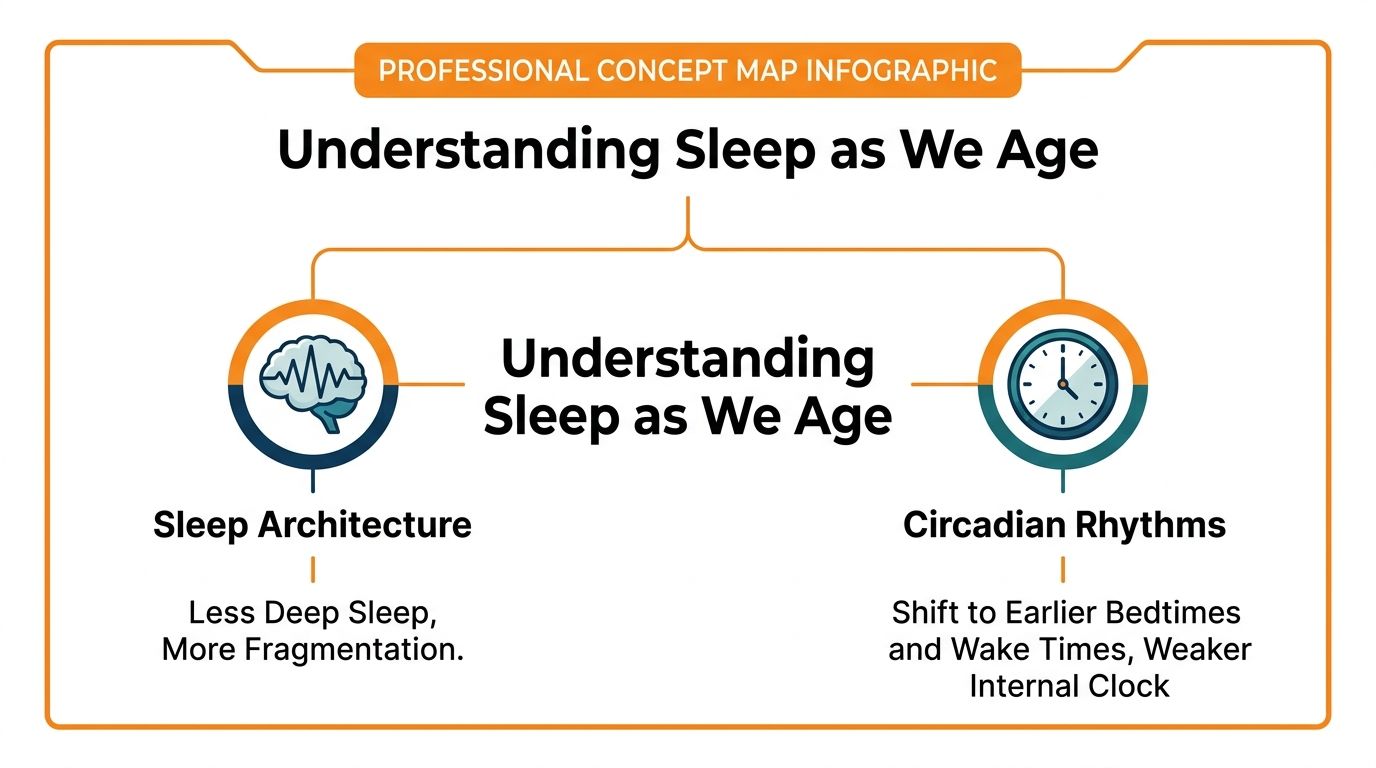
Two normal shifts explain a lot. One affects the way sleep is built across the night. The other affects timing.
Your sleep structure changes
Sleep works like a house with different rooms. Some rooms are light and easy to leave. Others are deeper and more restorative. In later life, people often spend less time in the deepest stages and more time in lighter sleep.
That change matters because lighter sleep is easier to interrupt. A full bladder, joint discomfort, noise in the hallway, room temperature, or stress can pull someone awake more easily than before. The result can be a night that feels broken into smaller pieces, even when total time in bed has not changed much.
A review on sleep and aging describes this pattern as a reduction in deep sleep along with a shift toward lighter, more fragmented sleep and an earlier body-clock schedule. In plain language, the brain still knows how to sleep. It just holds deep sleep less firmly than it did in younger years.
That is why “I sleep, but I do not feel as settled” is such a common description.
Your internal clock shifts earlier
The second change involves your circadian rhythm, which is the body's timing system for sleep and alertness. As people get older, that timing often moves earlier.
You might notice it in everyday ways:
- Feeling sleepy earlier in the evening
- Waking earlier in the morning
- Feeling as if your best sleep happens in the first part of the night
This pattern is often called an advanced sleep phase. The phrase sounds technical, but the idea is simple. The body starts sending its “nighttime” signals earlier than it used to.
Families sometimes misread this shift as stubbornness, poor sleep habits, or a sign that someone is “done sleeping” for the night. Often, the clock has moved. Trying to force a much later bedtime can backfire, because it may not match the body's new rhythm.
That is also why sleep changes in older adulthood should be viewed as something to work with, not a downhill slide to accept. Once you recognize whether the issue is lighter sleep, earlier timing, or both, you can start matching routines, light exposure, activity, and evening habits to the way the body now runs. Small adjustments can make sleep feel steadier again.
Common Sleep Challenges for Older Adults
A common scene in many families goes like this. An older parent says, “I was in bed for eight hours, so why do I still feel tired?” Another says, “My legs just would not settle,” or “I kept waking up and never got back into a good rhythm.” Those experiences can feel vague and frustrating, but they often fall into recognizable patterns.
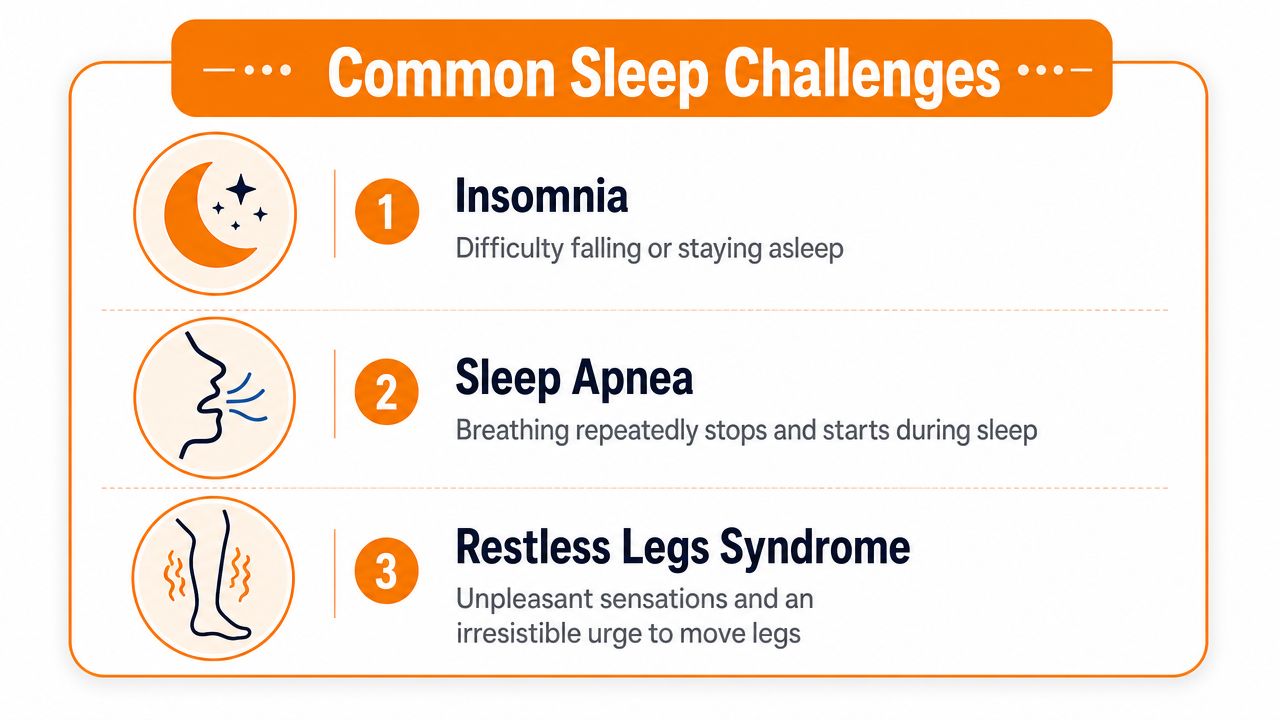
Knowing the pattern matters. A name does not solve the problem by itself, but it turns a fuzzy worry into something a person and family can notice, track, and talk about clearly. That shift can be reassuring, because many sleep problems are treatable or improvable.
When falling asleep or staying asleep feels like work
Insomnia is the term for trouble falling asleep, staying asleep, or waking too early and struggling to drift off again. In older adults, this can blur together with normal age-related sleep changes, which is why it is easy to feel unsure about what is happening.
One helpful way to sort it out is to focus less on one rough night and more on the pattern. If sleep feels hard to begin or easy to lose night after night, that is different from having lighter sleep than before. For families who want a clearer picture of what refreshing sleep feels like, this guide to restorative sleep and why it matters can add useful context.
When the night is broken up again and again
Sleep apnea happens when breathing repeatedly stops and starts during sleep. Families often notice the clues before the sleeper does. Loud snoring, pauses in breathing, choking or gasping, morning headaches, or strong daytime sleepiness can all point in that direction.
This kind of disruption is a little like trying to charge a phone with the cord slipping out all night. The phone is plugged in, but the battery never fills properly. A person may spend plenty of time in bed and still wake up feeling unrefreshed because sleep keeps getting interrupted.
When the body feels tired but the legs refuse to settle
Restless Legs Syndrome, or RLS, usually feels like an uncomfortable urge to move the legs, especially in the evening or during quiet rest. People describe it in different ways. Crawling. Tingling. Pulling. An inner restlessness that eases for a moment with movement, then returns.
That can be especially confusing for older adults who want sleep. The mind may be ready for bed, but the body keeps sending a “move now” signal. When families understand that pattern, they are less likely to mistake it for nervousness, stubbornness, or simple fidgeting.
Here is a plain-language summary:
| Main experience | Common term people may hear | Plain-language description |
|---|---|---|
| Trouble falling or staying asleep | Insomnia | Sleep is hard to start, hard to keep, or ends earlier than wanted |
| Repeated interrupted breathing during sleep | Sleep apnea | Breathing stops and starts, which repeatedly disturbs sleep |
| Strong urge to move the legs at night | Restless Legs Syndrome | Leg discomfort or restlessness makes it hard to settle and stay settled |
Some sleep changes come with aging. Some are problems with clear names and real solutions. Knowing the difference helps older adults and the people who care about them respond early, ask better questions, and work toward steadier, more refreshing nights.
The Link Between Good Sleep and Vibrant Aging
A good night of sleep often shows up in very practical ways the next day. An older adult gets through the morning with a clearer head. A conversation feels easier to follow. A favorite hobby feels inviting instead of tiring. A short walk, a trip to the kitchen, or time in the garden feels more manageable.

Sleep supports the life you want to keep living
Sleep works like the body's overnight repair shift. During rest, the brain sorts and stores information, the body recovers from the day, and energy systems reset for the next one. That is one reason sleep affects much more than bedtime.
For older adults, this matters because vibrant aging is built from many small abilities repeated day after day. Staying organized. Following a recipe. Remembering medication times. Feeling steady enough to enjoy visitors. Having enough patience for the normal bumps in family life.
Good sleep helps those daily pieces fit together more smoothly.
That also helps reframe a common fear. Changes in sleep with age do not automatically mean decline. In many cases, better rest is still a realistic goal, and improving sleep can support independence, mood, and confidence in very noticeable ways.
For a clearer picture of what refreshing sleep means, this guide to restorative sleep and why it matters explains it in everyday language.
Rest and independence are closely connected
Independence rarely depends on one big moment. It grows from ordinary tasks that feel doable. Getting dressed without feeling foggy. Keeping track of appointments. Enjoying movement instead of avoiding it because the body feels worn out.
Sleep plays a quiet but important role here. It can support:
- Clearer thinking: Better rest can make attention, memory, and decision-making feel steadier.
- More even mood: A rested brain often handles frustration with more patience.
- Better physical readiness: Sleep helps the body recover, which can make daytime activity feel safer and less draining.
- More social connection: People often have more energy for conversations, family time, and community activities after a better night.
Families sometimes assume tiredness, forgetfulness, or low motivation are considered part of getting older. Sometimes poor sleep is adding weight to all three. That is encouraging news, because sleep is something people can often improve with the right habits, support, and treatment when needed.
Vibrant aging is not about pretending the body never changes. It is about noticing which changes are normal, which problems can be solved, and which daily routines help an older adult stay active, engaged, and more fully themselves.
Creating a Positive Routine for Restful Nights
A good evening routine works like setting the house lights low before bedtime. It gives the brain and body a series of calm, familiar signals that say, "night is coming." For older adults, that rhythm can matter more than doing everything perfectly.
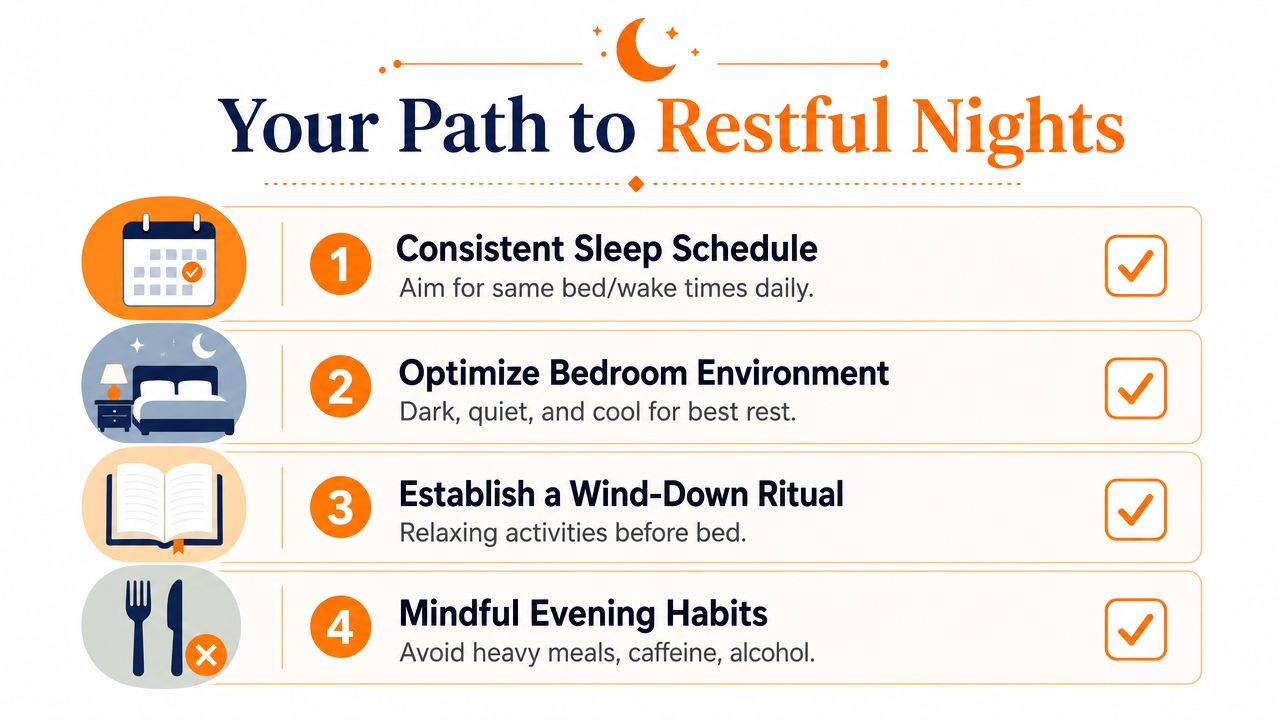
Small, repeatable habits usually work better than ambitious plans that last three days and disappear. A steady routine helps the body know when to feel alert and when to settle down.
Build a bedtime rhythm your body can recognize
Start with timing. Going to bed and waking up at about the same hours each day helps set the body's internal clock. Many older adults focus only on bedtime, but wake time often does more to steady the full sleep schedule.
The goal is a pattern your body can learn. If one night starts at 9:30 and the next at midnight, the brain gets mixed signals. A regular schedule is like giving it the same map every day.
A short wind-down routine can help make that map clearer. Keep it simple:
- Read something calming: A few pages is enough.
- Play soft music or quiet audio: Gentle sound can lower the sense of mental busyness.
- Try light stretching or slow breathing: This can ease the shift from daytime activity to rest.
- Dim the lights: Lower light helps the brain prepare for sleep.
Shape the bedroom for comfort
The bedroom does not need expensive upgrades. It needs to support sleep instead of competing with it.
Many families find it helpful to check a few basics:
| Part of the room | What to aim for |
|---|---|
| Light | Keep the room dark enough to feel restful |
| Sound | Reduce noise that pulls attention |
| Temperature | Keep the room cool and comfortable |
| Timing | Use the space for a regular sleep schedule |
If an older adult wakes easily, even small changes can help. Blackout curtains, a white noise machine, a bedside lamp with warm light, or easier-to-reach blankets can make the room feel calmer and safer. Comfort matters. So does predictability.
Keep evenings simple and steady
The last hour or two before bed often sets the tone for the night. A busy, bright, stimulating evening can keep the brain in daytime mode. A quieter evening gives it room to slow down.
It helps to treat bedtime like a gradual landing. Choose lighter activities, lower the lighting, and avoid habits that leave the body too full, too hungry, or too alert. Families who want to look more closely at food timing can read this guide on whether eating before bed affects sleep.
One point often causes confusion. More time in bed does not always mean better sleep. The American Association for Geriatric Psychiatry patient article explains that matching time in bed more closely to actual sleep can improve sleep continuity in older adults, and it describes sleep restriction therapy as one approach used for insomnia.
That idea can sound backward at first. If sleep feels broken, spending extra hours in bed seems like the obvious fix. But for some people, too much time in bed can train the brain to connect the bed with tossing, turning, and worrying. A better routine usually comes from a better fit between sleep need, daily timing, and evening habits.
That is encouraging. Sleep changes with age are real, but many nightly struggles respond to practical adjustments. Consistent routines, a sleep-friendly room, and a calmer evening can help older adults rest better and feel more like themselves during the day.
When to Chat with a Healthcare Professional
A common scene plays out at many kitchen tables. An older adult says, "I guess this is just aging," after another rough night, and the family lets the topic drop. That quiet assumption can delay help for a problem that may be treatable.
Some sleep changes are common with age. Ongoing struggle is still worth discussing.
A good rule is simple. If sleep is starting to affect mood, energy, memory, balance, or daily routines, bring it up at a medical visit. A short conversation can help sort out what looks like a normal shift in timing from what may be insomnia, sleep apnea, restless legs, medication side effects, pain, or another health issue.
That distinction matters because sleep works like a nightly repair shift for the body and brain. If that repair time keeps getting interrupted, the effects often show up during the day long before anyone has a name for the problem.
Signs that deserve a conversation
It helps to mention sleep concerns when patterns like these keep showing up:
- Sleep stays poor for weeks: A steady routine has not helped enough.
- Daytime fatigue is hard to ignore: Napping, low energy, or dozing off starts to interfere with normal activities.
- Snoring is loud or breathing seems unusual at night: A bed partner notices pauses, gasping, or choking sounds.
- Leg discomfort or an urge to move appears at bedtime: The body feels restless just when it should be settling down.
- Morning headaches, irritability, or trouble concentrating become more common: Poor sleep may be spilling into the day.
- Sleep changes begin after a new medication or health problem: Timing like that is useful to mention.
Families can help here. A spouse, adult child, or caregiver may notice patterns the sleeper does not, especially snoring, confusion after a poor night, or a change in daytime alertness.
What to bring to the appointment
You do not need a perfect sleep diary. A few notes are enough. Write down usual bedtime, wake time, naps, how often waking happens, and anything unusual such as breathing noises, vivid dreams, or leg discomfort.
If your family already uses connected health tools that help track daily routines at home, those observations can make the conversation even clearer. The goal is not to turn sleep into a science project. It is to give the clinician a more complete picture.
Bringing up sleep is a practical step toward staying active, steady, and independent. Many age-related sleep concerns can improve once the cause is identified.
How Technology Supports Sleep and Independence
Modern wellness tools can make sleep patterns easier to notice without turning the home into a clinic. That's part of what makes technology appealing for people who value privacy, simplicity, and aging in place.

Simple tracking can make patterns easier to see
Sleep can be hard to describe from memory. Nights blur together. One rough night can feel like a month, and one good night can make it easy to forget a pattern that's been building.
That's where simple tracking can help. Tools that note nighttime activity, sleep timing, and routine changes can turn vague impressions into something easier to understand. Instead of saying, “I feel like I was up a lot,” a person or family member may be able to spot a steadier pattern over time.
Connected wellness systems can also support family awareness without requiring constant check-ins. For readers interested in that broader approach, this overview of connected health solutions for independent living gives a helpful look at how digital tools fit into daily support.
Support feels better when it stays unobtrusive
The best technology for older adults usually doesn't demand a lot of attention. It blends into everyday life. It supports routines rather than interrupting them.
That can matter at night. A discreet system may help loved ones feel informed while still respecting the older adult's sense of space and autonomy. It can also encourage calm conversations based on observations instead of guesses.
For many families, the true value isn't “more data.” It's peace of mind. Better visibility into routines can support confidence, connection, and the ability to keep living independently in familiar surroundings.
Rx360 brings together Health Insights, Smart Technology, and Connected Care to help older adults stay independent while keeping loved ones in the loop. If you want a simpler way to support healthy routines, notice wellness patterns, and maintain peace of mind at home, Rx360 is built to make aging in place feel more connected and more confident.
Lower-Risk Medication Plan Checklist
Below is a practical checklist and step plan you can implement into your daily life:
-
List all medications
Include prescriptions, over-the-counter drugs, supplements, sleep aids, creams, patches, eye drops, and inhalers.
-
Mark fall-risk drugs
Flag medicines that cause dizziness, sleepiness, confusion, blurred vision, low blood pressure, or low blood sugar.
-
Ask for a medication review
Bring the list to a pharmacist or prescriber.
-
Review after any warning sign
Request a new medication check after a fall, near-fall, new prescription, dose change, dizziness, or confusion.