
You open the refrigerator at 9:30 p.m. because you feel a little hungry. Maybe dinner was early. Maybe you took an evening medicine that upsets your stomach if you don't eat. Maybe you're not even sure if it's hunger, habit, or boredom. What you want is simple. A comfortable night and steady sleep.
Then the mixed messages start. One person says never eat before bed. Another swears by warm milk and crackers. A family member worries that a snack will keep you up. You may be wondering the same thing many people ask: does eating before bed affect sleep, or is that advice too simplistic?
The honest answer is that it can, but not in the same way for everyone. What you eat, how much you eat, when you eat, and your health conditions all matter. For older adults, that question also ties into reflux, nighttime bathroom trips, blood sugar changes, and medication schedules. A bedtime snack can be a problem in one situation and a helpful solution in another.
What helps most is understanding a few clear principles. Once you know how digestion and sleep interact, it becomes easier to choose between a full meal, a light snack, or just a cup of water and an earlier bedtime routine. That kind of knowledge gives you options, not rules.
Table of Contents
- The Late-Night Snack Dilemma
- How Your Body Juggles Digestion and Sleep
- Timing Is Everything How Late Is Too Late
- Special Sleep Risks for Older Adults
- Smart Snacks Versus Sleep Saboteurs
- Building a Healthy Evening Routine
- A Caregivers Guide to Supporting Sleep
The Late-Night Snack Dilemma
A very common bedtime scene looks like this. You finish watching television, tidy the kitchen, and suddenly feel the urge to eat something small. A bowl of cereal sounds easy. Toast sounds comforting. Leftover pasta sounds tempting. At that moment, the choice doesn't feel medical. It feels practical.
For many older adults, the decision is even more layered. Some people eat early and are hungry again by bedtime. Some take medicines in the evening and need food in their stomach. Some have diabetes or prediabetes and worry about overnight blood sugar swings. Others have reflux and already know that the wrong snack can mean burning in the chest once they lie down.
That's why broad advice like “never eat at night” often misses the point. The actual question isn't just whether you eat before bed. It's whether that food helps your body settle or gives it one more job to do.
Late-night eating isn't one single habit. A large takeout meal, a handful of nuts, and a few crackers with medication are very different situations.
People also get confused because sleep problems don't always show up right away. You might fall asleep normally, then wake up at 1 a.m. feeling hot, uncomfortable, or restless. You may blame stress or aging when your evening eating pattern is a subtle factor.
A calmer way to approach this is to think in three steps:
- Start with hunger: Are you hungry, or just following a routine?
- Look at the portion: A light snack and a full meal affect the body differently.
- Match the choice to your health: Reflux, diabetes, nighttime urination, and medication instructions all change what makes sense.
When you look at it that way, the question becomes much easier to answer. Some evening eating habits work against sleep. Others can support comfort and stability. The difference is usually in timing, portion size, and food type.
How Your Body Juggles Digestion and Sleep
Two important jobs at the same time
At night, your body is trying to switch from daytime work into nighttime repair. If you eat close to bed, it also has to keep the digestive system active. Those two jobs can pull in different directions.
Sleep tends to begin best when the body is settling down. Heart rate slows. Core temperature moves lower. Muscles relax, and the brain starts cycling into the stages of sleep that help with memory, healing, and energy for the next day. Digestion asks for the opposite kind of attention. The stomach churns, the intestines keep moving, and blood flow shifts to help process the meal.
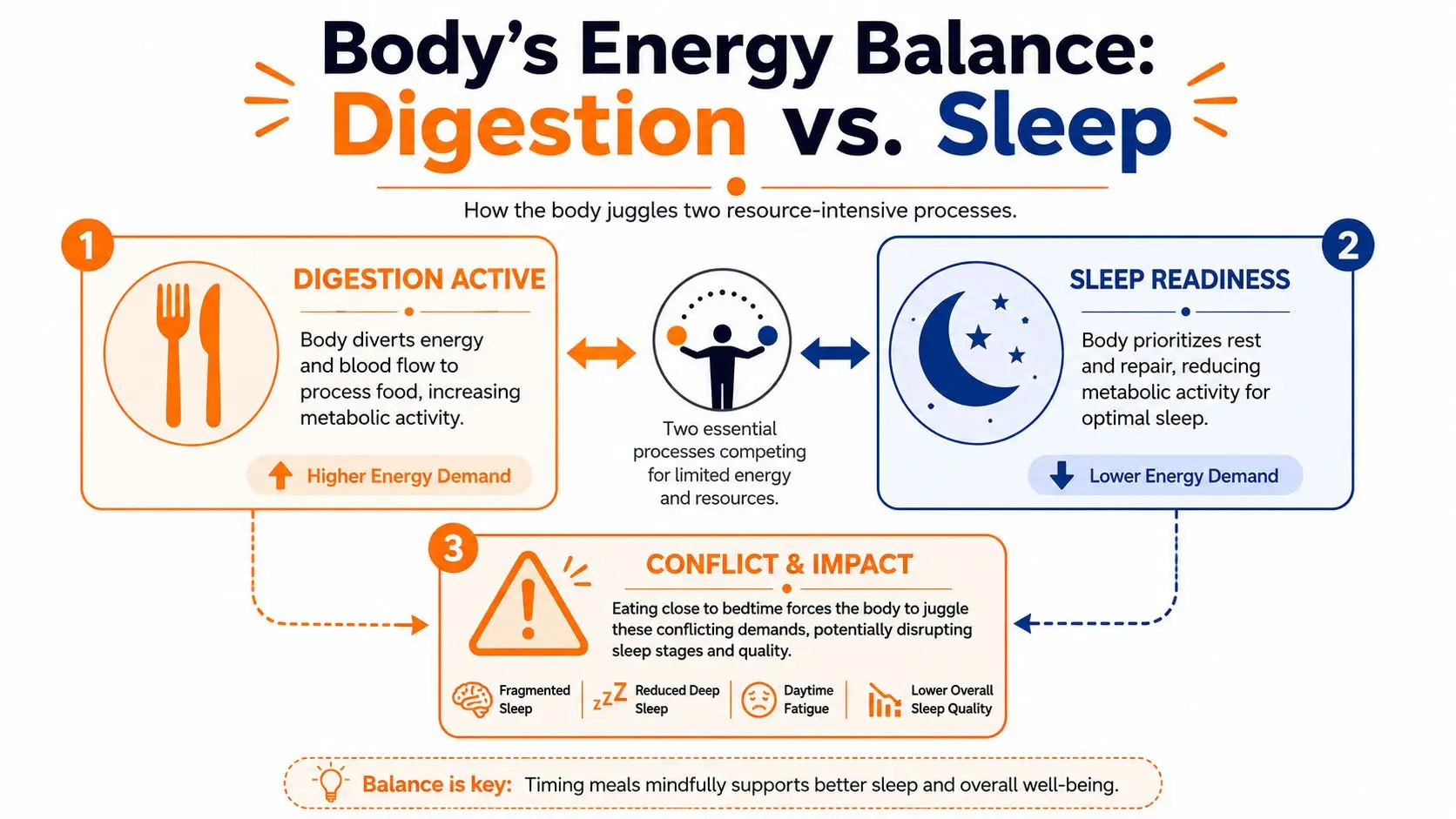
A simple comparison may help. Sleep is more like dimming the lights and locking up the house for the night. Digestion is more like keeping the kitchen open for cleanup after dinner. Your body can do both, but a big late meal means more lights stay on.
Why late eating can make sleep feel lighter
Three body changes help explain why sleep can feel lighter after eating late.
- Body temperature can stay higher: Digesting food takes work, and that work creates heat. Since sleep starts more easily when the body cools, feeling warm after a late meal can get in the way.
- Heart rate can stay a bit higher: The digestive tract needs blood flow and activity. That can leave some people feeling less settled in bed.
- Lying down can make discomfort more noticeable: If food is still sitting heavily in the stomach, you may notice fullness, pressure, or reflux once you are flat.
This is one reason an older adult may say, “I was tired, but my body never quite settled.” That feeling is real. It does not always mean insomnia. Sometimes it means the body is still busy with a task that would have been easier to finish earlier.
For older adults, this can matter more than many people realize. Aging changes digestion, stomach emptying may be slower, and medicines taken in the evening can add another layer. A person with reflux may feel burning in the chest. A person with diabetes may be trying to avoid an overnight low blood sugar while also avoiding a heavy snack that leads to discomfort. Someone with heart failure or kidney disease may already be dealing with fluid limits, nighttime bathroom trips, or salt sensitivity. In those situations, the goal is not to fear food. The goal is to match evening eating to the person's health needs.
Portion size matters here. A small, easy-to-digest snack often places far less demand on the body than a second dinner, rich dessert, or greasy takeout meal.
Practical rule: If you feel stuffed, warm, burpy, or restless after eating, your body may need more time before sleep.
Caregivers can watch for patterns that are easy to miss in the moment. If a parent sleeps lightly after late restaurant meals, coughs more when lying down, or seems more confused after a poor night of sleep, the evening meal may be part of the picture. A simple sleep and food log for a few days can make that connection easier to see.
The reassuring part is that this is often adjustable. Small changes in meal size, food choice, or evening routine can reduce the conflict between digestion and sleep and make nights more comfortable.
Timing Is Everything How Late Is Too Late
The clearest window to aim for
A common bedtime scene looks like this. Dinner ran late, the dishes are done, someone has a small dessert at 9:00, and bed is at 10:00. Nothing feels dramatic in that moment. Then the night turns choppy.
For many older adults, a helpful rule is simple. Finish your last full meal about 2 to 3 hours before lying down. That gives the stomach time to do the heavier work of digestion before the body shifts into sleep mode.
A smaller snack is different from a full meal. If hunger shows up later in the evening, a light snack often sits more comfortably than a large plate of food eaten close to bedtime. The question is less "Did I eat?" and more "How much work did I give my body right before sleep?"
The shortest window appears to be the most troublesome. A peer-reviewed study summarized by the American Journal of Managed Care found that eating or drinking within 1 hour of bedtime was linked to more fragmented sleep, according to the AJMC summary of the bedtime eating study.
Why the middle-of-the-night effect matters
Late eating does not always stop a person from falling asleep. It often shows up later, after the house is quiet and the body is supposed to stay settled.
One way to picture it is a dishwasher started right before bedtime. You may still get into bed on time, but there is extra activity running in the background. Digestion can work like that. The body may manage both jobs for a while, yet the sleep itself can become lighter or more interrupted.
That pattern showed up in a population study hosted by PMC. People who ate within 3 hours of bedtime were more likely to report nocturnal awakening, while meal timing was not clearly linked with taking longer to fall asleep or with total sleep duration, according to the PMC study on meal timing and nocturnal awakening.
This helps explain a common point of confusion. Someone may say, "I fall asleep fine, so food cannot be the problem." But sleep quality is not only about sleep onset. It is also about whether sleep stays steady enough to feel restorative by morning.
A practical way to decide what is too late
If you want an easy guide, use these time zones:
- Within 1 hour of bed: highest chance of trouble, especially with a full meal or drinks that trigger reflux or bathroom trips
- Within 2 to 3 hours of bed: often manageable for a light snack, but a heavy meal may still disturb sleep
- More than 3 hours before bed: usually the easiest timing for a full dinner
These are not hard rules for every person. They are a starting point.
Older adults and caregivers often need to adjust that starting point based on real life. A person taking evening insulin or certain diabetes medicines may need a planned snack to prevent overnight lows. Someone with reflux may need a longer gap between dinner and bed. A person who gets weak, shaky, or nauseated when going too long without food should not force a long fasting window just to follow generic sleep advice.
The safest approach is to watch the pattern for several nights. If sleep is worse after food eaten in the last hour, that is useful information. If a small snack at 8:00 helps blood sugar stability and sleep stays solid, that is useful too. The goal is not perfection. The goal is a routine that supports sleep, safety, and comfort.
Special Sleep Risks for Older Adults

Older adults don't just ask whether food affects sleep. They often ask whether their reflux, their medications, or their bathroom trips at night are being made worse by evening eating. That's a smart question. Age changes digestion, sleep patterns, and the number of health issues that have to be managed at once.
A late meal can be inconvenient for anyone. For an older adult with chronic conditions, it can create a chain reaction. One snack leads to heartburn. Heartburn leads to sitting up in bed. Then comes a trip to the bathroom, followed by difficulty settling back down.
Reflux and lying flat
Reflux becomes more likely when you lie down with a full stomach. Food and stomach acid can move upward more easily, especially after large, fatty, spicy, or acidic meals. Even a food that seemed harmless at dinner can feel different once you're flat in bed.
Signs that evening eating may be contributing include burning in the chest, sour taste, throat irritation, cough after lying down, or needing extra pillows to sleep comfortably. People sometimes think they have “bad sleep” when the actual issue is nighttime reflux.
A few practical changes help:
- Keep dinner modest: A smaller evening meal is often easier than a large late supper.
- Watch common triggers: Tomato sauces, fried foods, spicy meals, chocolate, and peppermint bother some people.
- Stay upright after eating: Give your stomach some time before lying down.
Nocturia blood sugar and medications
Another issue is nocturia, or waking to urinate during the night. Late fluids can contribute, including not just water but tea, soup, smoothies, or juicy fruit. If you already wake easily, one bathroom trip can break the night into pieces.
Blood sugar can add another layer. Some people feel shaky or hungry overnight if dinner was too light or too early. Others sleep worse after sweets or a large carbohydrate-heavy snack. The goal isn't perfection. It's steadiness. A small, balanced snack may be useful for some people, while a sugary dessert may leave them less comfortable.
Medication timing matters too. Some medicines need food. Others may upset the stomach if taken alone. Some increase urination, which can make late-evening fluid intake more troublesome.
If a medication says to take it with food, ask your doctor or pharmacist what counts as enough food. You may not need a full meal.
This is a good point for a family conversation or a medication review. Many older adults have developed bedtime eating habits for practical reasons, not because they want a treat. If the habit is tied to medicine, blood sugar concerns, or stomach comfort, the answer should be individualized.
A short video can help reinforce the sleep-health basics behind these patterns.
Bring up persistent reflux, repeated nighttime waking, or suspected medication side effects with a clinician. Those symptoms deserve attention, especially if they've become part of your nightly routine.
Smart Snacks Versus Sleep Saboteurs
When a small snack may help
A more balanced perspective emerges. Not all food before bed is a mistake. The Sleep Foundation review of eating before bed notes that while large meals close to bedtime can worsen reflux and sleep quality, a light snack may help some people fall asleep faster or stay asleep longer, especially if hunger or low blood sugar is behind their wakefulness. The same review notes that a 2022 study linked eating within 1 hour of bed to both more long sleep duration and more nocturnal awakenings, which shows the relationship is more complex than “late eating is always bad.”
That nuance matters, especially for older adults. If you're lying in bed with a growling stomach, a small snack may reduce discomfort and help you settle. The key word is small. The goal is to quiet hunger, not to serve your digestive system a second dinner.
A light bedtime snack is sometimes a comfort tool. A heavy bedtime meal is usually a sleep burden.
Sleep-Friendly Snacks vs Sleep-Disrupting Foods
| Choose These (Sleep-Friendly) | Limit These (Sleep-Disrupting) |
|---|---|
| A small bowl of oatmeal | Fried leftovers |
| Plain yogurt with a little fruit | Spicy takeout |
| Whole grain toast with a thin layer of nut butter | Large slices of pizza |
| A few whole grain crackers with a small portion of cheese or turkey | Ice cream in a large portion |
| A banana or a small handful of nuts | Sugary cereal in a big bowl |
| Applesauce or a simple piece of toast if you need food with medicine | Rich desserts and heavy pastries |
Why do these choices work better?
- Lighter portions digest more easily: Smaller snacks are less likely to leave you feeling full or uncomfortable.
- Simple foods are often gentler: Bland, familiar foods usually cause fewer problems than greasy or spicy meals.
- Balanced snacks may feel steadier: Pairing a carbohydrate with a little protein or fat can be more comfortable than eating sweets alone.
If you want a quick test, ask yourself two questions before eating. “Will this calm hunger?” and “Will this sit lightly?” If the answer to both is yes, it may be a reasonable bedtime option.
Building a Healthy Evening Routine
A simple routine you can repeat
Good sleep usually comes from a sequence of small choices, not one perfect food. The most reliable evening routine is predictable, gentle, and easy to maintain.
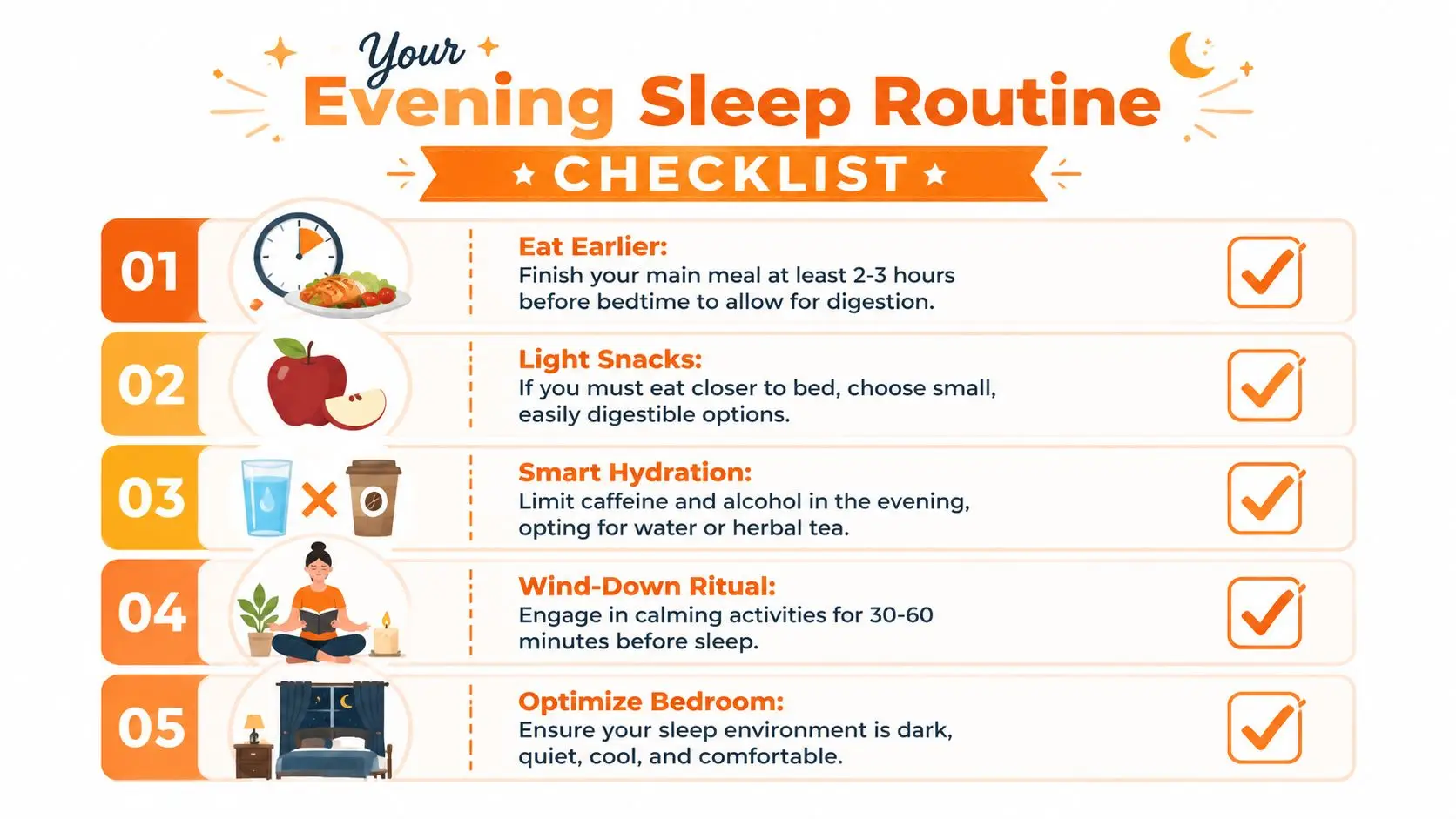
Here's a routine that works well for many older adults:
- Eat dinner earlier when possible. If your bedtime is fairly regular, try to keep your main meal comfortably ahead of it.
- Decide on snacks on purpose. Don't wait until you're overtired and standing in the kitchen looking for anything quick.
- Shift most fluids earlier in the day. That can help lower the chance of repeated bathroom trips at night.
- Use a wind-down ritual. Reading, quiet music, light stretching, or a warm shower can help the body transition better than television snacking.
- Keep the bedroom sleep-friendly. A cool, quiet, dark room makes it easier to get back to sleep if you do wake.
What to do if hunger keeps showing up
If you're hungry most nights, that's useful information. It may mean dinner is too early, too small, or not balanced enough for your needs. Instead of fighting hunger every evening, adjust the plan.
A practical approach is to choose one of these patterns:
- Earlier balanced dinner: Helpful if you tend to eat lightly and then get hungry late.
- Planned mini-snack: Helpful if you know hunger appears at the same time each night.
- Medication snack only: Helpful if evening food is needed mainly to protect your stomach with medicine.
Consistency helps. When your body can expect dinner, a light snack if needed, and a calm bedtime routine, sleep often becomes less erratic.
Try the same routine for several nights before judging it. Sleep responds better to patterns than to one-night experiments. If a certain food repeatedly leaves you restless, believe your own body. Personal patterns matter.
A Caregivers Guide to Supporting Sleep
Support without taking over
Family members often notice the pattern before the older adult does. “You seem to wake up more on nights you eat late.” “Tomato sauce seems to bother you.” That kind observation can be helpful if it stays respectful.

The best support usually looks collaborative, not controlling.
- Plan together: Ask what time hunger usually starts and keep a few light snack options ready.
- Notice patterns gently: Mention what you observe without criticism.
- Match food to real needs: If medicine requires food at night, help identify the smallest snack that works comfortably.
- Bring concerns to appointments: Reflux, repeated waking, or medication confusion are worth discussing with a clinician.
Try using plain language. “Would it help if we moved dinner a little earlier?” works better than “You shouldn't eat so late.” Older adults deserve support that protects independence while making healthy choices easier.
If you're caring for someone with memory changes, keep bedtime eating simple and familiar. Too many options can be overwhelming. A regular routine, a regular snack if needed, and a regular place for medications can reduce friction at night.
Sleep support isn't about enforcing rules. It's about making the evening feel safe, calm, and predictable.
Rx360 helps older adults stay independent while keeping families and care teams connected through a simple, supportive wellness experience. If you want a better way to keep an eye on daily routines, spot changes early, and support aging in place with confidence, explore Rx360's connected wellness platform.
Lower-Risk Medication Plan Checklist
Below is a practical checklist and step plan you can implement into your daily life:
-
List all medications
Include prescriptions, over-the-counter drugs, supplements, sleep aids, creams, patches, eye drops, and inhalers.
-
Mark fall-risk drugs
Flag medicines that cause dizziness, sleepiness, confusion, blurred vision, low blood pressure, or low blood sugar.
-
Ask for a medication review
Bring the list to a pharmacist or prescriber.
-
Review after any warning sign
Request a new medication check after a fall, near-fall, new prescription, dose change, dizziness, or confusion.