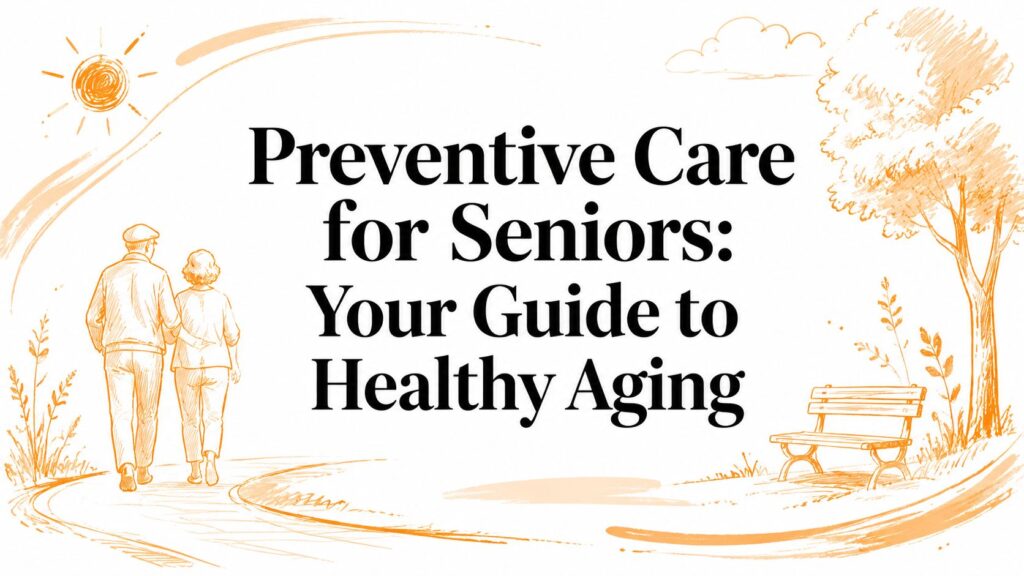
Only 7.2% of adults aged 35 and older received all recommended high-priority clinical preventive services in 2022, and public health officials estimate that 100,000 lives could be saved each year if everyone in the U.S. received recommended clinical preventive care, according to Healthy People 2030. That number changes how we should think about aging.
Preventive care for seniors isn't just a list of screenings. It's a practical plan for protecting strength, mobility, judgment, and confidence. Families often think of healthcare as something to use after a fall, after a hospitalization, or after memory problems become obvious. In geriatrics, we try to work earlier than that.
The goal is simple. Help an older adult stay safe at home, keep doing familiar routines, and avoid preventable setbacks that can erode independence. That takes more than a doctor visit. It takes coordination between the older adult, family members, clinicians, and the tools that help everyone stay informed.
Table of Contents
- Why Preventive Care Is Your Key to Independence
- The Five Pillars of Senior Preventive Health
- Your Personalized Screening and Vaccination Schedule
- Building a Safe Harbor at Home
- Coordinating Care with Family and Technology
- Embracing a Future of Proactive Health
Why Preventive Care Is Your Key to Independence

Many older adults lose independence gradually, not all at once. A missed hearing change leads to confusion during appointments. Dizziness after a medication adjustment leads to a fall risk. A skipped vaccine leads to an infection that takes weeks to recover from. Preventive care works earlier in that chain, while the problem is still small and easier to handle.
For families, it helps to picture preventive care as regular maintenance on the abilities that make daily life possible. We are protecting the routines that matter: getting dressed safely, preparing meals, managing medications, walking with confidence, keeping up with friends, and staying involved in meaningful activities. Social connection belongs in that picture too, because mood, memory, and motivation often hold up better when an older adult maintains an active social life and regular community connection.
Independence is built before a crisis
While many people associate prevention with adding years, its immediate value in geriatrics is often more practical. It helps preserve function. In clinic, that means asking whether a person can rise from a chair, hear instructions clearly, remember a medication schedule, recover after a minor illness, and move through the home without fear.
Those questions often matter more than a lab result viewed by itself.
A good preventive plan also depends on coordination. The older adult notices what feels different. Family members may spot subtle changes in walking, appetite, memory, or confidence. Clinicians connect those clues to medical causes. Technology can fill the gaps by helping track blood pressure, medication schedules, appointment dates, and symptoms between visits. When those pieces work together, small changes are less likely to become emergencies.
Prevention is a plan, not a pile of appointments
Reactive care starts after a setback. Proactive care looks for early warning signs and responds calmly. That could mean a vision check before driving becomes unsafe, a medication review after new fatigue appears, or a balance assessment before an unsteady gait turns into a fall.
Families often worry that prevention means saying yes to every test forever. Good geriatric care is more thoughtful than that. Some screenings remain useful because they can prevent disability or guide treatment in a meaningful way. Others may become less helpful when the burden of testing outweighs the likely benefit, especially for someone with serious illness, advanced frailty, or limited life expectancy. In those moments, the goal is still prevention. The focus shifts toward comfort, function, and avoiding interventions that add stress without improving daily life.
This topic matters because independence rarely disappears in one dramatic moment. More often, it erodes through a series of missed opportunities to notice, communicate, and act early. Preventive care helps families and clinicians protect quality of life with a shared plan, clear priorities, and support that fits the person, not just the chart.
The Five Pillars of Senior Preventive Health
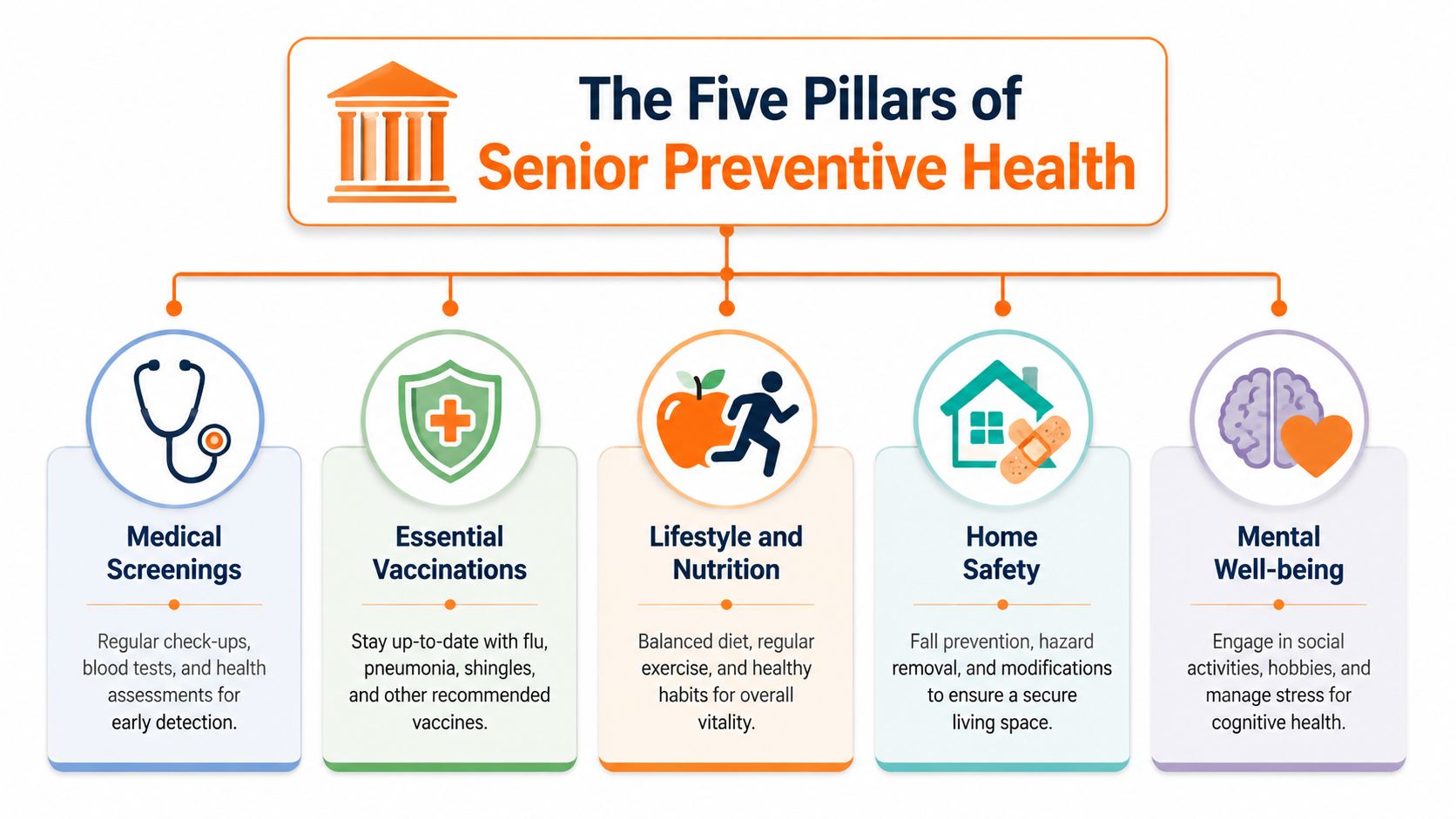
Think of senior health like a house. A strong roof won't help much if the foundation is unstable. In the same way, one annual checkup isn't enough if mobility, nutrition, mood, or home safety are neglected.
Five pillars support healthy aging. When one weakens, the others feel it.
Pillar one through three
Medical screenings help identify disease early and track ongoing conditions before symptoms become disabling. For older adults, these visits also create a chance to ask about fatigue, dizziness, bowel changes, sleep, pain, and medication side effects. The best screening visit is not rushed. It connects test results to real life.
Essential vaccinations protect older adults from illnesses that can cause a sharp decline in strength and independence. A routine infection in a younger adult can mean confusion, weakness, or hospitalization in an older one. Staying current with recommended vaccines is part of preserving daily function, not just avoiding illness.
Lifestyle and nutrition often sound less urgent than tests, but they shape resilience. A body that gets regular movement, adequate nutrition, and steady routines usually handles stress better. Even modest exercise can support balance, stamina, and confidence. Social engagement matters here too. Isolation often affects eating, sleep, motivation, and overall health. Families looking for ways to support this area may find ideas in this guide to an active social life for older adults.
Pillar four and five
Home safety and fall prevention deserve the same seriousness as blood pressure or diabetes checks. Falls are not random events. They often follow a combination of poor lighting, clutter, weak leg muscles, vision problems, medication effects, and unnoticed difficulty with daily tasks. One overlooked issue in preventive care is functional impairment screening. Data cited by Go365's senior preventive care article notes that 50% of seniors aged 65+ with an undiagnosed functional impairment will experience a fall within two years, yet only 12% of annual wellness visits include these assessments. That means many people are being checked medically without being checked practically.
Mental and cognitive well-being is the fifth pillar. This is about more than memory testing. Cognitive and emotional health affect medication management, financial safety, driving decisions, meal preparation, and communication with family. If someone seems more withdrawn, more suspicious, less organized, or less interested in familiar routines, that deserves attention.
A simple way to remember the five pillars is to ask whether the care plan is covering these areas:
| Pillar | What to look for |
|---|---|
| Medical screenings | Regular review of health conditions, symptoms, and medications |
| Essential vaccinations | Up-to-date protection against common infections |
| Lifestyle and nutrition | Strength, stamina, appetite, hydration, and routine activity |
| Home safety | Fall risks, hazard removal, and ease of moving around the home |
| Mental well-being | Memory, mood, judgment, and social connection |
A senior can have normal test results and still be at risk if walking, bathing, hearing, or medication management are getting harder.
Families often ask which pillar matters most. The honest answer is the one that's slipping right now. If a parent is missing meals, nutrition may be the urgent issue. If they seem unsteady in the bathroom, home safety comes first. If appointments are being forgotten, cognitive screening may matter more than another lab draw.
Your Personalized Screening and Vaccination Schedule
Good preventive care for seniors is personal. Two people of the same age may need very different plans depending on mobility, chronic illness, energy, memory, and goals. Age matters, but function matters more.
A useful schedule doesn't just answer "What is recommended?" It also answers "What still makes sense for this person?" That second question is where many families get stuck.
What belongs on the schedule
For most older adults, the schedule should include routine primary care follow-up, review of chronic conditions, medication checks, recommended vaccines, and age-appropriate screening discussions. Some care needs to happen on a calendar. Other care should be triggered by changes, such as new fatigue, worsening balance, confusion, appetite loss, or trouble managing daily tasks.
Here is a practical planning table you can bring to a visit.
| Service | Frequency | Target Group / Notes |
|---|---|---|
| Primary care wellness visit | Regularly, based on clinician guidance | Use the visit to review medications, symptoms, mobility, memory concerns, and daily function |
| Blood pressure and chronic disease monitoring | As advised by the care team | Important for older adults managing ongoing conditions or medication changes |
| Cancer screening discussion | Individualized | Ask whether screening still fits the person's health status and goals |
| Diabetes and cardiovascular screening | Individualized | Especially relevant when risk factors or chronic conditions are present |
| Bone health review | Individualized | Discuss fracture risk, falls, posture changes, and mobility decline |
| Vision and hearing review | When concerns arise and during routine care planning | Changes here often affect safety, communication, and confidence |
| Functional assessment | Include in wellness discussions | Ask about walking, bathing, dressing, toileting, cooking, and medication management |
| Annual influenza vaccination | Yearly | Older adults may be advised to receive a high-dose flu vaccine |
| Pneumococcal vaccination | Based on clinician guidance | Review status and timing with a clinician |
| Shingles vaccination | Based on clinician guidance | Ask whether it is due or already completed |
This kind of table helps families move from vague concern to specific questions. Instead of saying, "I think Mom might need some tests," you can ask, "Can we review her vaccines, her fall risk, and whether her current screening plan still fits her health?"
When stopping a test can be good care
This is one of the hardest conversations in senior medicine. Families worry that stopping a screening means giving up. It doesn't.
Sometimes the most thoughtful decision is to stop a test that is unlikely to help and may create stress, follow-up procedures, or burdensome treatment. According to UCHealth's discussion of preventive care after 65, cancer screenings should cease when a patient's life expectancy falls below 10 years. That guidance is not about withholding care. It's about choosing care that supports comfort, function, and quality of life.
Good preventive care includes knowing when a test is useful and when it may no longer serve the person in front of you.
A family can ask:
- Will this screening change treatment decisions
- Is the person healthy enough to benefit from early detection
- Could this test lead to procedures that reduce comfort or independence
- What matters more right now, more testing or simpler care
For a healthy older adult, ongoing screening may still fit. For a frail adult with advancing illness, the better plan may focus on symptom relief, fall prevention, vaccines, medication simplification, and support at home.
That is still preventive care. It just prevents different harms.
Building a Safe Harbor at Home
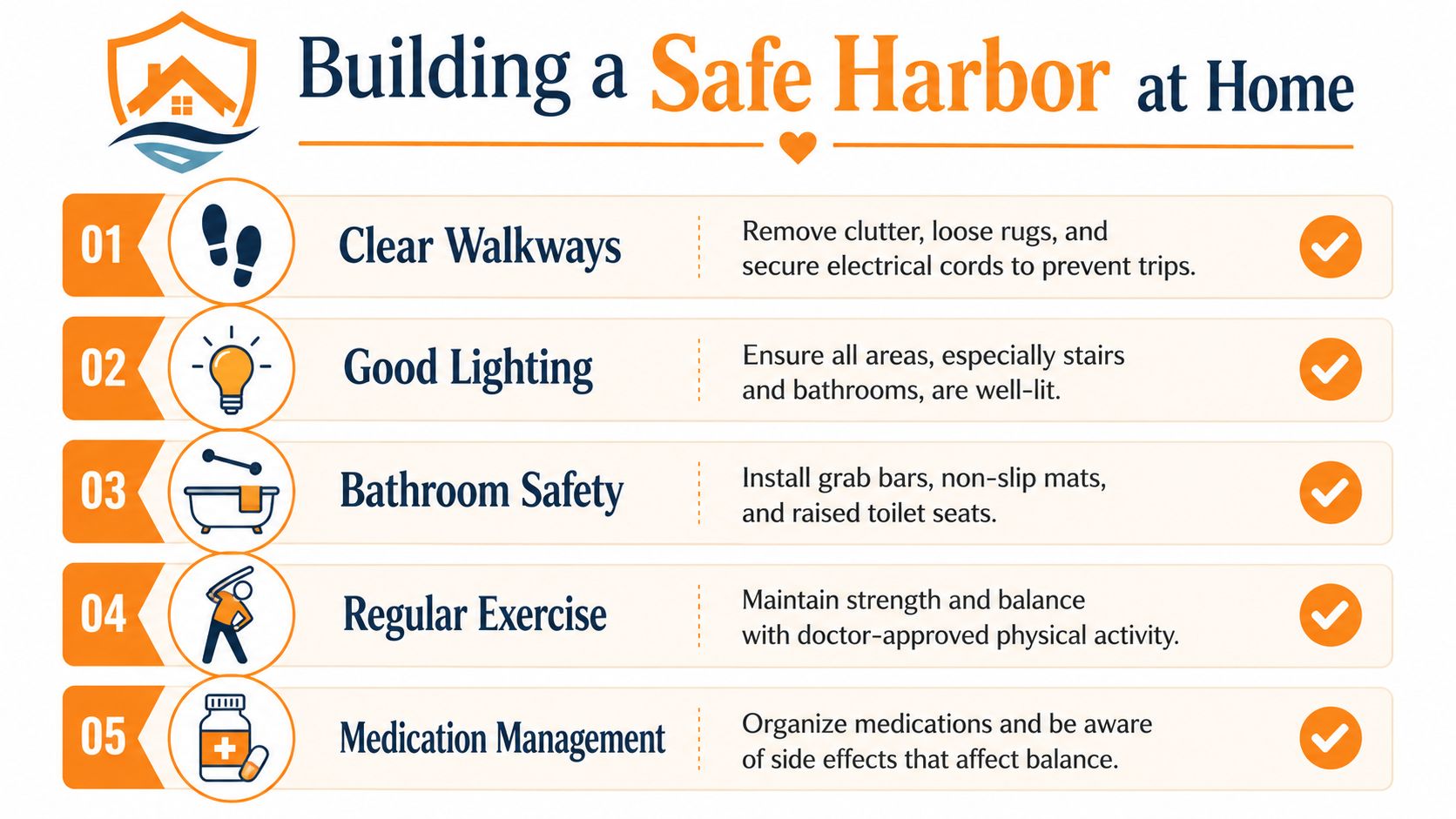
A clinic can identify risk. A home reveals how that risk plays out.
The bathroom with no grab bars, the dim hallway, the loose rug near the bed, the pills stored in three different places. These are not minor details. They are part of preventive medicine for older adults.
The home as a preventive care setting
Falls are a major reason older adults lose confidence after an otherwise manageable health change. The concern isn't only injury. It's what often follows: fear of walking, reduced activity, weakness, and greater dependence. According to Tufts Medicare Preferred's preventive care guidance, falls are the primary cause of emergency room visits for adults over 45, and simple home modifications such as improving lighting and removing clutter can reduce fall incidence by 20% to 30% in frail seniors.
That makes the home one of the most important places to intervene early.
A practical safety review should include:
- Walkways: Remove loose rugs, cords, footstools, and stacks of papers from regular walking paths.
- Lighting: Improve visibility in hallways, bathrooms, stairways, and near the bed.
- Bathroom setup: Add non-slip mats and grab bars where stepping, turning, or standing is difficult.
- Seating and bed height: Make sure the person can sit and stand without struggling.
- Medication storage: Keep medicines organized and easy to review.
Families who want a structured way to think through hazards can use these fall risk assessment tools for older adults.
Daily habits that protect mobility
Preventive care at home also means protecting strength. Many adults become less active after illness, pain, or fear of falling. Then they lose leg strength, tire more quickly, and become even less steady. That cycle is common, but it can be interrupted.
Movement should be simple and repeatable. Walking indoors, standing from a chair with control, gentle strength work, and clinician-approved balance exercises can help preserve function. The aim isn't athletic performance. The aim is steadiness in ordinary life.
Food matters here too. If someone is skipping meals, eating mostly convenience snacks, or drinking too little, weakness can show up quickly. Families should pay attention to patterns like unopened groceries, clothes fitting more loosely, or a refrigerator with very little usable food. Those clues often appear before a major decline.
Home check: If a person avoids stairs, hesitates before standing, or starts holding onto furniture, treat that as important clinical information.
The safest plan is usually the simplest one. Clear the path. Improve the light. Support regular meals. Encourage activity that fits the person's current ability. Review medication side effects if balance seems worse. Small changes done consistently often do more than elaborate plans that no one can maintain.
Coordinating Care with Family and Technology

Senior wellness works best when someone notices change early, someone documents it clearly, and a clinician can act on that information. Without coordination, preventive care becomes fragmented. The doctor may not know about a missed meal pattern, the daughter may not know a vaccine is overdue, and the older adult may minimize symptoms because they don't want to worry anyone.
That kind of disconnect matters more now because missed care hasn't fully resolved after the pandemic period. A CDC study on preventive service use from 2018 through 2022 found that preventive services dropped sharply in 2020 and rebounded in 2021 and 2022, but some key services did not fully return to pre-pandemic levels. For seniors, that lingering health debt can mean delayed screening, delayed diagnosis, and delayed treatment.
What families should notice and report
Families don't need medical training to contribute. They need a short list of changes that are worth passing along.
Watch for patterns such as:
- Mobility changes: Slower walking, more furniture-grabbing, new difficulty with stairs, or reluctance to leave home.
- Medication confusion: Pills left behind, duplicate doses, uncertainty about timing, or unopened prescriptions.
- Daily task changes: Trouble cooking, paying bills, bathing, dressing, or keeping appointments.
- Social withdrawal: Less interest in phone calls, church, clubs, meals with others, or favorite hobbies.
- Behavior shifts: New irritability, confusion, forgetfulness, or trouble following familiar routines.
These observations are often more useful than general statements like "Dad seems off." Specific examples help clinicians decide what to evaluate first.
How communication prevents missed care
A coordinated system gives everyone a role. The older adult shares priorities and symptoms. Family members notice patterns between visits. Clinicians interpret those patterns, adjust the plan, and decide what needs evaluation now versus later.
Technology can help without taking over. The best tools don't replace human judgment. They make it easier for the right people to see the same information. A shared communication system can support appointment follow-up, wellness updates, daily routine awareness, and more organized conversations with clinicians. For readers interested in how these tools support aging in place, this overview of connected health solutions for older adults is useful.
Keep one running note for the doctor with dates, examples, medication questions, and any change from baseline. That record is often more valuable than trying to remember everything in the exam room.
Families sometimes worry that more communication will feel intrusive. In practice, many older adults welcome support when it helps them stay independent. The key is to frame coordination as a way to preserve choice. If a care team learns about a problem while it's still small, the older adult usually has more options.
Embracing a Future of Proactive Health
Healthy aging isn't about trying to control everything. It means paying attention to the things that most strongly influence day-to-day life, then acting early enough to prevent avoidable setbacks.
The strongest preventive care plans for seniors usually share a few qualities. They include routine medical care, current vaccinations, attention to food and movement, a safer home environment, and watchfulness for changes in mood, memory, or function. They also respect the fact that good care changes over time. Sometimes that means adding support. Sometimes it means stopping tests that no longer fit the person's health or goals.
The most helpful question to ask
Families often ask, "What should we do next?" A better question is, "What will best protect this person's independence over the next season of life?" That question leads to wiser decisions. It shifts attention away from doing everything possible and toward doing what is most useful.
For one older adult, that may mean catching up on vaccines and scheduling overdue checkups. For another, it may mean removing tripping hazards, addressing hearing loss, and simplifying medications. For someone who is frail, it may mean focusing less on screening and more on comfort, balance, appetite, and daily support.
Confidence comes from a shared plan
Preventive care works best when nobody carries the full burden alone. Older adults need clear explanations and respectful choices. Families need practical signs to watch for. Clinicians need accurate information from daily life. Supportive technology can make those connections easier, but the heart of the plan is still human.
A well-coordinated approach doesn't make aging risk-free. It does make aging less chaotic. It reduces surprises, supports better decisions, and helps older adults keep doing the things that give life its shape and meaning.
Preventive care for seniors is an act of protection. It protects routines, mobility, confidence, and connection. That's what independence is built on.
Rx360 helps independent older adults stay connected to family and care teams while supporting the day-to-day awareness that makes proactive care possible. If you want a simpler way to strengthen communication, support aging in place, and build a more coordinated circle of care, explore Rx360.
Lower-Risk Medication Plan Checklist
Below is a practical checklist and step plan you can implement into your daily life:
-
List all medications
Include prescriptions, over-the-counter drugs, supplements, sleep aids, creams, patches, eye drops, and inhalers.
-
Mark fall-risk drugs
Flag medicines that cause dizziness, sleepiness, confusion, blurred vision, low blood pressure, or low blood sugar.
-
Ask for a medication review
Bring the list to a pharmacist or prescriber.
-
Review after any warning sign
Request a new medication check after a fall, near-fall, new prescription, dose change, dizziness, or confusion.