
A clinician's guide to fall risk assessment in 2026 starts with one hard truth. Structured tools outperform guesswork. Validated tools such as the Morse Fall Scale and the CDC's STEADI approach identify high risk patients with accuracy in the 70 to 85 percent range, and studies report they improve identification of at-risk patients by about 20 to 30 percent compared with unstructured clinical judgment, according to this review of structured falls assessment and reporting frameworks in care delivery (workflow and accuracy review for fall risk assessment).
That matters because falls rarely come from one cause. A patient may have mild gait instability, poor nighttime lighting, a sedating medication, urgency to toilet, and growing fear of falling. None of those factors alone tells the full story. Together, they often do. The right fall risk assessment tools help clinicians, caregivers, and families move from vague concern to specific action.
No single tool works best in every setting. Hospital units need fast triage. Outpatient clinics need efficient screening. Home-based care needs context about function, behavior, and environment. This guide focuses on eight tools and models that matter in practice, including where each one fits, where it falls short, and how to connect episodic testing to continuous monitoring for people aging in place.
Table of Contents
- 1. Timed Up and Go (TUG) Test
- 2. Berg Balance Scale (BBS)
- 3. Morse Fall Scale (MFS)
- 4. Performance-Oriented Mobility Assessment (POMA) / Tinetti Test
- 5. Short Physical Performance Battery (SPPB)
- 6. Hendrich II Fall Risk Model
- 7. Falls Risk for Older People in the Community (FROP-Com)
- 8. Rx360 Fall Risk Monitoring Integration & Connected Assessment Ecosystem
- Comparison of 8 Fall Risk Assessment Tools
- The Future of Fall Prevention Is Connected and Proactive
1. Timed Up and Go (TUG) Test
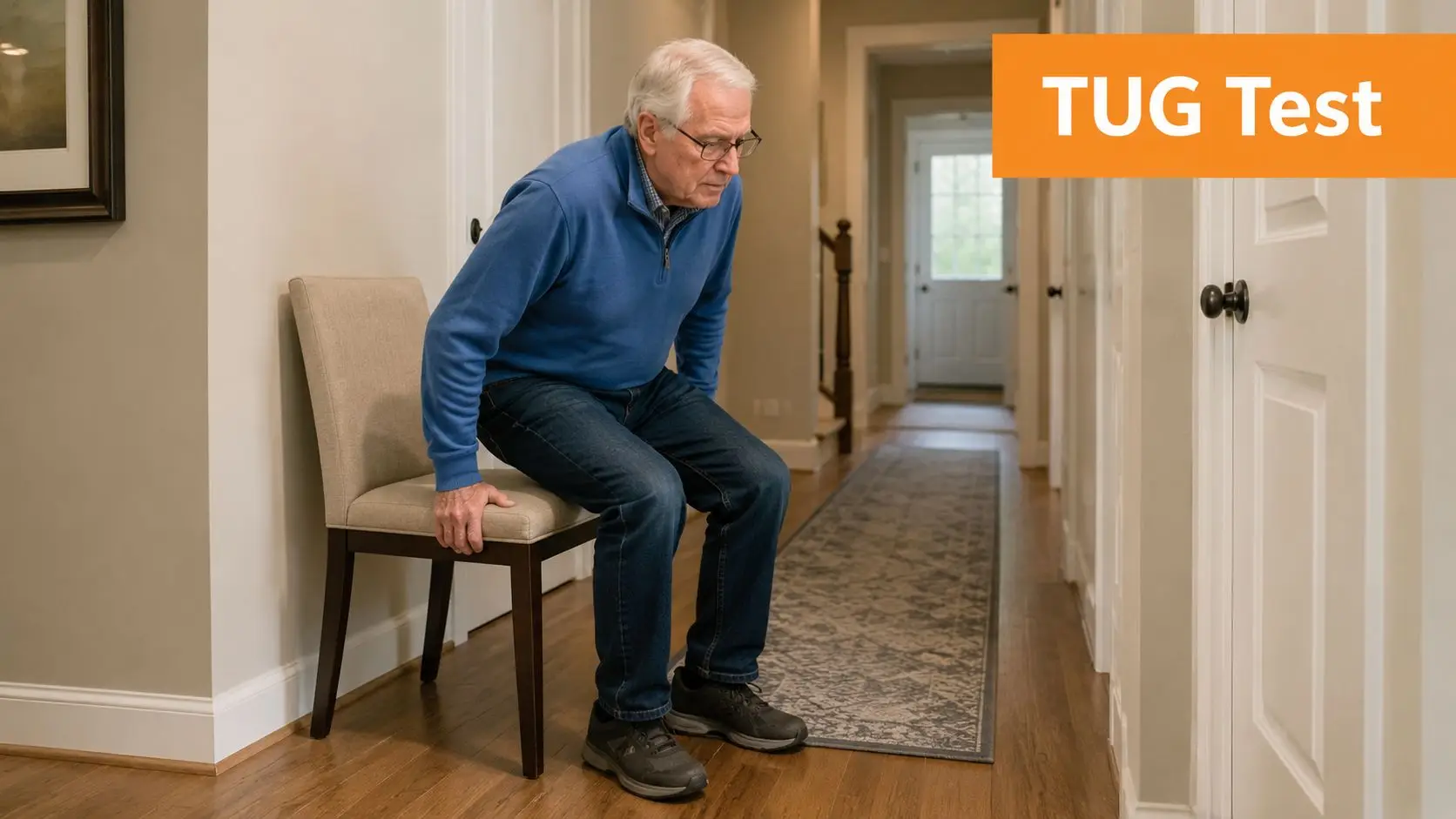
The Timed Up and Go stays popular for a reason. It gives you a fast read on transfers, gait, turning, and balance in one short task. In a busy clinic, home health start-of-care visit, or senior living screening event, that speed matters.
What it doesn't do well is tell you why someone is at risk. A slow or unstable TUG result can reflect weakness, fear, joint pain, poor footwear, dizziness, cognitive distraction, or all of the above. That makes it a strong screening tool, but not a complete assessment by itself.
Where TUG works best
TUG is useful when you need a repeatable baseline. Primary care teams often use it during annual wellness or geriatric visits. Home health clinicians use it at admission and again after therapy or medication changes. Community programs use it to flag who needs a deeper mobility workup.
In practice, TUG is strongest when the patient can follow directions and safely walk a short distance with or without their usual assistive device. If a patient is highly frail, severely cognitively impaired, or unable to rise without major physical help, the result may be less meaningful than direct observation and a broader functional review.
- Standardize the setup: Use the same chair height, the same walking distance, and the same cueing each time.
- Protect the test environment: Clear the path, stay close enough to guard, and don't turn a screen into a fall event.
- Track change over time: One result is a snapshot. Serial results tell you whether strength, gait, or confidence is improving or slipping.
Practical rule: If TUG looks worse than the patient's usual presentation, don't stop at timing. Check orthostatic symptoms, medication changes, pain, footwear, and recent near-falls.
A common real-world use case is the older adult who says, “I'm fine, just slower.” TUG often reveals whether that slowdown is ordinary deconditioning or the beginning of a larger fall risk pattern that deserves therapy, home safety review, or both.
2. Berg Balance Scale (BBS)
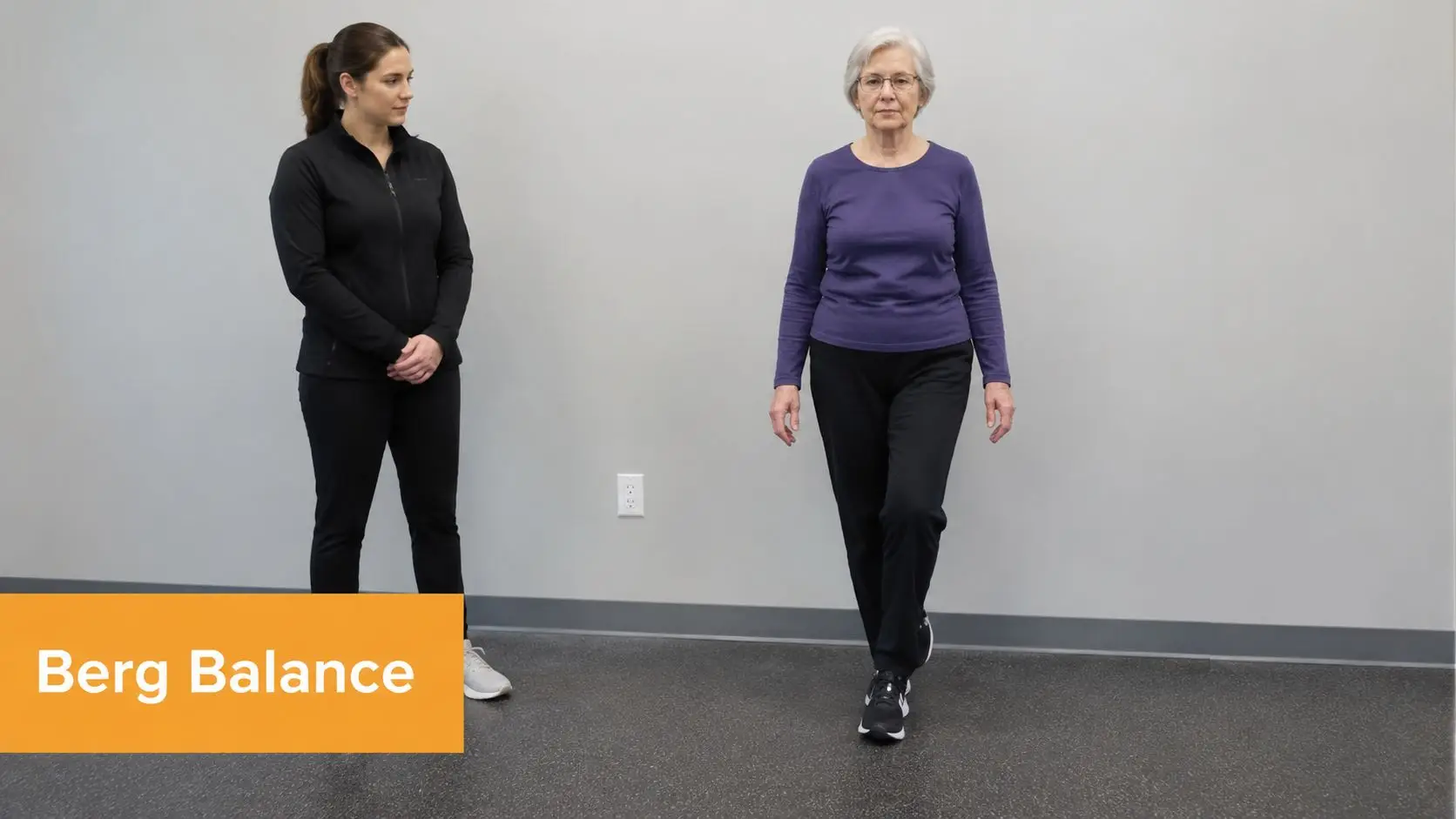
The Berg Balance Scale is more detailed than TUG and more demanding to administer well. That's exactly why many rehab clinicians trust it. It looks beyond simple walking speed and tests balance across common functional tasks such as standing unsupported, turning, reaching, and changing position.
For patients recovering from stroke, orthopedic surgery, prolonged hospitalization, or clear balance decline, BBS often gives a better picture of impairment than a single quick mobility screen. It can also help show whether therapy is translating into better functional control rather than just better strength numbers.
What BBS tells you that a quick screen may miss
BBS is especially helpful when the fall problem seems balance-driven. A patient may walk at a reasonable speed down a hallway and still struggle with reaching, turning, narrow base stance, or controlled transfers. Those are the patients who look “mostly okay” until they're challenged in the bathroom, kitchen, or community.
That depth comes with trade-offs. BBS takes longer, requires consistent scoring, and works best when the examiner has enough repetition to score confidently. In rushed environments, teams sometimes collect the score but fail to use the item-level observations. That's a missed opportunity.
- Use item-level findings: Don't just record a total score. Note which tasks break down first.
- Match the intervention to the deficit: Turning instability calls for a different plan than poor sit-to-stand control.
- Repeat in the same conditions: Same footwear, same assistive device, and similar setup improve comparability.
A practical example is the resident in assisted living who hasn't fallen but has started touching walls during turns and avoiding showers without help. BBS can surface that balance deterioration early enough to justify targeted therapy and environmental changes before an actual fall occurs.
3. Morse Fall Scale (MFS)
If you work in acute care, the Morse Fall Scale is hard to ignore because it's one of the most widely used inpatient fall risk assessment tools. Its appeal is simple. It's brief, familiar, and easy to build into admission workflows and nursing reassessment.
Its six-item structure focuses on common inpatient drivers of falls, including recent fall history, secondary diagnoses, ambulatory aids, gait or transfer issues, IV therapy, and mental status. On the Morse Fall Scale clinical overview, scores from 0 to 24 are considered low risk, 25 to 44 moderate risk, and 45 or above high risk. The same review notes that a key validation study found the tool correctly identified high-risk patients in about 78 percent of cases.
Why MFS lasts in real workflows
MFS works because nurses can use it quickly and act on it quickly. A new admission with a high score can trigger closer observation, toileting support, mobility assistance, bed or chair alarms where appropriate, and more frequent reevaluation after status changes.
The limitation is equally clear. MFS is best for inpatient triage, not for understanding community fall risk in depth. It won't replace a home safety review, a medication reconciliation focused on dizziness or sedation, or a physical performance assessment when the patient transitions out of the hospital.
Use MFS to organize immediate precautions. Don't mistake it for a full root-cause analysis.
A strong real-world pattern is admission after an infection or surgery. The patient may have been independent at home two weeks ago, but now has weakness, urgency, IV lines, and fluctuating attention. MFS helps teams respond to that acute, temporary risk even before rehab completes a fuller mobility evaluation.
4. Performance-Oriented Mobility Assessment (POMA) / Tinetti Test
The Tinetti, often referred to as POMA, sits between quick screening and full functional evaluation. It gives clinicians a structured way to observe both balance and gait, which makes it useful when the question isn't only “Is this person at risk?” but also “What pattern of instability are we seeing?”
That dual focus is what makes POMA valuable in geriatrics, outpatient rehab, and mobility-focused care planning. Some patients are primarily unsteady during transfers and standing. Others look stable until they initiate gait, shorten steps, veer, or turn poorly. POMA captures that distinction better than many faster tools.
Best use cases for POMA
POMA fits well when the clinician needs descriptive movement findings, not just a pass-fail signal. Geriatric clinics often use it before recommending a cane, walker, or therapy referral. Physical therapists may use it to document baseline gait quality before balance retraining or strengthening.
Its main drawback is time and training. It requires observation skill, and teams need a consistent scoring approach if multiple staff members administer it. In a high-volume primary care clinic, that burden may be too much. In a geriatric assessment program, it's often worth it.
- Watch the gait details: Step length, symmetry, turning, and hesitancy can shape the intervention plan.
- Note compensation patterns: Furniture walking, hand hovering, and wide base tell you a lot even if the patient completes the task.
- Use it when decision-making depends on movement quality: That's where POMA adds more than a quick screen.
A typical example is the older adult who reports “legs giving out” but doesn't have obvious weakness on a brief exam. POMA can reveal impaired initiation, inconsistent foot clearance, or poor turning control that points toward therapy, device training, or more neurologic review.
5. Short Physical Performance Battery (SPPB)
SPPB is one of the most useful tools when you care about function broadly, not just falls in isolation. It combines standing balance, gait speed, and repeated chair rise performance. That mix makes it practical for older adults whose fall risk is tied to lower-extremity strength, endurance, and overall physical reserve.
I like SPPB when the care plan needs to answer a bigger question than immediate safety. Can this person recover from illness? Are they losing reserve over time? Would therapy, exercise, or closer monitoring likely help? SPPB often gives a cleaner answer than a single test.
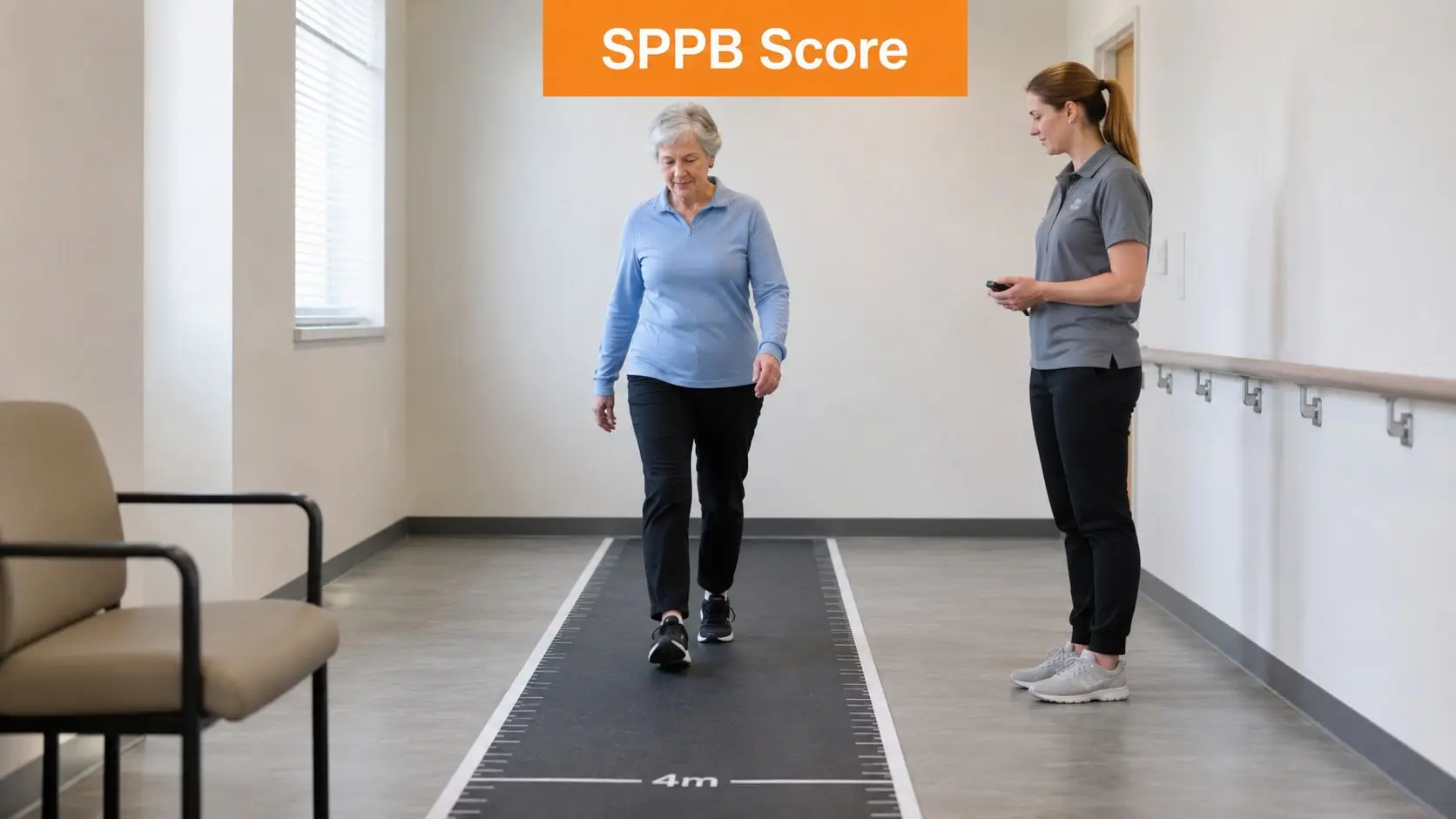
Why SPPB is valuable beyond a fall screen
Because SPPB separates components, it highlights where decline is happening. One patient may have acceptable balance but poor chair rise ability, pointing to lower-body weakness. Another may manage chair rises but slow dramatically on gait speed, raising concern about endurance, pain, or neurologic change.
That detail is clinically useful in home-based care. If the patient can still manage daily tasks but scores are trending down over repeat visits, that's often the moment to intervene before they start limiting activity and becoming more unstable.
A fall rarely starts on the day of the fall. Functional decline often shows up first in gait speed, transfers, or willingness to move.
A practical use case is the patient discharged home after hospitalization who says they're “back to normal,” but family notices they're avoiding stairs and taking longer to stand from the couch. SPPB can capture that post-acute drop and support timely therapy, strengthening work, or closer follow-up.
6. Hendrich II Fall Risk Model
Hendrich II is useful when cognitive and medication-related risk may matter as much as mobility. In hospital settings, that's common. A patient may not score as dramatically on a performance test, yet still be dangerous to leave unmonitored because of confusion, impulsivity, dizziness, elimination needs, or sedating medications.
That's where Hendrich II earns its place. It's built for quick bedside risk recognition when falls stem from behavior and physiology as much as from gait mechanics.
Where Hendrich II adds value
This model is especially practical on medical-surgical units, step-down care, and emergency or observation settings where patient status shifts fast. Nurses can reassess when medication regimens change, delirium worsens, or toileting frequency increases. That responsiveness is more important than theoretical thoroughness.
Its weakness is that it remains a hospital-oriented tool. It doesn't replace structured mobility testing or community risk review, and it won't tell a home care team what to do about loose rugs, poor lighting, or deconditioning after discharge.
- Reassess after medication changes: Opioids, benzodiazepines, and similar agents can alter risk quickly.
- Pay attention to elimination patterns: Urgency and frequent bathroom trips often drive overnight falls.
- Tie the score to action: High risk should change supervision, environment, and communication among staff.
A common scenario is the patient recovering well medically but becoming restless overnight, trying to toilet alone, and forgetting physical limitations. Hendrich II helps teams recognize that the fall threat may come less from baseline mobility and more from fluctuating cognition plus medication effects.
7. Falls Risk for Older People in the Community (FROP-Com)
FROP-Com matters because community falls usually aren't caused by one factor. They're layered. Vision changes, polypharmacy, lower-limb weakness, incontinence, home hazards, foot problems, fear of falling, and reduced confidence often build gradually. FROP-Com is built for that reality.
Among fall risk assessment tools, this one is especially helpful when the goal is to keep someone safely at home. It connects clinical findings to practical intervention planning in a way many hospital tools don't.
Why community teams need a broader lens
A community-dwelling older adult can pass a quick office screen and still be at high real-world risk. They may walk through a short clinic hallway well but struggle with uneven thresholds, nighttime bathroom trips, cluttered rooms, or carrying laundry while turning. FROP-Com brings those contextual issues into the assessment.
It also supports multidisciplinary follow-up. A patient may need medication review from a prescriber, strength and gait work from therapy, footwear changes, vision care, continence management, and basic home modifications. FROP-Com is one of the better tools for pulling those pieces together into one care picture.
Here's a demonstration clinicians often use when training teams on the tool:
- Use it in the home when possible: Context improves the value of the findings.
- Write down interventions clearly: Families and caregivers need plain next steps, not just a score.
- Coordinate follow-through: The assessment only helps if someone acts on the risk factors uncovered.
A strong use case is the older adult who has had no major injury but several “close calls” reaching the bathroom at night. FROP-Com helps identify the combination of urgency, lighting, path obstacles, balance decline, and medication timing that a simpler screen might miss.
8. Rx360 Fall Risk Monitoring Integration & Connected Assessment Ecosystem
The biggest gap in fall prevention today isn't a lack of tools. It's the gap between occasional assessment and daily life. Most formal tools are episodic. They tell you how the patient performed in one encounter. They don't tell you what happened last week at home, what changed overnight, or whether mobility is subtly deteriorating between visits.
That's why connected monitoring matters. Evidence reviewed in a study on analytic and sensor-based fall risk implementation showed that advanced analytic models achieved c-statistics of 0.96 and 0.99 in one multi-center implementation, and units using the analytic approach saw mean fall rates drop from 1.92 to 1.79 falls per 1,000 patient-days while control units increased from 1.95 to 2.11. The same study also noted that uptake depended heavily on nurse engagement, ease of use, and fit with existing workflows.
From snapshot screening to continuous risk awareness
That implementation lesson is the important one. Continuous monitoring only works when patients, families, and clinicians can use it. A connected model should combine periodic formal assessments such as TUG, SPPB, and balance testing with ongoing signals such as gait change, activity patterns, near-falls, or behavior shifts.
For older adults aging in place, a platform like Rx360 is most useful when it doesn't replace clinical judgment but extends it. A clinician can review formal assessment trends. A caregiver can receive timely updates. A family member can notice a change in routine before a crisis happens. That's how fall prevention becomes proactive rather than reactive.
The most effective digital model doesn't ask one tool to do everything. It layers quick screens, functional testing, and continuous monitoring into one shared view.
In practice, this approach fits home health, senior living, primary care follow-up, and family-supported aging in place. If someone's formal score remains stable but daily movement becomes more hesitant or nighttime patterns change, the care team has a reason to reassess before a serious fall forces the issue.
Comparison of 8 Fall Risk Assessment Tools
| Assessment / Tool | Core features | UX & quality (★) | Value / Unique points (✨) | Target audience (👥) | Cost / Effort (💰) |
|---|---|---|---|---|---|
| Timed Up and Go (TUG) | Quick chair‑stand + 10 ft walk; stopwatch‑based | ★★★★, fast, objective | ✨ Rapid fall‑risk screen; easy home use | 👥 Community & clinic; ambulatory older adults | 💰 Free; ~3–5 min |
| Berg Balance Scale (BBS) | 14 scored balance tasks (0–56) | ★★★★★, sensitive to balance change | ✨ Detailed static/dynamic balance profiling | 👥 Clinics, PT, rehab; ambulatory older adults | 💰 Free; 15–20 min; trained rater |
| Morse Fall Scale (MFS) | 6 weighted clinical items → risk category | ★★★★, efficient for hospitals | ✨ Fast triage with actionable risk tiers | 👥 Acute care, SNF, home health triage | 💰 Free; <5 min |
| POMA / Tinetti Test | 16 items: balance + gait subscales (0–28) | ★★★★★, strong gait/balance specificity | ✨ Granular gait analysis for PT planning | 👥 Geriatric clinics, PT, retirement communities | 💰 Free; 10–15 min; trained rater |
| Short Physical Performance Battery (SPPB) | Balance, 4‑m gait, 5× chair rise (0–12) | ★★★★★, objective predictor of disability | ✨ Brief, validated predictor of function & mortality | 👥 Primary care, research, home health | 💰 Free; 5–10 min |
| Hendrich II Fall Risk Model | 6 clinical/medication & cognitive factors | ★★★★, strong for inpatient falls | ✨ Emphasizes meds & cognition for hospitals | 👥 Hospitalized patients; ED discharge planning | 💰 Free; 2–3 min |
| FROP‑Com | Multifactorial: vision, meds, home hazards + recommendations | ★★★★★, holistic community tool | ✨ Actionable interventions + environment check | 👥 Community‑dwelling older adults; home health | 💰 Free; longer administration; trained staff |
| 🏆 Rx360 Fall Risk Monitoring Integration | Integrates validated tests + wearables + alerts | ★★★★★, continuous, longitudinal insights | ✨ Real‑time alerts, shared dashboard, automated tracking | 👥 Independent older adults, family caregivers, providers | 💰 Subscription + device costs; reduces formal testing burden |
The Future of Fall Prevention Is Connected and Proactive
The strongest fall prevention programs don't rely on a single favorite tool. They match the tool to the setting, then build a process around it. TUG works when you need a quick mobility screen. BBS and POMA help when movement quality matters. SPPB is useful when function and physical reserve are part of the question. MFS and Hendrich II support fast inpatient decision-making. FROP-Com is valuable when the goal is safe aging in place.
That said, one lesson keeps repeating across care settings. Snapshot assessments are necessary, but they aren't enough. A patient can test well on one day and still be drifting toward trouble because of medication changes, fear of falling, reduced activity, poor sleep, urinary urgency, or subtle gait decline that only shows up at home.
That's also consistent with broader screening evidence. A systematic review of fall screening tools in primary care found that predictive performance across commonly used tools was relatively low, with no clear winner, and concluded that a simple question about falling in the past 12 months performed as well as or better than more complex tools in many settings. The same review highlights the CDC STEADI screening approach, which uses three core questions about prior falls, unsteadiness, and worry about falling, with any positive response prompting fuller assessment. That's a practical reminder that efficient screening and deeper evaluation should work together, not compete.
Another shift is happening in how clinicians think about monitoring over time. A review of digital and home-based fall risk monitoring describes how continuous gait and balance monitoring in home settings can detect subtle decline before traditional clinic assessment picks it up, while many guidelines still treat fall risk as a periodic snapshot. For independent older adults and the people supporting them, that gap is where many preventable falls still happen.
The future model is straightforward. Start with a brief, scalable screen. Add the right functional or multifactorial tool based on risk, setting, and patient profile. Then connect those findings to ongoing observation in daily life. When clinicians, caregivers, older adults, and family members share the same timely picture, interventions happen sooner. Medications get reviewed earlier. Therapy starts before a crisis. Home hazards get fixed before a near-fall becomes a fracture.
That's the direction care needs to move. Not more forms for the sake of forms. Better visibility, better timing, and better coordination around real human risk.
If you're building a safer aging-in-place plan for yourself, a parent, or the people you serve, Rx360 offers a practical way to connect formal fall assessments with ongoing wellness insight, family visibility, and coordinated support so concerns don't wait until the next appointment.
Lower-Risk Medication Plan Checklist
Below is a practical checklist and step plan you can implement into your daily life:
-
List all medications
Include prescriptions, over-the-counter drugs, supplements, sleep aids, creams, patches, eye drops, and inhalers.
-
Mark fall-risk drugs
Flag medicines that cause dizziness, sleepiness, confusion, blurred vision, low blood pressure, or low blood sugar.
-
Ask for a medication review
Bring the list to a pharmacist or prescriber.
-
Review after any warning sign
Request a new medication check after a fall, near-fall, new prescription, dose change, dizziness, or confusion.