
Sleep debt is the cumulative amount of sleep you've missed when you get less than the 7 to 8 hours healthy adults generally need, and it adds up night after night. If your body needs 8 hours and you sleep 6 hours for 5 days, you build 10 hours of sleep debt.
Sleep debt can be likened to a credit card balance. One short night may not feel dramatic, but small deficits can pile up until you're paying for them with foggy thinking, low energy, and a body that doesn't work as smoothly as it should.
If you're an older adult, this can be especially confusing. You may be in bed long enough, yet still wake up unrefreshed. If you're caring for a parent, spouse, or patient, you may notice more irritability, daytime dozing, or forgetfulness and wonder whether it's aging, illness, or “just a bad week.” Sleep debt often hides in plain sight.
That matters because sleep loss isn't only about feeling tired. It can affect attention, mood, balance, and long-term health. The good news is that once you know how to define sleep debt clearly, you can start spotting it earlier and respond in safer, more practical ways.
Table of Contents
- The Hidden Cost of Feeling Tired
- What Is Sleep Debt and How Does It Accumulate
- The Health Consequences of an Overdrawn Sleep Account
- Can You Truly Repay Your Sleep Debt
- How to Spot and Monitor Sleep Debt in Yourself and Others
- Building a Sustainable Sleep Routine for Lasting Wellness
The Hidden Cost of Feeling Tired
Some people describe it this way: they wake up, make coffee, push through the morning, then hit a wall by afternoon. They aren't necessarily sleeping only a few hours. In fact, many think they're doing “pretty well” because they go to bed at a reasonable time.
But the body keeps a more exact record than we do.
An older adult may spend extra time in bed, wake several times, and still lose enough sleep to feel dull, unsteady, or short-tempered the next day. A caregiver may see the person drift off in a chair, forget routine details, or seem less engaged in conversation. Those changes can look like stress, normal aging, or medication side effects. Sometimes sleep debt is part of the picture.
When tiredness stops being just tiredness
Sleep debt is useful because it gives a name to a pattern. Instead of thinking, “I'm just exhausted lately,” you can ask a better question: “Have I been under-sleeping often enough that it's catching up with me?”
That shift matters. Once a problem has a clear definition, it becomes easier to track, discuss, and respond to safely.
Sleep debt isn't a character flaw or a sign that you're not trying hard enough. It's a measurable mismatch between the sleep your body needs and the sleep it actually gets.
For older adults who want to stay independent, and for families trying to support them without overreacting, that's a practical starting point. It helps separate a vague complaint from a health pattern that deserves attention.
What Is Sleep Debt and How Does It Accumulate
A simple way to define sleep debt
A common older-adult pattern looks like this: someone goes to bed at 9:30, gets up at 6:00, and still feels worn out by lunch. The missing piece is that time in bed and time asleep are not always the same.
If you want to define sleep debt in plain language, it is the running total of sleep your body needed but did not get.
Sleep debt works like an overdrawn checking account. If your body needs about 8 hours of sleep and you get 6, you are short by 2 hours that night. If the same thing happens for 5 nights, the shortfall keeps adding up. ScienceDirect's overview of sleep debt describes sleep debt as a cumulative loss that builds over multiple days of sleeping less than your baseline need, and notes that many healthy adults fall in the 7 to 8 hour range.
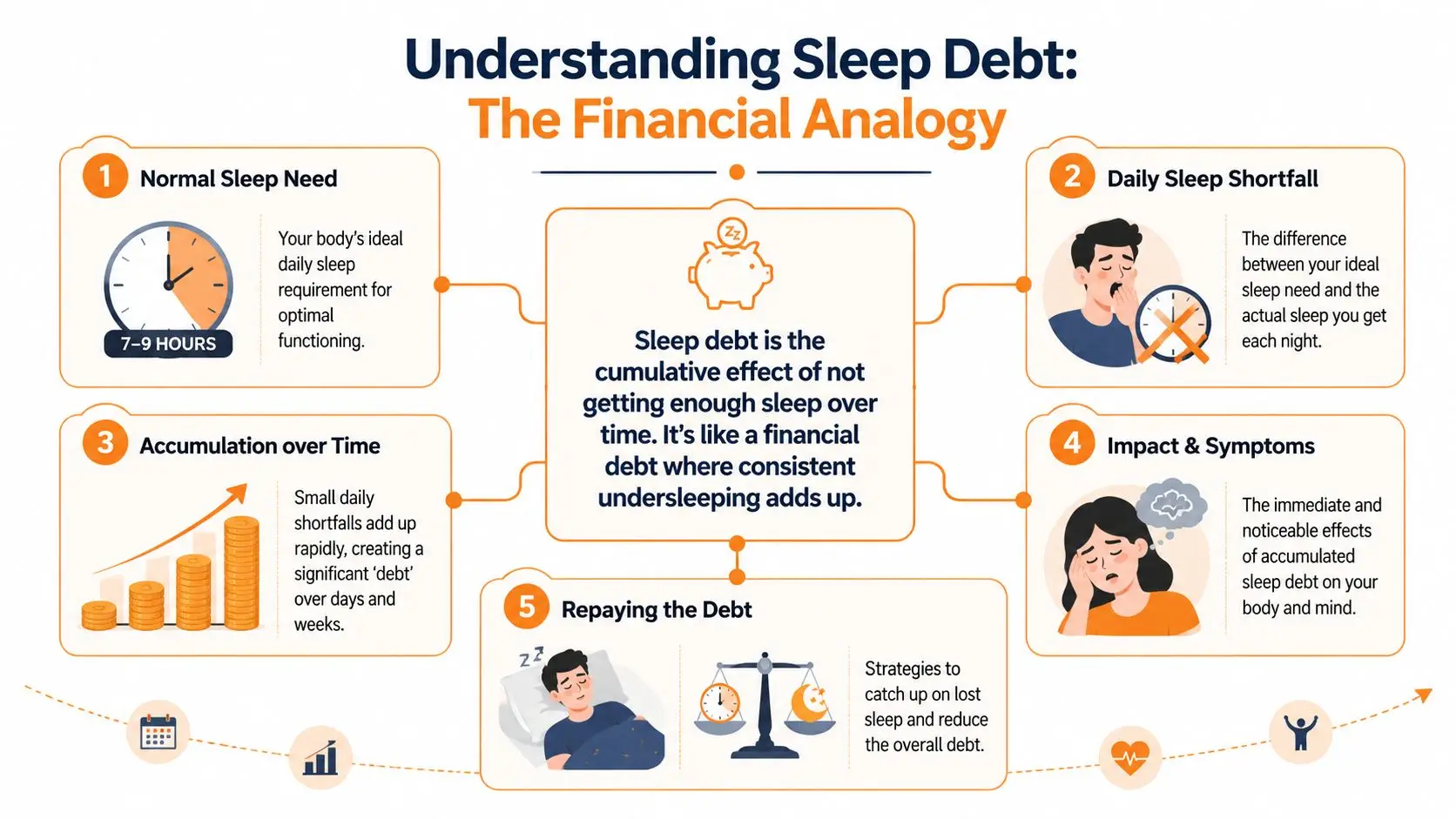
That is why sleep debt often develops subtly. A person does not need one sleepless night to feel the effects. Small nightly losses can stack up in the background.
How small losses become a real deficit
Even modest sleep loss can matter when it happens again and again. Missing 30 to 60 minutes a night may not sound serious, but over a week it can amount to several hours of missed recovery.
For older adults, this often happens in ways that are easy to overlook. Sleep may be interrupted by pain, arthritis stiffness, bathroom trips, medication timing, breathing problems, caregiving duties, or early-morning waking. A caregiver may see plenty of time spent in bed and assume sleep is adequate, even though the night was broken into short stretches.
Here are common ways sleep debt builds:
- Bedtime slips later: television, chores, or worry delay sleep
- Sleep becomes fragmented: the person wakes often and has trouble settling back down
- Morning stays fixed: appointments, pets, work, or caregiving still require an early start
- The body adjusts poorly: the person may say they are “fine,” while attention, balance, and patience slowly worsen
Two patterns are especially useful to separate:
| Type | What it looks like | Common example |
|---|---|---|
| Acute sleep debt | A short-term sleep shortfall | Several poor nights during travel, illness, or a stressful week |
| Chronic sleep debt | A repeated pattern of inadequate sleep | Weeks or months of sleeping less than needed, or sleeping lightly and waking often |
Chronic sleep debt deserves special attention in later life. It is easier to normalize because the change is gradual, and because tiredness, forgetfulness, and napping can be mistaken for ordinary aging.
There is another nuance caregivers should know. Newer sleep research suggests that some effects of long-term sleep loss may not reverse fully or quickly, even after a period of catch-up sleep. That does not mean improvement is impossible. It means early monitoring matters.
Practical rule: Track sleep by sleep obtained, not just hours spent in bed.
For a caregiver, that can be as simple as noting bedtime, estimated time asleep, nighttime awakenings, wake time, and daytime dozing for several days. That record often reveals the pattern more clearly than memory does.
The Health Consequences of an Overdrawn Sleep Account
A common scene in later life looks harmless at first. An older adult dozes in a chair after lunch, feels foggy during a conversation, then seems sharper by evening. Family members may call it a normal slow day. Sometimes it is. Sometimes it is the visible edge of a larger sleep shortfall.
Sleep debt often shows up first in daily function, not in dramatic symptoms. Attention drifts. Reading the same paragraph takes two or three tries. A person may lose track of a task halfway through, miss a stair, or mix up a medication time. For caregivers, these small slips matter because they can be early warning signs before anyone says, “I'm exhausted.”
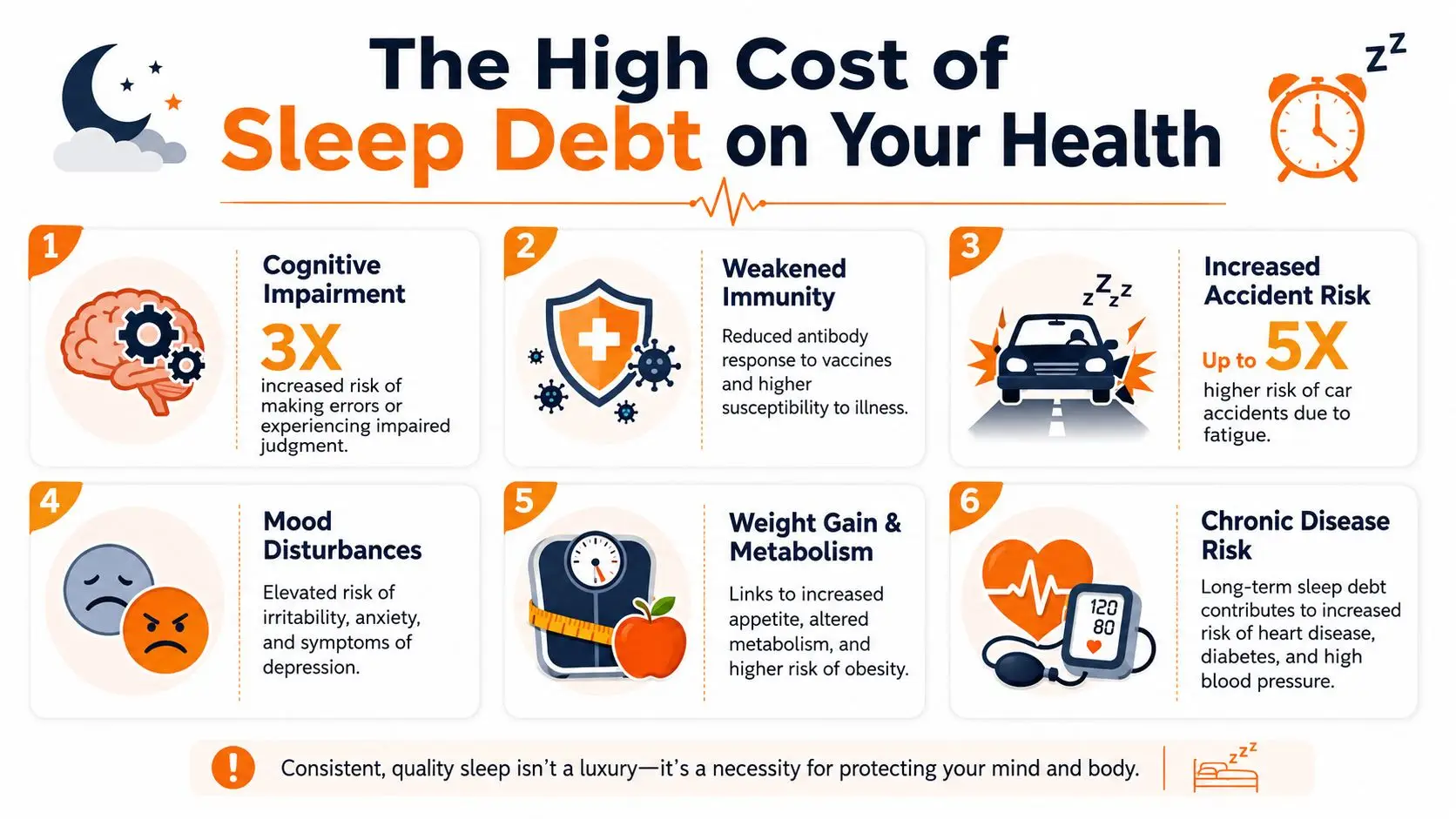
The body handles sleep loss much like a home running on low power. The lights are still on, but key systems work less efficiently. Reaction time slows. Judgment gets less steady. Mood control weakens. Over time, the strain reaches beyond tiredness. According to HelpGuide's summary of sleep statistics, many adults do not get enough sleep, and inadequate sleep is associated with higher risk of Type 2 diabetes, high blood pressure, heart attack, and coronary heart disease.
For older adults, the consequences can be easy to misread because they overlap with problems families already worry about. Sleep debt may look like ordinary aging, mild memory trouble, depression, or the side effects of medication. The clue is often inconsistency. A person seems clear and capable one hour, then unusually forgetful, irritable, or unsteady the next.
Several patterns deserve close attention in later life:
- Balance problems: A sleep-deprived brain corrects missteps more slowly, which can raise fall risk.
- Patchy thinking: Attention and short-term memory may come and go across the day.
- Mood changes: Irritability, withdrawal, and low frustration tolerance often rise after poor sleep.
- Less confidence: Some older adults begin avoiding driving, errands, or social activities because they do not feel as steady or clear.
That loss of confidence can shrink independence long before a formal diagnosis appears.
There is also a nuance that deserves more attention. Newer research has raised concern that chronic sleep loss may leave behind effects that do not disappear quickly with a few better nights. In plain terms, some wear and tear from long-term under-sleeping may be only partly reversible, at least in the short run. That is one reason caregivers should not wait for severe symptoms before paying attention to a pattern of poor sleep.
Sleep problems are also common enough that they should stay on the checklist whenever function changes. Ongoing disturbances such as sleep apnea, repeated waking, restless sleep, or heavy snoring can create real sleep debt even when a person spends plenty of time in bed.
Persistent tiredness, new mistakes, fluctuating attention, and increased daytime sleepiness deserve attention as health clues.
For caregivers, the practical takeaway is simple. If memory, balance, mood, or daily function seems to vary from day to day, do not assume the cause is aging alone. Sleep may be one of the missing pieces, and noticing that early can help guide a safer conversation with a clinician.
Can You Truly Repay Your Sleep Debt
A common scene plays out like this. An older adult sleeps poorly for several nights, then stays in bed much longer over the weekend and expects Monday to feel normal again. Sometimes Monday does feel a little better. The trouble is that feeling somewhat better is not the same as full recovery.
Weekend catch-up sleep works like putting a partial payment toward a bill that has been growing for weeks. It can reduce the pressure. It does not always clear the balance. As noted earlier, sleep experts consistently stress that regular nightly sleep protects health better than a repeated pattern of short nights followed by long recovery sleep.
For older adults, this pattern can be harder on the body clock. Sleeping far later than usual may delay the next bedtime, which can keep the cycle going. Caregivers often see the result first. The person may report, “I slept in, so I should be fine,” while still seeming slowed down, less steady, or less patient later in the day.
What recovery can and cannot do
Recovery sleep helps. That part matters.
After a few longer nights, many people notice less sleepiness and better energy. Even so, chronic sleep loss may leave some effects behind for longer than expected. A summary from Clayton Sleep's discussion of chronic sleep restriction dynamics describes research suggesting that attention and stress-related measures may recover more slowly than simple sleepiness, and that some effects of long-standing sleep restriction may be only partly reversible in the short term.
That point is easy to misunderstand, especially for families already stretched thin. It does not mean lost sleep can never be improved. It means the body is not a light switch. You cannot always flip from depleted to restored with one long night in bed.
A safer, more realistic approach looks like this:
- Treat consistency as the main repair tool: Keep bedtimes and wake times as steady as possible, even after a rough night.
- Add sleep in smaller, repeatable amounts: A series of better nights often works better than one extra-long sleep period.
- Use naps with care: Brief daytime naps may help some older adults, but long or late naps can make nighttime sleep harder.
- Look for hidden causes of ongoing sleep loss: Pain, medication timing, anxiety, sleep apnea, frequent urination, and restless legs can all keep sleep debt in place.
Extra sleep can improve how awake you feel. Attention, reaction time, and stress regulation may take longer to recover.
For caregivers, monitoring recovery is often more useful than asking about hours alone. A better check is: over several days, is the person more alert at breakfast, safer when walking, less irritable by evening, and better able to follow conversations? Those day-to-day signs often give a clearer picture than one “good” night.
This is one of the overlooked parts of sleep debt in later life. The goal is not to chase perfect sleep after every bad night. The goal is to notice patterns early, correct what can be corrected, and get medical guidance when sleep does not improve with steady routines.
How to Spot and Monitor Sleep Debt in Yourself and Others
Signs you can watch for in yourself
Sleep debt often announces itself through patterns, not one dramatic symptom. A simple self-check can be more helpful than waiting until exhaustion becomes obvious.
Ask yourself:
- Morning grogginess: Do you wake feeling unrefreshed, even after what seemed like a full night in bed?
- Daytime sleepiness: Do you nod off while reading, watching television, or sitting?
- Heavy dependence on stimulation: Do you need coffee, constant activity, or noise just to stay alert?
- Poor focus: Are simple tasks taking longer because your concentration drifts?
- Mood changes: Are you more impatient, flat, or easily overwhelmed than usual?
- Fast sleep onset: Do you fall asleep almost immediately when your head hits the pillow?
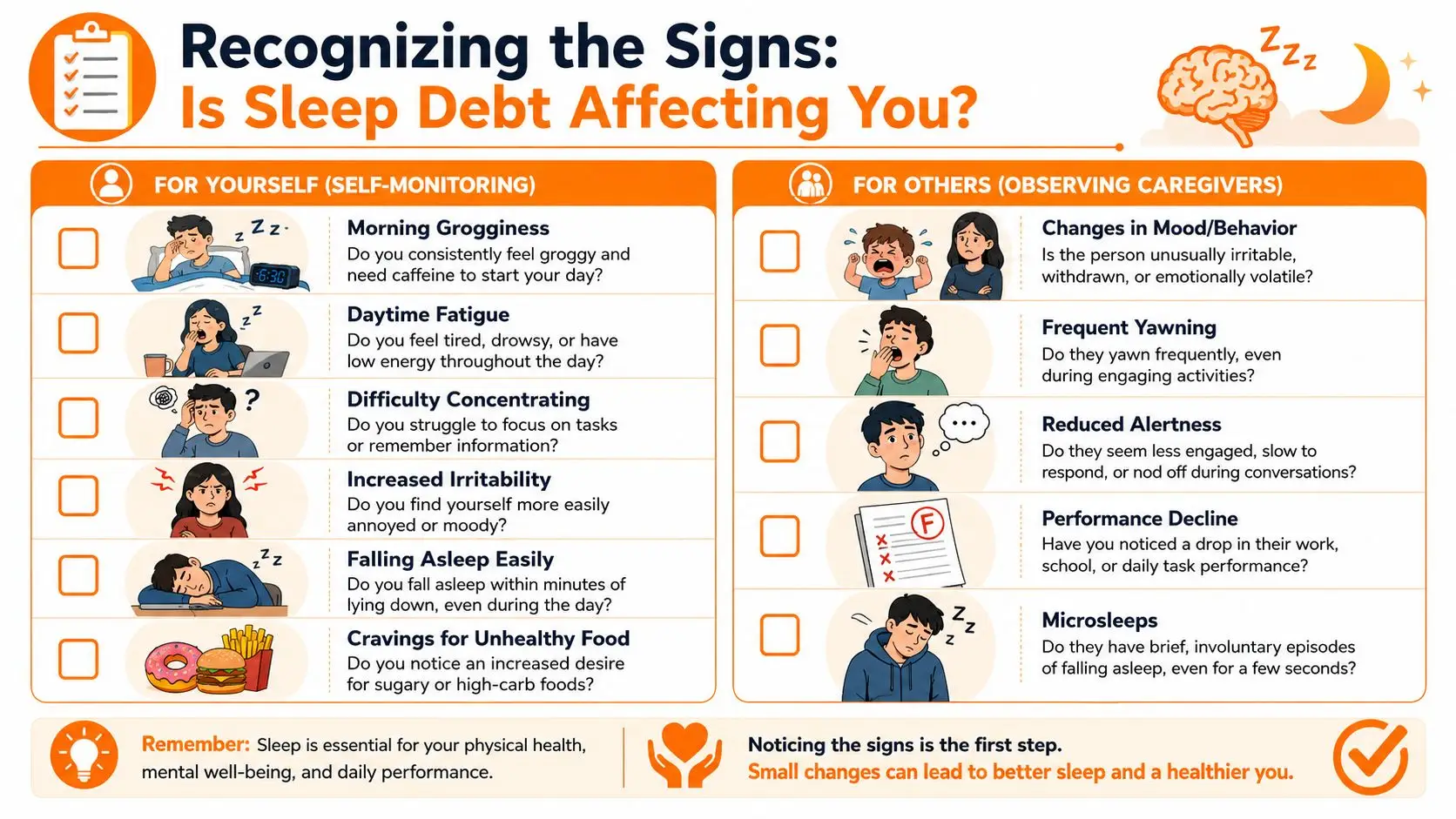
One sign alone doesn't prove sleep debt. A pattern across several days is more meaningful.
What caregivers and family members may notice
Caregivers often see the signs before the person does, especially when the tired individual has gotten used to feeling below par.
Watch for changes such as:
- More irritability than usual
- Reduced engagement in conversation
- Frequent yawning or blank staring
- Dozing off in a chair or during appointments
- More household mistakes
- New clumsiness, near-falls, or slowed reactions
- Forgetfulness that seems worse later in the day
A useful question for caregivers is not “Is this person tired?” but “Has this person changed?” Sleep debt tends to show up as a change from the person's usual rhythm, attention, and emotional tone.
If an older adult becomes newly confused, has repeated falls, or shows major behavior changes, treat that as a medical issue. Sleep debt may contribute, but it shouldn't be assumed to be the only cause.
A simple sleep diary that works
You don't need special equipment to begin monitoring. A notebook on the bedside table is enough.
Track these items each day for a couple of weeks:
| What to record | Why it helps |
|---|---|
| Bedtime | Shows whether sleep is starting later than intended |
| Estimated time asleep | Helps separate time in bed from time actually sleeping |
| Wake time | Reveals whether mornings are cutting sleep short |
| Night awakenings | Points to fragmentation from pain, bathroom trips, or breathing issues |
| Daytime naps | Shows whether naps may be helping or interfering |
| How you felt the next day | Connects sleep patterns to energy, mood, and attention |
For caregivers, add a brief note on observed behavior. Write things like “more forgetful at lunch,” “nodded off during TV,” or “steady on feet today.” Those details can help a clinician see the difference between a rough night and a repeating pattern.
If you're trying to define sleep debt for yourself or someone you support, monitoring beats guessing. It turns vague concern into usable information.
Building a Sustainable Sleep Routine for Lasting Wellness
The most effective strategy isn't heroic catch-up sleep. It's building a routine that lowers the chance of debt accumulating in the first place.
That approach protects more than energy. It supports steadier mood, clearer thinking, and the kind of daily function that helps older adults remain confident at home.
A few habits make the biggest difference:
Daily habits that protect sleep
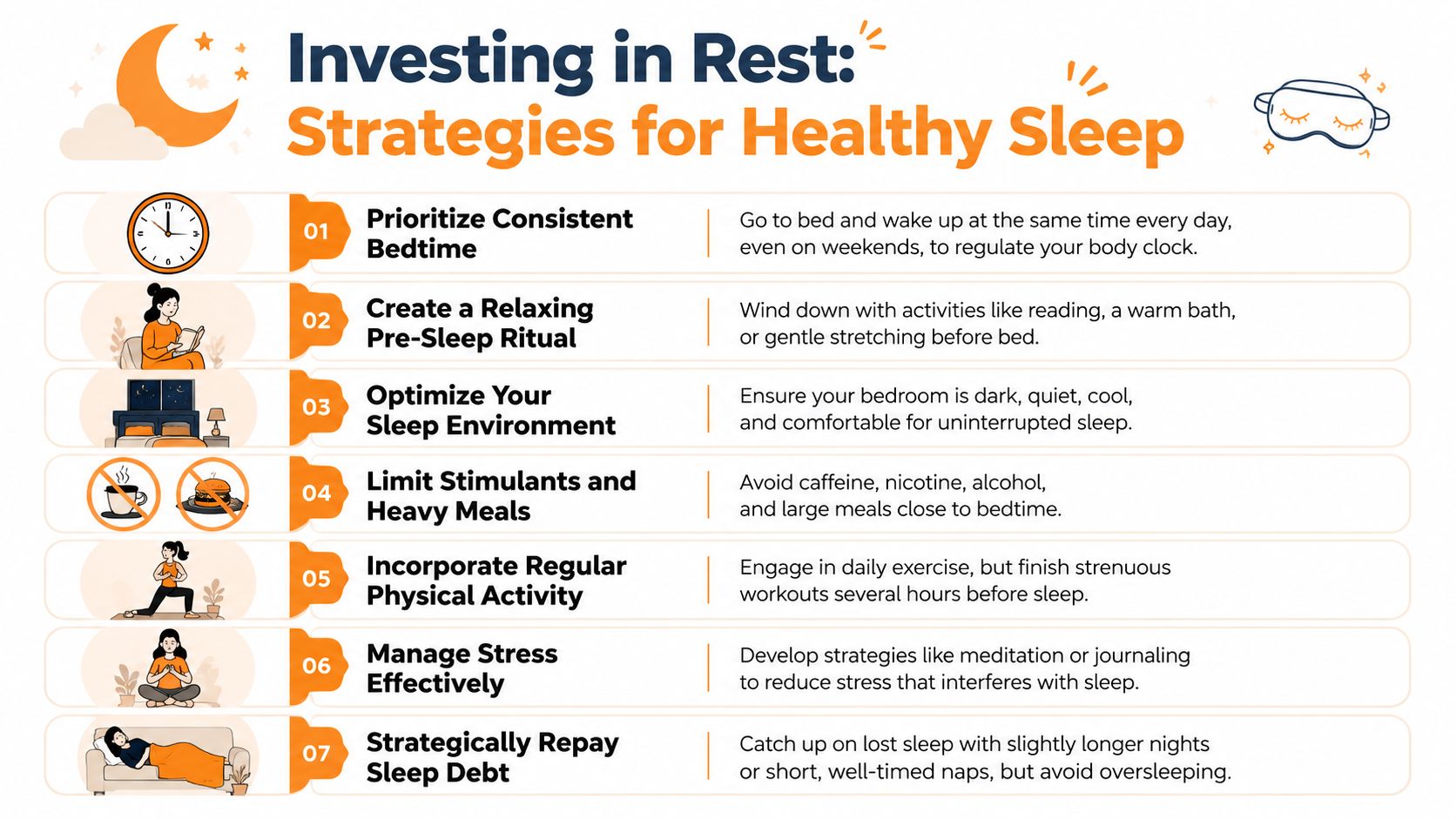
- Keep your schedule steady: Try to wake up and go to bed at about the same times each day.
- Build a wind-down routine: Reading, soft music, gentle stretching, or quiet prayer can signal that the day is ending.
- Protect the bedroom: A dark, cool, quiet room helps many people sleep more soundly.
- Watch late stimulants: Caffeine, nicotine, alcohol, and heavy meals close to bedtime can interfere with sleep.
- Get daylight and movement: A morning walk and regular physical activity can support a healthier sleep-wake rhythm.
- Review medications: Some medicines can disrupt sleep or increase nighttime waking.
This short video offers a helpful overview of healthy sleep habits:
When to ask for extra help
Sometimes good sleep habits aren't enough. If a person snores loudly, wakes gasping, feels exhausted despite enough time in bed, or becomes increasingly sleepy during the day, it's wise to speak with a clinician. The same is true if poor sleep is pairing with low mood, chronic pain, or repeated nighttime urination.
The goal isn't perfection. It's steadier, more restorative sleep most nights of the week.
When you define sleep debt clearly, the problem becomes less mysterious. You can notice it earlier, respond more calmly, and focus on what helps most: consistent sleep, careful observation, and timely support when something deeper may be interfering.
Rx360 helps older adults stay independent while keeping loved ones and care teams meaningfully connected. If you want a simpler way to stay aware of wellness signals, support daily routines, and strengthen peace of mind at home, explore Rx360's connected wellness platform.
Lower-Risk Medication Plan Checklist
Below is a practical checklist and step plan you can implement into your daily life:
-
List all medications
Include prescriptions, over-the-counter drugs, supplements, sleep aids, creams, patches, eye drops, and inhalers.
-
Mark fall-risk drugs
Flag medicines that cause dizziness, sleepiness, confusion, blurred vision, low blood pressure, or low blood sugar.
-
Ask for a medication review
Bring the list to a pharmacist or prescriber.
-
Review after any warning sign
Request a new medication check after a fall, near-fall, new prescription, dose change, dizziness, or confusion.