

What makes home the place older adults most often want to keep, even when a newer address looks simpler on paper?
Comfort works like a path you have already walked. You know which turn leads to the bakery and which porch light means a neighbor is in. A fresh map can be perfectly clear and still take more effort to follow.
Home and community preference research points the same way. Many adults want to remain in the home they already live in. Many also want to stay near the community they already know. Those wishes travel together, and they are not identical. One is about the rooms. The other is about the street, the shops, and the people just outside the door.
The pages below walk through eight benefits of aging in place. Each benefit sits next to a cited source and a concrete step you can try this week, with the focus on healthy, active aging. Familiar rooms, personal choice, friends, easier movement through the house, a steadier budget, family contact, daily motion, and hobbies each get a turn.
Start with the step that fits this week. Leave the rest for later.
Table of Contents
- 1. Familiar Surroundings and Everyday Comfort
- 2. Preserving Independence and Personal Choice
- 3. Staying Close to Community and Friends
- 4. Home Design That Supports Everyday Movement
- 5. Financial Flexibility and Cost Comfort
- 6. Staying Connected to Family From Home
- 7. Movement Routines Built Into Daily Life
- 8. Familiar Environments That Support Mental Engagement
- 8 Benefits of Aging in Place at a Glance
- Bringing It All Together: Staying Independent and Connected
1. Familiar Surroundings and Everyday Comfort
The World Health Organization's explanation of healthy ageing and functional ability describes functional ability as the interaction between a person's physical and mental capacities and the environment around them. That environment includes the home, the community, social relationships, policies, and support systems. WHO names five concrete areas: meeting basic needs; learning, growing, and making decisions; being mobile; building and maintaining relationships; and contributing to society.
That's a formal way of naming something neighbors already notice. The mug lives on the same shelf. Morning light hits the same chair. A walk to the corner and back becomes a ritual because the route doesn't need a map.
A known room can hold a quiet cup of tea without a new set of instructions.
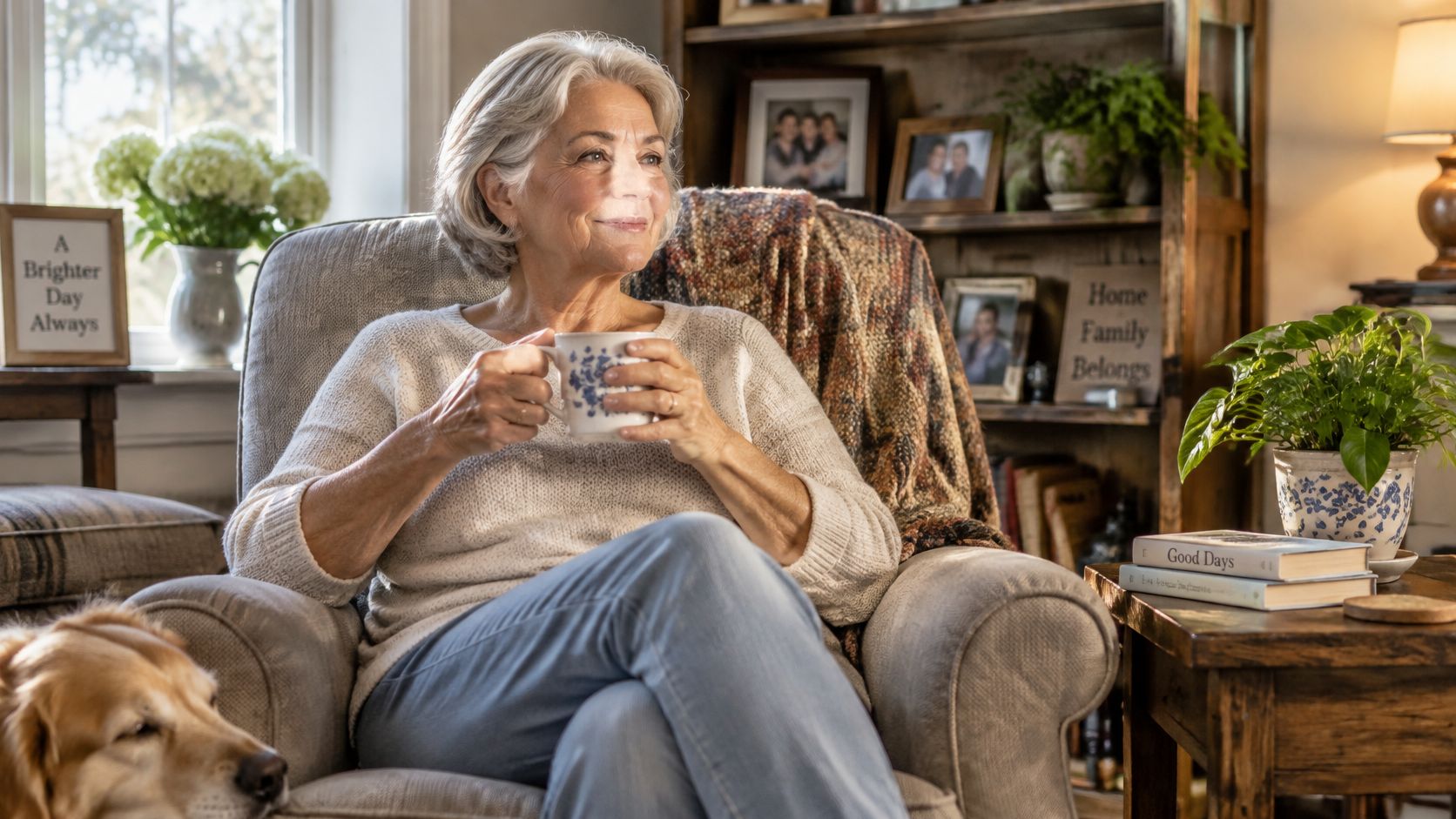
What to keep when you update a room
Say you refresh a kitchen but leave the spice shelf where your hands already reach. You haven't frozen the house in time. You've kept the cues that make breakfast automatic.
A yearly walk through the rooms you use most shows what still feels easy and what has started to snag.
- Keep favorite items in their usual spots when you do make a change, so muscle memory still works.
- Share one favorite routine with family, such as the evening news in the same chair, so they know what a normal day looks like for you.
- Protect a neighborhood sound you like, whether that's a porch sit or a short loop around the block.
2. Preserving Independence and Personal Choice
The 2024 AARP report on aging in place found that 51% of adults age 50 and older said they needed a home that supports independent aging. In the same survey, 61% of adults 50-plus preferred to receive care at home from a combination of family members and paid help. Independence here isn't a slogan. It's the ordinary right to choose lunch, guests, and the shape of the afternoon.
A weekly planner on the kitchen table is a small version of that choice. You write the grocery list. You decide who comes over on Thursday. A check-in from a daughter can sit beside that plan without taking the pen out of your hand.

A note you can hand to someone you trust
A simple share: Write the routines you want kept, then hand that note to one trusted person.
- Name the decisions that stay yours, including meal times, visitors, and how you spend a free hour.
- Set two reminder tools you already understand, such as a paper calendar and one phone alarm for appointments.
- Say which help feels welcome, and which help feels like someone else running the day.
That conversation keeps support nearby while the week's plan still starts with you.
3. Staying Close to Community and Friends
WHO measurement materials on healthy ageing report that, in the analysis described, 81.0% of older adults had high or sufficient functional ability. The same materials separate intrinsic capacity, a person's available physical and mental capacities, from functional ability, which also depends on environmental conditions and how those conditions meet the person. Relationships and the wider community sit inside that environment.
An active social life can live on the same street you've walked for years. The café on the corner already knows your order. A walking club, a card table, or a book group gives the week a meeting that isn't a chore.
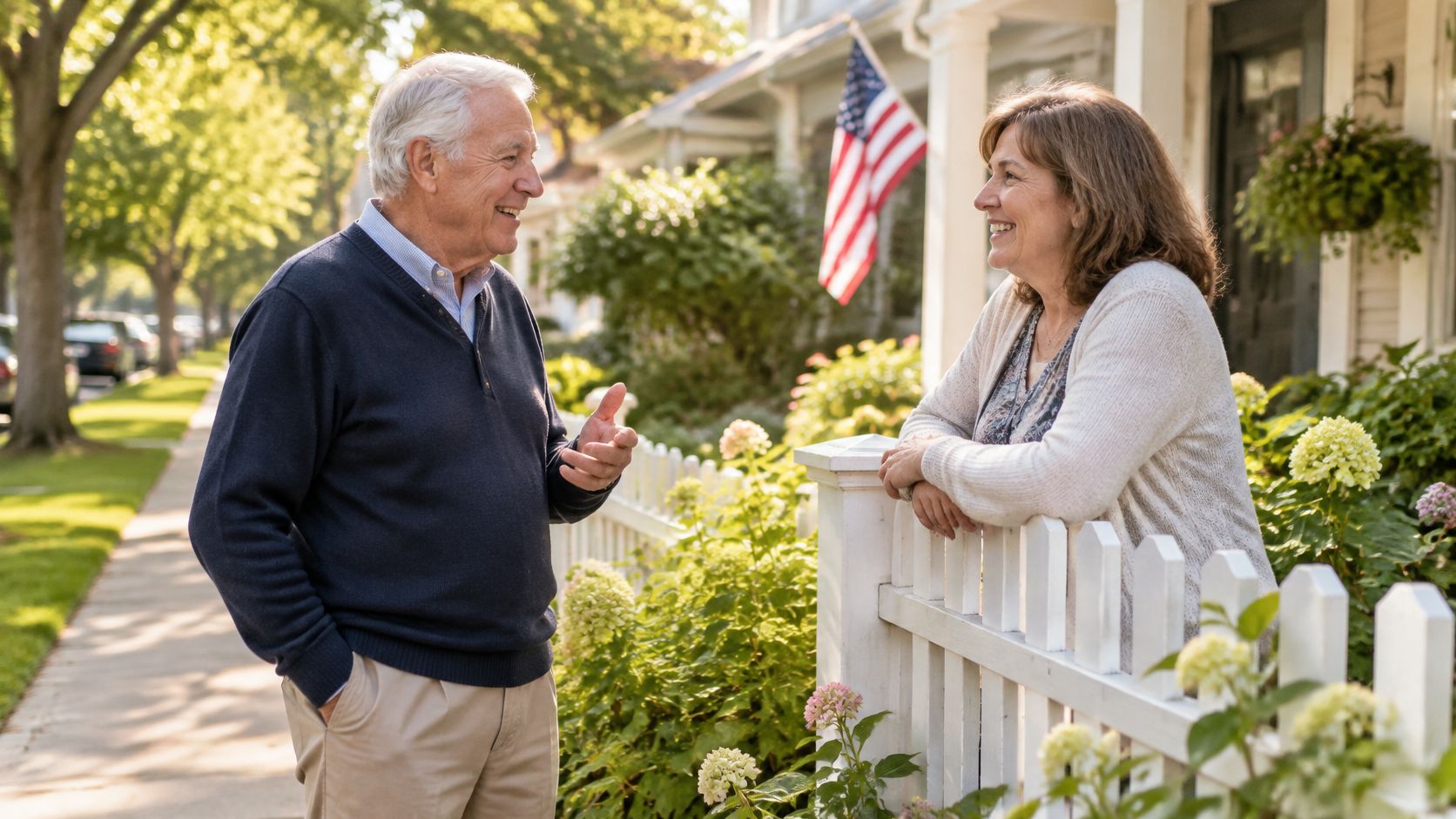
One hello that repeats
Picture a Tuesday coffee that never needs a new invitation. Two neighbors, one table, the same hour. Distance friends can join by phone after the cups are cleared.
- Pick one recurring hello, a weekly walk or a standing call, and put it on the calendar before the week fills up.
- Look up one local program at a senior center or library, then try a single session before you commit to a season.
- Keep a faraway friendship on a simple channel, video or voice, so the relationship doesn't depend on a long drive.
4. Home Design That Supports Everyday Movement
The National Institute on Aging's guide to aging in place describes staying in one's own home and lists practical changes that make that arrangement easier to manage. Examples include checking the home room by room, correcting loose stair railings and poor lighting, and shaping a space that is safer and more accessible. Lighting changes what you can see. A secure railing gives the stairs a handhold. A room-by-room pass keeps the review orderly.
A published look at the CAPABLE model, which pairs occupational therapy, nursing, and low-cost environmental changes, describes common changes such as grab bars, railings, and improved lighting. In a real-world implementation with 90 older adults, average modification costs were $943 per participant, and 69% completed the intervention, as reported in that CAPABLE implementation article.
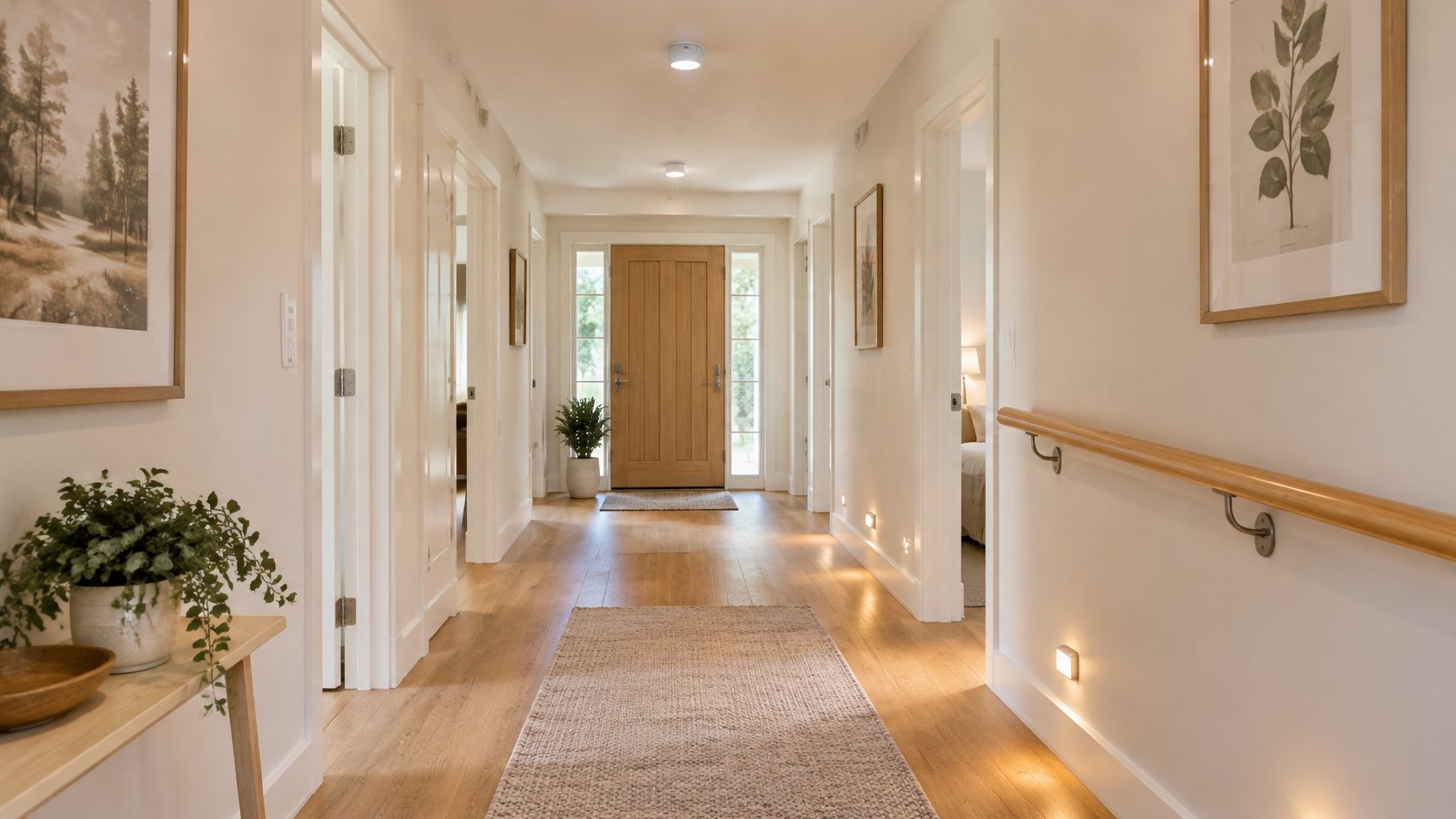
A pass you can do before sunset
Walk the hall at dusk with the lights you use. If a corner disappears, a nightlight or a clearer path is a first fix, not a full remodel. Lever-style handles and a non-slip mat are the same kind of small change. Broader aging in place solutions follow that same idea of fitting the house to daily movement.
- Start with furniture and light, then add hardware only where your own walk-through shows a snag.
- Ask a trusted friend who knows the house to walk it with you and name what they notice.
5. Financial Flexibility and Cost Comfort
A 2025 University of Michigan poll found that only 46% of adults aged 65 and older had taken steps to age in place. 38% identified cost as a current or expected barrier, 30% cited an inability to do modifications themselves, and 29% had difficulty finding qualified workers. The same poll found that 38% expected to need additional modifications.
A paid-off house, or a rent you already understand, can be easier to picture than a new monthly bundle of service fees. The poll doesn't say every household should stay. It does show that money, labor, and finding workers are the barriers people name when they try to prepare a home.
A one-page yearly check
Say a household sets aside a small repair fund each January and reviews it with an adult child over coffee. Insurance, taxes, and one planned update go on the same page. Nobody needs a spreadsheet with twelve tabs.
- List three yearly costs you already pay, upkeep, insurance, and taxes, so the surprise isn't the whole story.
- Separate "this year" from "later", because the poll's expected modifications don't all have to happen in one season.
- Keep names of two local repair people you have already used, so the search doesn't start from zero when a faucet fails.
Cost comfort comes from knowing the next bill, not from pretending the house never needs work.
6. Staying Connected to Family From Home
This section draws on everyday family contact rather than a new survey, and a closer look at connected care for families sits in the same lane. Living at home doesn't mean living out of reach. A phone, a tablet, and a shared calendar can carry news without moving anyone into the spare room.
A weekly video call where a grandchild holds up a school project is a full visit in miniature. A shared photo album updated after a birthday does the same job between calls. Privacy stays intact because you choose when the screen turns on.

Two devices, one standing time
Pick the phone you already answer and one larger screen for faces. If a button feels confusing, a short lesson at the library, or from a relative who will sit beside you, beats a stack of unused apps.
- Agree on a repeating call, same day and roughly the same hour, so nobody waits for a spontaneous gap.
- Share a simple photo habit, one picture after a visit, so the family album doesn't depend on perfect timing.
- Name what you want shared, and what stays private, before anyone sets up alerts or group chats.
7. Movement Routines Built Into Daily Life
This part doesn't rest on a new percentage. It uses the home you already walk through. Gardening, a load of laundry, a lap to the mailbox, and a stretch while the coffee brews are movement with a reason. Public conversation about older-adult activity often points to variety, including strength, balance, and flexibility. A house makes that variety easier to tuck into a day you already have.
Pair the motion with a habit that exists
Say the radio comes on at 7. That's the stretch. You don't need a separate workout identity. You need a clear patch of floor, a light you can see by, and a song that ends before you get bored.
- Anchor one move to one cue, stretching while coffee brews or a balance hold while the kettle heats.
- Keep a lit, uncluttered corner for that cue so you aren't hunting for space.
- Add a community class when you want company, a balance or mobility session at a center you can reach without rearranging the whole week.
A garden bed counts too. Bending to pull a weed and walking to the next row is a session with tomatoes as the reward. The benefit of aging in place, in this case, is that the "gym" is the path you already take.
8. Familiar Environments That Support Mental Engagement
This section stays with hobbies and daily planning, not a clinical test of memory. A familiar kitchen tells you where the puzzle book lives. A workshop tells you which drawer holds the sandpaper. That saved searching leaves attention for the activity itself, whether it's a crossword, a song, or a piece of wood that isn't finished yet.
One old hobby, one new hour
Say Thursday is crossword day at the table you like. Once a month, add a library workshop or a short class that lasts a single afternoon. The old hobby keeps the week steady. The new hour keeps curiosity awake.
- Label the spots you use every day, so finding glasses, keys, or the current book doesn't eat the morning.
- Mix a long-time interest with one fresh try, a book club, a song you haven't played, or a tool you've meant to learn.
- Put the mental work where people are, a puzzle with a friend or a discussion group, so the hobby doubles as company.
The room you know is a quiet assistant. It holds the plan so you can spend energy on the project.
8 Benefits of Aging in Place at a Glance
| Benefit | Core Theme | First Step to Try | Key Source |
|---|---|---|---|
| Familiar Surroundings and Everyday Comfort | Identity, routine, and comfort at home | Schedule a yearly walkthrough to identify what feels comfortable and what may need attention | Wiles et al. (2012), The Gerontologist; NCOA |
| Preserving Independence and Personal Choice | Self-direction in daily life and decisions | Write down daily routines and preferences to share with trusted people | NCOA; National Institute on Aging |
| Staying Close to Community and Friends | Belonging and continued social connection | Choose one recurring social activity, such as a weekly walk or call | Holt-Lunstad et al. (2010), PLOS Medicine; AARP |
| Home Design That Supports Everyday Movement | Accessible, safer home design | Walk through the home to spot dim or cluttered areas | AARP HomeFit Guide; National Institute on Aging |
| Financial Flexibility and Cost Comfort | Budgeting for home-based living | Create a yearly budget for upkeep, insurance, and taxes | NCOA; AARP Public Policy Institute |
| Staying Connected to Family From Home | Technology-enabled family connection | Set up a regular call schedule that works for everyone | Pew Research Center; AARP |
| Movement Routines Built Into Daily Life | Everyday physical activity at home | Pair movement with an existing habit, such as stretching while coffee brews | National Institute on Aging; CDC |
| Familiar Environments That Support Mental Engagement | Hobbies, learning, and purposeful routines | Add one new activity to a familiar hobby routine this month | National Institute on Aging; Wiles et al. (2012) |
Bringing It All Together: Staying Independent and Connected
The eight benefits of aging in place in this guide are ordinary on purpose. Familiar rooms keep daily life from asking for a new map. Personal choice keeps the week's plan in your handwriting. Neighbors, cafés, and standing calls keep relationships from thinning out. A clearer hallway, a railing that doesn't wobble, and light you can see by make movement through the house less of a negotiation. A one-page budget names upkeep before it becomes a scramble. Family contact from the sofa keeps distance from turning into silence. Movement piggybacks on coffee, gardens, and chores. Hobbies stay within reach because the puzzle, the radio, and the workbench already have a home.
None of those benefits asks you to redo the house this month. They ask for one small step. If the kitchen still feels like yours, tell one person the routine you want kept. If the hall goes dim at dusk, add a light before you shop for bigger hardware. If friends have slipped to "someday," put one repeating hello on the calendar. If money talk has been vague, write the three yearly costs you already pay. If a grandchild's face would brighten the week, set the call time and test the tablet once. If your body wants a cue, stretch while the coffee brews. If your mind wants a project, keep Thursday's puzzle and add one new hour this month.
Rx360 is a modern wellness platform for independent older adults. It brings together Health Insights, Smart Technology, and Connected Care, including a Family Connection feature that keeps loved ones close when they are far away. The point is practical. The routines you already like can continue, with support within reach, without handing the day to someone else.
The benefits grow when independence and connection work together. A home you can move through, a plan you still direct, and people who can reach you are the same story told three ways. Start with the step that fits this week. The rest of the list will still be here.
Rx360 brings health insights, supportive technology, and trusted connections into one wellness platform for independent older adults who want to keep living at home. Family Connection keeps loved ones close when they are far away, so the routines you enjoy can continue with support within reach. Visit Rx360 to see how that circle of support is organized.
Lower-Risk Medication Plan Checklist
Below is a practical checklist and step plan you can implement into your daily life:
-
List all medications
Include prescriptions, over-the-counter drugs, supplements, sleep aids, creams, patches, eye drops, and inhalers.
-
Mark fall-risk drugs
Flag medicines that cause dizziness, sleepiness, confusion, blurred vision, low blood pressure, or low blood sugar.
-
Ask for a medication review
Bring the list to a pharmacist or prescriber.
-
Review after any warning sign
Request a new medication check after a fall, near-fall, new prescription, dose change, dizziness, or confusion.