
You turn over in bed. A hallway light clicks on, a door closes softly, or your spouse shifts the blanket, and you're awake again. Meanwhile, someone else in the house seems able to sleep through anything. If you've found yourself asking, “Why am I such a light sleeper?”, you're not being dramatic, and you aren't failing at sleep.
For many older adults, light sleep feels personal. It can seem like your body is working against you. But light sleeping often has real biological roots. Your brain may react more quickly to sound, light, movement, or stress. Aging, medications, pain, bathroom trips, and bedtime habits can add to that sensitivity.
The encouraging part is this. Once you understand what your brain and body are doing at night, sleep stops feeling so mysterious. You can start making changes that fit your health, your home, and your daily routine.
Table of Contents
- The Frustration of Being a Light Sleeper
- Understanding Your Nightly Sleep Journey
- The Biological Blueprint of a Light Sleeper
- How Health Habits and Medications Impact Your Sleep
- Practical Strategies for Deeper More Restorative Sleep
- How Caregivers Can Support Better Sleep with Connected Care
- When to Discuss Light Sleep with Your Doctor
The Frustration of Being a Light Sleeper
A lot of families know this scene. One person says they barely slept because the dog barked once, the bathroom light came on, and the heating system clicked in the middle of the night. Another person says, “I didn't hear a thing.” That difference can feel unfair.
For older adults, the frustration often goes beyond annoyance. A broken night of sleep can leave you groggy, short-tempered, worried about falling, or less steady the next day. Family members may notice that small disruptions lead to a hard morning, even when you spent plenty of time in bed.
Light sleep also creates confusion because it doesn't always look dramatic. You may fall asleep without much trouble, yet wake up often. Or you may drift off, hear a tiny sound, and feel fully alert within seconds. Many people assume this means they're doing something wrong.
They're usually not.
What often helps most is replacing self-blame with a clearer explanation. Your sleep is shaped by brain rhythms, body chemistry, stress level, environment, and, for many people, inherited traits. Some brains remain more watchful at night.
You aren't weak because you wake easily. Your nervous system may just be more sensitive to nighttime change.
That matters because solutions work better when they match the underlying cause. If your brain reacts strongly to noise, masking sound may help more than forcing an earlier bedtime. If your body stays on alert, a calmer evening routine may matter as much as the mattress.
Families can help by treating light sleep as a health concern worth understanding, not a personality quirk. The goal isn't perfect sleep. It's steadier, more restorative rest and fewer unnecessary wake-ups.
Understanding Your Nightly Sleep Journey
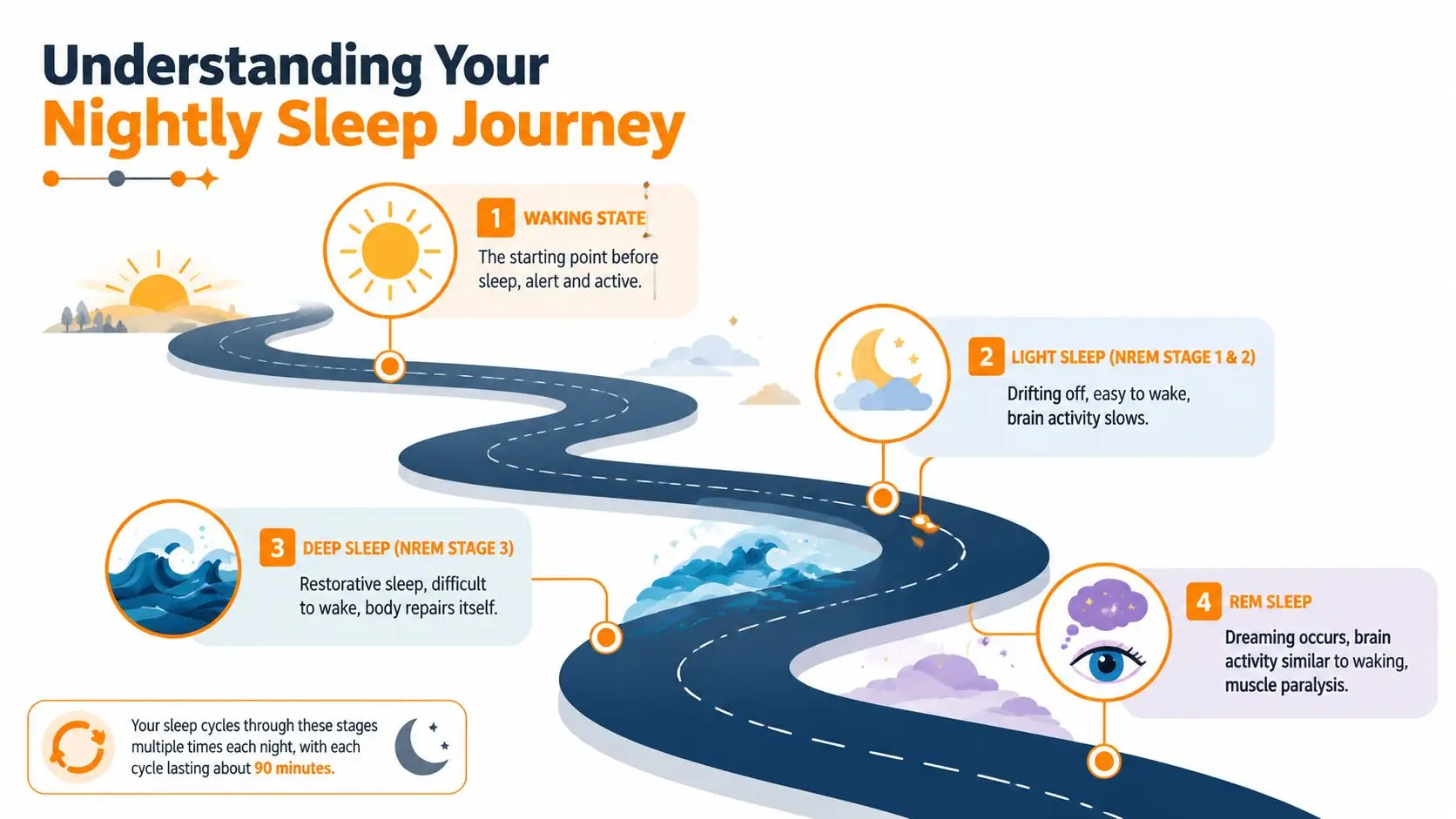
Sleep isn't one long, unbroken state. It moves in stages. A simple way to think of it is as a house with different rooms. Early in the night, you enter the lighter rooms first. Later, your brain and body should move into deeper, more protected rooms, then into dream-related REM sleep.
Why light sleep is not automatically a problem
Many people hear the phrase “light sleep” and assume it means poor sleep. That isn't quite right. Adults generally spend around 50% of total sleep time in light sleep, with the remaining 50% split between deep sleep and REM, according to Big Fig's overview of light sleep. So spending a large part of the night in lighter stages is normal.
What makes a person feel like a light sleeper is often something else. Their brain stays more alert during those lighter stages instead of moving smoothly into deeper, more protected sleep. That's why a minor sound, a partner turning over, or a door latch can pull them fully awake.
Think of light sleep as the front porch of sleep. Everyone passes through it. Some people just linger there longer, with one hand still on the doorknob.
Your brain's internal security system
The key idea is arousal threshold. That means how much stimulation it takes to wake your brain. If your arousal threshold is low, a small signal can wake you. If it's higher, your brain is more likely to ignore the same signal and keep sleeping.
Your brain also uses something called sleep spindles. These are brain waves during non-REM sleep that help block outside noise. A simple analogy is earmuffs for the brain. When that noise-filtering system works well, sounds stay in the background. When it works less effectively, ordinary household noise feels much louder to the sleeping brain.
Here's how this plays out in real life:
- A soft hallway light turns on: A less sensitive brain filters it out. A light sleeper's brain may treat it like morning.
- Your spouse shifts position: One person barely notices. Another wakes and starts thinking.
- The house settles at night: A heavy sleeper rolls on. A light sleeper's nervous system checks the signal.
Practical rule: If you wake easily, the problem often isn't that you “can't sleep.” It's that your brain detects change too efficiently while you're in naturally lighter stages.
That distinction matters. It means many sleep strategies should focus on reducing signals your brain has to process, not merely trying harder to sleep.
The Biological Blueprint of a Light Sleeper
Some people notice they have always slept with one ear open. They wake when a floorboard creaks, when a partner turns over, or when the room changes temperature by a small amount. That pattern often reflects biology, not a personal failure.

Some people are built with a lower wake-up threshold
One part of that biology is a lower arousal threshold. In simple terms, the brain needs less stimulation to switch from sleeping to waking. Cymbiotika's discussion of light sleepers describes light sleeping as being linked to this lower threshold, along with differences in sleep spindles and neurotransmitters such as adenosine and GABA.
A home alarm is a useful comparison. One system stays quiet unless someone opens a door. Another reacts when the wind rattles the frame. A light sleeper's nervous system often works more like the second one. It is highly responsive, and during the night that responsiveness can interrupt sleep.
That helps explain why two people can share the same bedroom and have very different nights. The environment is only part of the story. The brain's settings matter too.
Adenosine metabolism helps explain why some sleep stays shallow
This is one of the most overlooked parts of the conversation. Adenosine is a chemical signal that builds up while you are awake. You can picture it as sleep pressure collecting through the day, like sand slowly filling the bottom of an hourglass. By bedtime, that pressure helps nudge the brain into deeper, more settled sleep.
But adenosine does not work the same way in every person. Differences in adenosine metabolism, including how the body builds, uses, and clears this signal, may affect how strong and steady that sleep pressure feels. For some light sleepers, the body creates enough pressure to fall asleep, but not enough to hold sleep soundly through the night.
That can feel confusing. You may feel sleepy at 10 p.m., fall asleep without much trouble, then wake at 1 a.m. from a small sound and feel fully alert. In many cases, the issue is not effort. It is that the brain's sleep-pressure system and wake-up system are not balanced in the same way they are for a heavier sleeper.
GABA is part of this picture too. GABA helps quiet brain activity, almost like dimming the lights in a busy room. If adenosine is not creating strong enough sleep pressure, and calming signals are less effective, the brain can remain more watchful than restful.
Why light sleep often becomes more noticeable with age
Many older adults say, “I used to sleep through anything. Now every little thing wakes me.” That experience is common.
Part of the reason is life itself. Pain, stress, grief, caregiving duties, medication changes, and nighttime bathroom trips can all add more interruptions. Yet aging can also make a biologically light sleep pattern easier to notice. A brain that already wakes easily has less room to absorb those extra signals.
Stress hormones can intensify the problem. When nighttime cortisol stays higher, the body remains more alert than it should be. Then a minor trigger, such as dry mouth, a creaking mattress, or a sliver of light under the door, can set off a full awakening.
A common pattern looks like this:
- A small change or discomfort occurs
- The brain wakes quickly
- The mind starts monitoring the problem
- The body becomes more alert
- Sleep feels harder to regain
For older adults and families, this biological explanation can be reassuring. It shows why standard sleep tips do not work equally well for everyone, and why targeted support often works better. Once you understand that adenosine, arousal threshold, and nighttime alertness are part of the picture, it becomes easier to choose practical tools that fit the person, including medication review, routine tracking, and connected-care support through platforms such as Rx360.
How Health Habits and Medications Impact Your Sleep
Light sleep isn't always just a built-in trait. Sometimes your body is sending up a flag. Approximately 30% to 50% of adults report trouble with sleep onset or sleep maintenance, and if sleep difficulties last for over a month, an underlying health condition or sleep disorder may be the cause, according to Health's summary on light sleeping.
When a sleep problem is really a health clue
Older adults often have several small sleep disruptors that pile up. One person wakes because a knee hurts when they turn. Another wakes because they need the bathroom. Someone else has breathing interruptions, leg discomfort, reflux, or a racing mind. Each wake-up may look minor, but together they chop sleep into pieces.
Doctors often pay attention when light sleep comes with signs like these:
- Breathing concerns: Loud snoring, gasping, or witnessed pauses in breathing.
- Body discomfort: Chronic pain, restless feelings in the legs, or reflux that gets worse at night.
- Frequent bathroom trips: Repeated awakenings to urinate can break sleep continuity.
- Daytime strain: Fatigue, brain fog, or irritability that affects daily function.
A useful question is not only “Do I wake up?” but also “What wakes me up most often?”
Common daily factors that make light sleep worse
Habits matter because they can lower your brain's ability to stay settled. The biggest troublemakers are often ordinary.
- Late caffeine: Coffee, tea, cola, or chocolate later in the day can keep the brain more alert than you realize.
- Alcohol near bedtime: It may make you drowsy at first, but many people find their sleep becomes more broken later in the night.
- Screen exposure before bed: Blue light in the period before bedtime can interfere with the body's transition into sleep.
- Stress and anticipatory worry: If you go to bed bracing for another bad night, your body may stay guarded.
- Medication timing: Some prescription and over-the-counter medicines can make sleep lighter or more fragmented.
A family medication review can be surprisingly helpful. Not because every medicine is “bad,” but because timing, combinations, and side effects matter more as we age.
Bring a full list to your next appointment, including over-the-counter sleep aids, pain relievers, cold medicines, and supplements. Sleep changes often hide in that list.
When light sleep appears suddenly, worsens after a new prescription, or comes with new daytime symptoms, it deserves a closer look.
Practical Strategies for Deeper More Restorative Sleep
A lighter sleeper often does better with a bedtime setup that asks less of the brain.
One helpful way to picture it is this. Your brain works like a night watchman. If the room is too bright, too warm, too noisy, or unpredictable, that watchman keeps checking the doors and windows instead of settling down. For older adults, that watchman can become even more alert because sleep is already more fragile. If adenosine does not build sleep pressure as strongly or wear off in a predictable way, the brain may need steadier conditions to stay asleep.
That is why small changes can matter so much. You are not trying to force sleep. You are giving your brain fewer reasons to wake up.
Start with the bedroom
Your bedroom should send one clear message: nothing urgent is happening here.
Anatome's sleep guidance notes that a cool room, blackout curtains, sound masking, and a consistent sleep schedule can all support deeper sleep. For many people, a bedroom temperature around 68°F (20°C) feels comfortable and may help the body settle into its nighttime cooling pattern.
Try adjusting the room in practical ways:
- Darken the space: Blackout curtains or a sleep mask can reduce light cues that nudge the brain toward wakefulness.
- Use steady background sound: A fan, white noise machine, or soft sound app can cover sudden noises like plumbing, footsteps, or traffic.
- Keep the room comfortably cool: Many older adults sleep better in a slightly cool room, as long as it feels safe and comfortable.
- Cut down on motion disruption: Separate blankets, a mattress topper, or sleeping positions that reduce jostling can help if a partner's movement wakes you.
- Use low, warm light at night: For bathroom trips, soft amber or warm pathway lighting helps you see without telling the brain that morning has arrived.
Give your brain a routine it recognizes
A regular bedtime routine works like the same song played every night before a curtain closes. After enough repetition, the brain begins to connect those steps with sleep.
This matters even more for a light sleeper. If adenosine related sleep pressure is less reliable, external routine becomes more important. The body benefits from a predictable rhythm when the internal signal is not as strong.
A simple wind-down routine might look like this:
- Turn off bright screens late in the evening.
- Lower the stimulation in the home by dimming lights and reducing noise.
- Choose one quiet activity such as reading, prayer, gentle stretching, or slow breathing.
- Go to bed and get up at about the same time each day so your brain sees a stable pattern.
- Keep the last hour simple with fewer decisions, fewer chores, and fewer upsetting conversations.
If you wake during the night, avoid checking the clock if possible. Clock watching can pull the brain into problem-solving mode. That is the opposite of what a light sleeper needs.
Support sleep pressure during the day
Nighttime sleep starts long before bedtime.
Adenosine is one of the chemicals that helps create the feeling of sleep pressure across the day. You can think of it as the body's natural sleep weight. By evening, that weight should be heavy enough to help you drift into deeper sleep. In some light sleepers, that process may be weaker or more easily interrupted.
These daytime habits can help support that process:
- Get morning light exposure: Sunlight soon after waking helps set the body clock for the day and night ahead.
- Stay gently active: Walking, chair exercises, or physical therapy movements can help the body build a clearer day-night rhythm.
- Be careful with naps: A long or late nap can take away some of the sleep pressure you need at night.
- Keep meals and activity fairly regular: A steady daily pattern gives the body better timing signals.
Actionable Sleep Improvement Checklist
| Category | Action | Why It Works |
|---|---|---|
| Environment | Use blackout curtains or a sleep mask | Reduces light cues that can trigger awakening |
| Environment | Run a sound machine or fan | Masks irregular noise so the brain hears fewer sudden changes |
| Environment | Keep the room comfortably cool | Supports the body's natural nighttime cooling process |
| Routine | Keep a steady sleep and wake schedule | Gives the brain a predictable rhythm to follow |
| Routine | Stop screens before bed | Reduces light exposure and mental stimulation late in the evening |
| Routine | Create a short calming ritual | Helps the brain connect repeated steps with sleep |
| Daytime | Get morning light | Strengthens the body clock that helps organize sleep at night |
| Daytime | Stay physically active | Supports stronger day-night sleep timing |
| Habits | Limit caffeine and alcohol late in the day | Lowers common triggers for lighter, more broken sleep |
| Safety | Use warm pathway lighting | Helps with nighttime mobility without fully waking the brain |
Start small. Pick one change in the room, one change in your routine, and one daytime habit. Then keep track for a week or two.
That last step matters. A light sleeper often improves through patterns, not overnight miracles. Clear notes about bedtime, wake-ups, naps, noise, and bathroom trips can later help families and connected-care tools such as Rx360 see what is improving and what still needs attention.
How Caregivers Can Support Better Sleep with Connected Care
At 10 a.m., an older adult may say, "I was awake all night." A daughter may answer, "But you were asleep when I checked on you." Both can be telling the truth. Light sleep often feels like barely sleeping at all, especially when the brain keeps drifting toward wakefulness.

That is where connected care can help families see the full pattern, instead of relying on scattered memories from a tired morning conversation.
What families often miss
Sleep trouble is rarely just one thing. A person may wake because of bladder urgency, joint pain, room noise, medication timing, or a brain that stays easy to arouse. Earlier in this article, we discussed adenosine as part of the body's sleep-pressure system. If that system does not build or clear sleep pressure in the usual way, sleep can stay lighter and more fragile. That helps explain why some older adults do everything "right" and still wake easily.
Families usually notice the effects first. More daytime dozing. More irritability. More unsteady trips out of bed at night. But without a record, it is hard to know whether the main problem is frequent waking, long time awake after each waking, or a shifting day-night rhythm.
Connected care fills in those gaps. A platform such as Rx360 can help track routines, activity changes, nighttime movement, and other home patterns so caregivers and clinicians can look for trends instead of guessing.
Why pattern tracking matters
A sleep log written on paper is useful. Connected care adds another layer. It helps families notice changes over days and weeks, which is often how light sleep improves or worsens.
That kind of tracking can support better decisions:
- Medication review gets more precise: Families can compare sleep changes with dose changes or timing changes.
- Safety concerns stand out sooner: Repeated nighttime bed exits may signal fall risk, pain, or bladder problems.
- Appointments become more productive: A clinician can work from observed patterns instead of a vague report that "sleep is bad."
- Care stays respectful: Support can match the person's actual routine, without repeated check-ins that may feel intrusive.
A good comparison is a home blood pressure log. One reading tells part of the story. A pattern tells much more. Sleep works the same way.
For older adults, that matters because poor sleep rarely stays isolated. It can affect mood, balance, memory, patience, and willingness to stay active during the day. Families who can spot those links early are in a better position to ask the right questions and support changes that fit the person's life.
Good caregiving means noticing patterns early and responding with calm, useful support.
Connected care does not replace a doctor's judgment. It gives the doctor and family a clearer picture of what is happening at home, especially when light sleep may be tied to biology, daily routines, and health changes happening at the same time.
When to Discuss Light Sleep with Your Doctor
Some light sleepers mainly need routine changes and a better sleep environment. Others need a medical evaluation. The difference usually shows up in how long the problem lasts, how much it affects daytime life, and whether other symptoms come with it.
Signs it's time to bring it up
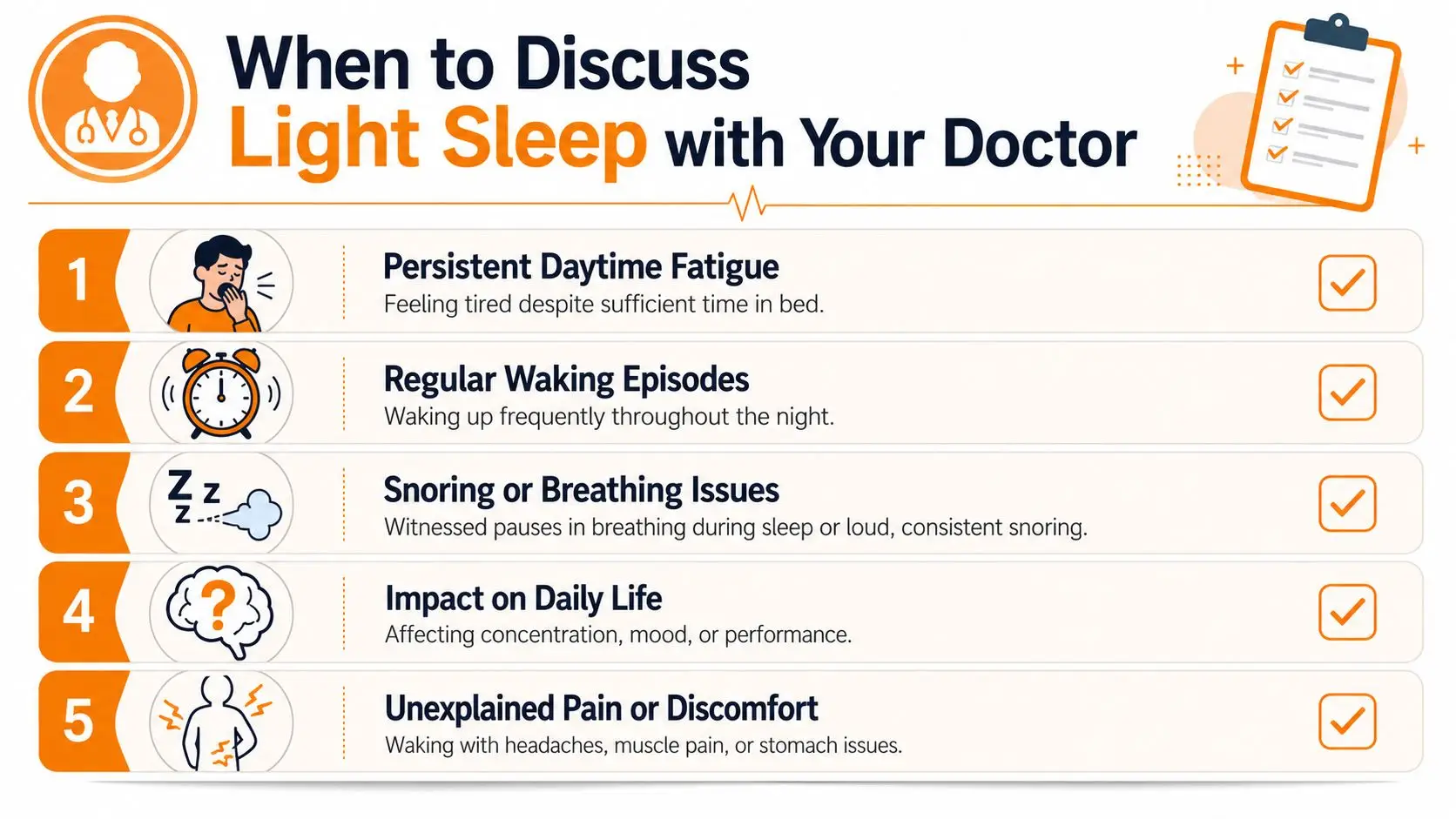
Talk with your doctor if any of these fit your situation:
- You feel tired most days: Even when you spend enough time in bed, you don't feel restored.
- You wake repeatedly and can't explain why: Frequent waking deserves attention, especially if it has become your new normal.
- Breathing seems involved: Snoring, gasping, or pauses in breathing should be discussed promptly.
- Daily life is suffering: Concentration, mood, balance, or patience are getting worse.
- Pain or discomfort keeps waking you: Headaches, body pain, reflux, leg discomfort, or other physical symptoms may be part of the story.
- The problem has lasted over a month: Persistent sleep difficulty can signal an underlying condition, as noted earlier from the verified Health reference.
Bring a short sleep log if you can. Note bedtime, wake time, awakenings, bathroom trips, naps, caffeine, alcohol, and new medications. That kind of record often tells the story faster than memory alone.
A good appointment doesn't have to end with a pill. It may lead to a medication adjustment, a sleep disorder screening, a pain plan, or a better bedtime routine. The important thing is not to normalize suffering just because sleep problems are common in later life.
If you or someone you love is trying to stay independent while managing restless nights, Rx360 offers a connected-care approach that helps families stay informed, supports clearer conversations with clinicians, and promotes confident aging in place without adding unnecessary complexity.
Lower-Risk Medication Plan Checklist
Below is a practical checklist and step plan you can implement into your daily life:
-
List all medications
Include prescriptions, over-the-counter drugs, supplements, sleep aids, creams, patches, eye drops, and inhalers.
-
Mark fall-risk drugs
Flag medicines that cause dizziness, sleepiness, confusion, blurred vision, low blood pressure, or low blood sugar.
-
Ask for a medication review
Bring the list to a pharmacist or prescriber.
-
Review after any warning sign
Request a new medication check after a fall, near-fall, new prescription, dose change, dizziness, or confusion.