It's a familiar moment. Dinner gets late, everyone's tired, and pizza sounds easy, comforting, and normal. Then the worry shows up: “If I eat this, am I setting myself up for a gout flare?”
That fear makes sense. Gout pain can be intense, and many people start to feel that favorite foods are off-limits forever. The good news is that pizza and gout aren't a simple yes-or-no issue. In many cases, the safer answer isn't “never eat pizza again.” It's “build the slice more carefully.”
A better way to think about pizza is in parts. The crust, sauce, cheese, toppings, portion size, and what you drink with it all matter. Once you know which parts tend to be lower risk and which ones are more likely to cause trouble, pizza becomes much easier to manage.
Table of Contents
- The Pizza Dilemma for Gout Sufferers
- Understanding How Gout Works
- Deconstructing Pizza What Really Matters for Gout
- How to Build a Gout-Friendly Pizza
- Beyond the Slice Portion Size and Pairings Matter
- Partnering with Your Healthcare Provider
The Pizza Dilemma for Gout Sufferers
You may have already had this conversation at home. One person says, “Let's just order pizza,” and the other immediately thinks about a swollen toe, a sore ankle, or a painful night that follows. That can turn an ordinary meal into a stressful decision.
For many people with gout, the surprise is that the crust itself usually isn't the main issue. A Verywell Health review discussing guidance from the Johns Hopkins Arthritis Center notes that more than 12 million American adults are affected by gout, and that foods like bread and pizza dough don't typically increase uric acid levels. The bigger concerns are often processed meat toppings and beer.
That distinction matters because it changes the question from “Can I ever eat pizza?” to “How can I make pizza work for me?” A plain cheese slice, a vegetable pizza, and a meat-loaded pie with beer on the side are not the same meal from a gout standpoint.
Main takeaway: With pizza and gout, the riskiest part is often the combination of high-purine toppings, large portions, and alcohol, not the dough alone.
That's a more hopeful place to start. Instead of giving up a favorite food, you can learn how to lower the chances that pizza night turns into flare night.
Understanding How Gout Works
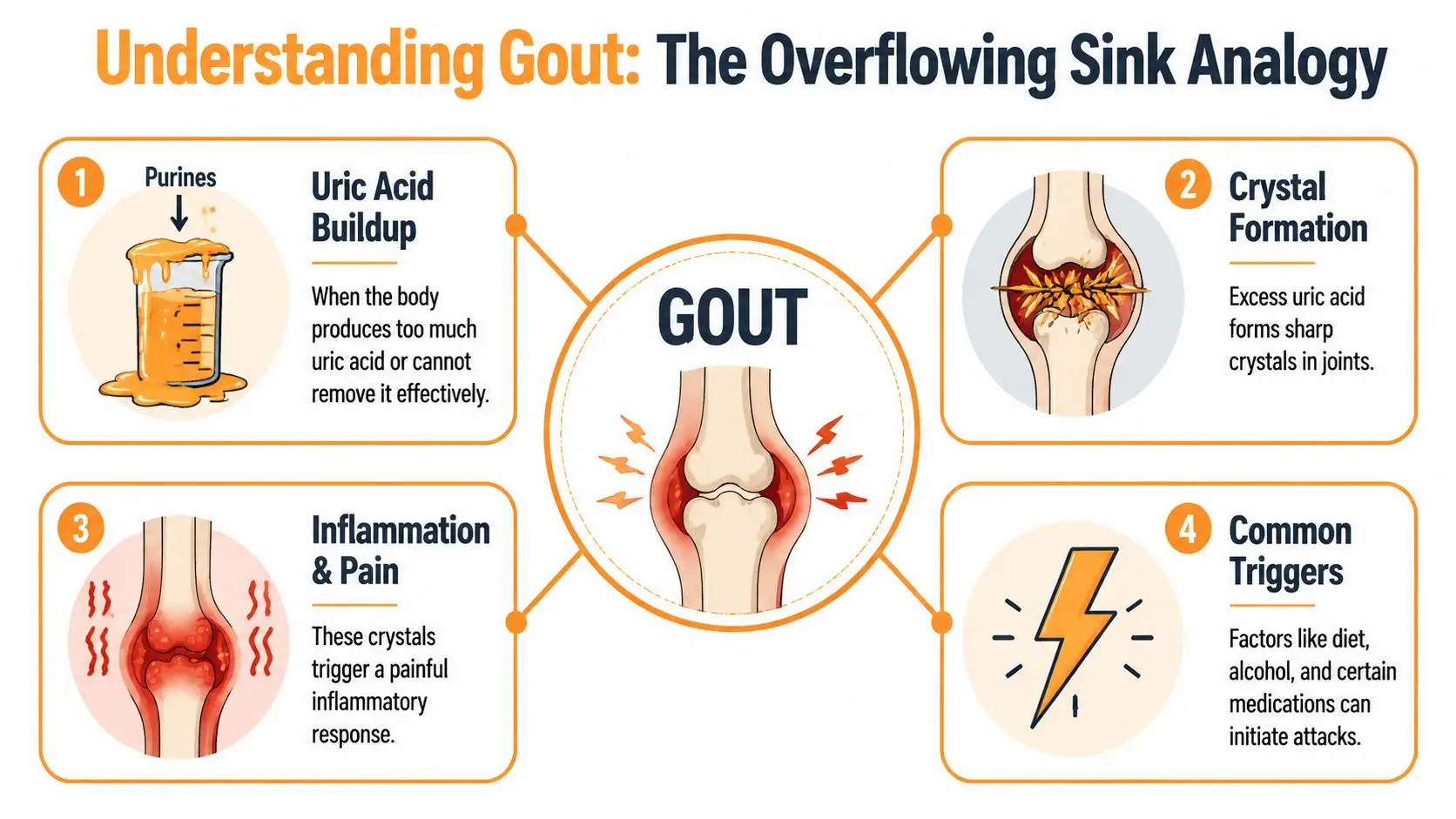
Gout is a form of arthritis linked to uric acid, a substance your body makes as it breaks down purines. Purines are natural compounds found in your body and in many foods. Trouble starts when uric acid builds up faster than the body can clear it.
The overflowing sink example
Think of your body like a kitchen sink. The faucet is making uric acid. The drain is getting rid of it. If the faucet runs too fast, or the drain doesn't work well enough, the sink starts to fill.
After a while, that “overflow” can show up as sharp uric acid crystals in a joint. Those crystals irritate the joint lining and trigger inflammation. That's when people feel the classic gout symptoms: sudden pain, swelling, warmth, redness, and tenderness.
A lot of people get confused here. They assume every painful food reaction is immediate and obvious. Gout doesn't always work that way. The problem is the body's overall uric acid burden, and certain foods or drinks can push that burden higher.
Where food fits in
Food is only one part of gout, but it's an important part because it's something you can influence day to day. Some foods contribute more purines than others. Some meals also come packaged with other issues, such as large portions, lots of sodium, and heavy eating patterns that don't help anyone feel their best.
The practical point is simple:
- Lower-purine choices generally put less pressure on uric acid handling.
- High-purine meats and certain seafood can raise the risk of problems.
- Alcohol, especially beer, can make the situation worse.
- Meal pattern matters too. A very heavy meal can be harder on the body than a modest one.
Gout management often works best when people stop asking whether a single food is “good” or “bad” and start looking at the full picture of the meal.
That full-picture approach is exactly why pizza can still fit, as long as you know which parts deserve the closest attention.
Deconstructing Pizza What Really Matters for Gout
Pizza is common enough that this question comes up all the time. According to an NIH dietary brief on pizza in the American diet, about 11% of the U.S. population eats pizza on any given day. On the day it's eaten, pizza provides about 27% of total energy intake, and it contributes about one-third or more of nutrients that guidelines recommend limiting, including total fat, saturated fat, and sodium. That's why the whole meal matters, not just one ingredient.
Crust is usually not the problem
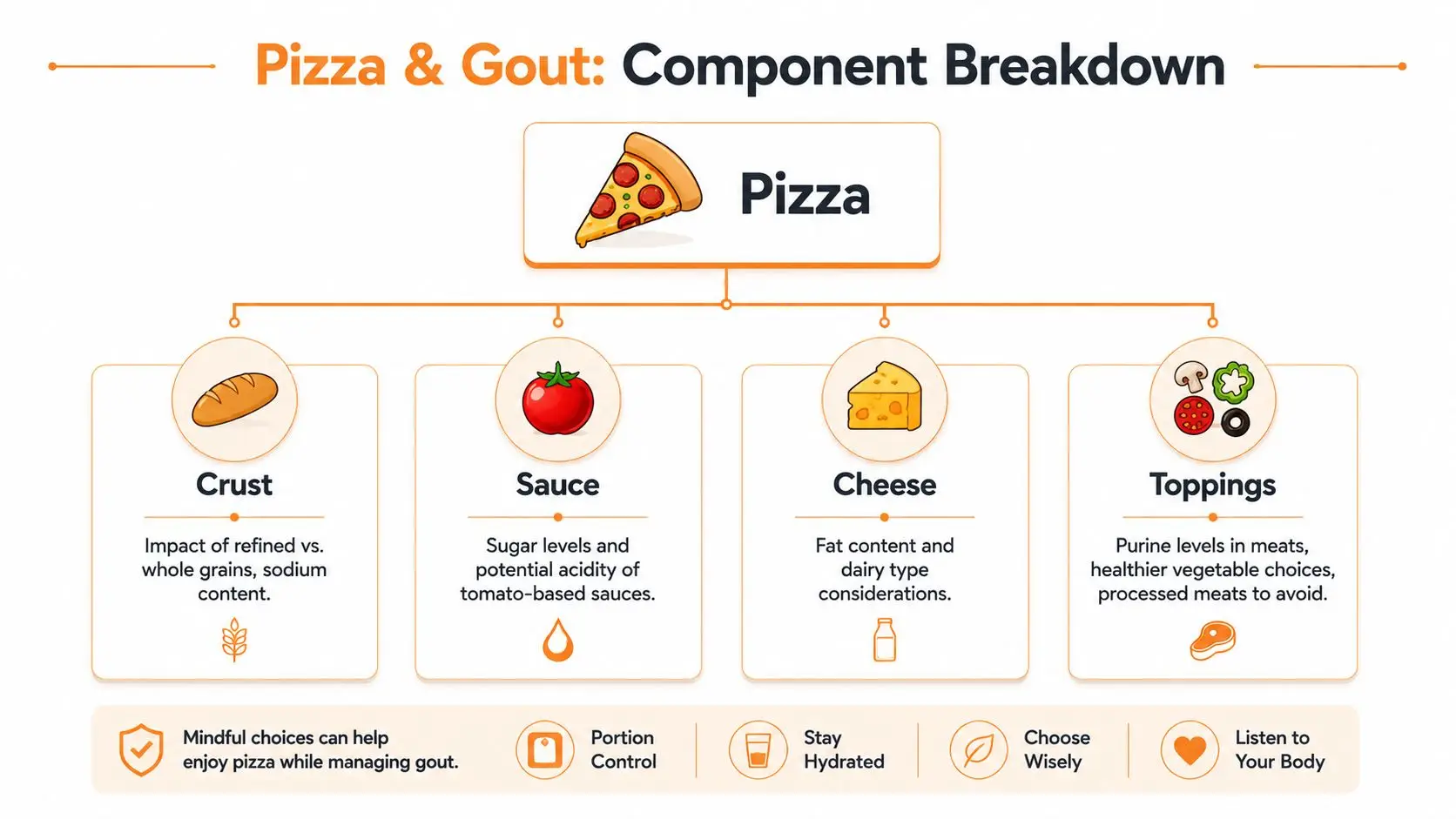
For many readers, this is the biggest relief. Plain crust is generally the least concerning part of the pizza from a gout perspective. If you've been blaming the dough for every problem, that may be too simple.
Crust can still affect the quality of the meal. A very large, thick, heavily salted pizza may encourage overeating. But in terms of uric acid, the crust usually isn't the top issue.
The sauce usually falls into the middle ground. Tomato sauce isn't usually what triggers concern in gout counseling, but sauces can add sodium, sugar, and extra calories depending on the brand or restaurant. That doesn't make sauce forbidden. It just means “extra sauce” may not always be the smartest default if the rest of the meal is already heavy.
Here's a quick look at the pizza parts:
| Pizza part | General gout concern | Why it matters |
|---|---|---|
| Crust | Lower | Usually not a major uric acid issue |
| Sauce | Lower to moderate | Can add salt and overall meal load |
| Cheese | Moderate | Adds richness, saturated fat, and heaviness to the meal |
| Toppings | Highest variation | This is where purine load often climbs |
A short explainer helps make the breakdown easier to visualize:
Sauce cheese and toppings are not equal
Cheese confuses people because it feels “rich,” so many assume it must always be the main problem. In practice, cheese often matters more because it can make the pizza heavier, saltier, and higher in saturated fat, not because it's the top purine source on the pie.
Toppings are where the risk can change quickly. A vegetable pizza and a pizza topped with pepperoni, sausage, bacon, or anchovies are very different meals. Once processed meats pile up, the pizza becomes a stronger purine concern.
A useful rule is to judge the pizza by its top layer, not by the crust underneath. If the top is loaded with processed meat or seafood, the meal becomes more likely to work against your gout plan. If the top is mostly vegetables with a modest amount of cheese, the same food can be much easier to fit into real life.
How to Build a Gout-Friendly Pizza
A safer pizza starts with a simple question: “How do I keep this enjoyable without turning it into a high-purine, high-burden meal?” That's more practical than trying to make pizza “perfect.”
An article on practical ingredient choices for gout and pizza recommends active purine-load management. In plain terms, that means avoiding anchovies, pepperoni, sausage, and bacon, then choosing lighter toppings and pairing the meal with water instead of beer or soda.
Start with a simple base
If you're ordering or making pizza at home, start with these habits:
- Keep the crust ordinary: Thin or regular crust can make portion control easier than a very thick, heavy pie.
- Go lighter on cheese: You still get flavor, but the slice feels less greasy and less overwhelming.
- Choose vegetable toppings first: Bell peppers, onions, tomatoes, spinach, mushrooms, or other vegetables can add interest without loading the pizza with processed meat.
- Treat meat as an accent, not the foundation: If you include meat at all, keep it limited rather than stacking multiple kinds.
- Drink water with the meal: That's a simple way to support hydration and avoid a common trigger pairing.
Practical rule: The more your pizza looks like vegetables with some cheese, the gentler it usually is than a slice buried under salty meat.
Pizza Topping Choices for Gout Management
| Topping Category | Lower-Risk Choices (Enjoy Freely) | Moderate-Risk Choices (Eat in Moderation) | Higher-Risk Choices (Best to Avoid) |
|---|---|---|---|
| Vegetables | Bell peppers, onions, tomatoes, spinach, broccoli | Mushrooms | None in usual pizza portions |
| Cheese and dairy-style additions | Light cheese, moderate cheese | Extra cheese, creamy add-ons | Very heavy cheese-loaded combinations |
| Protein toppings | Vegetable-forward pizza with no meat | Small amounts of chicken if tolerated in your meal pattern | Pepperoni, sausage, bacon, anchovies |
| Flavor extras | Garlic, herbs, chili flakes in modest amounts | Rich specialty sauces | Meat-heavy drizzles or add-on processed meats |
This table isn't meant to make you anxious. It's meant to help you see where the big wins are. In most cases, skipping the processed meat toppings does more for pizza and gout than obsessing over the crust.
Ordering out without feeling deprived
Restaurant pizza can still work. You don't need a “special medical pizza.” You need a few smart choices.
Try this when ordering:
- Choose one vegetable-heavy pizza for the table so there's always a lower-risk option.
- Skip the meat trio combinations that stack pepperoni, sausage, and bacon.
- Ask for less cheese if the restaurant allows it.
- Pair it with a salad or vegetables so pizza isn't the whole meal.
- Stop at satisfied, not stuffed. Comfort matters, but so does recovery afterward.
At home, you get even more control. A store-bought crust, modest cheese, plenty of vegetables, and a lighter hand with salty ingredients can produce a pizza that still feels familiar and enjoyable. For many families, home pizza night becomes easier once they stop trying to copy restaurant-style excess.
Beyond the Slice Portion Size and Pairings Matter
Even a well-built pizza can become a problem if the meal is too large or paired with the wrong drink. A common error arises here. Individuals often focus on ingredients, then ignore the size of the meal and what goes with it.
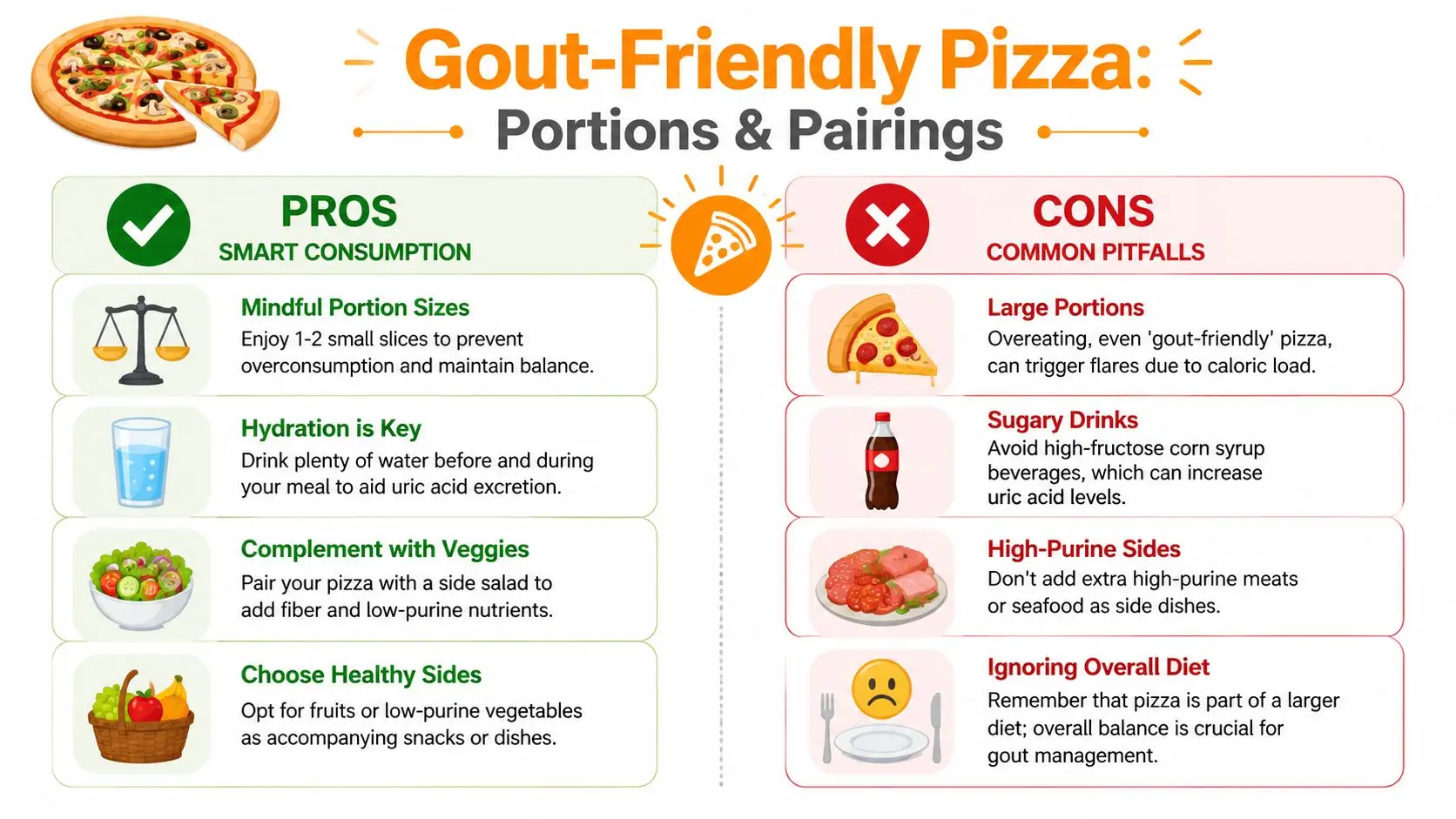
Why the whole meal matters
A pizza dinner can get heavy fast. Large portions, salty toppings, and eating quickly can leave you feeling bloated and uncomfortable, even before gout enters the conversation. For someone prone to flares, that “big meal” pattern is worth paying attention to.
A gentler pizza night often looks like this:
- A modest number of slices: Enough to enjoy, not enough to feel overfull.
- A side salad or vegetables: This adds bulk and balance to the meal.
- A slower pace: Eating more slowly makes it easier to notice when you've had enough.
- No second round out of habit: Many people keep eating because the box is open, not because they're still hungry.
A pizza meal is easier on gout when the slice is part of dinner, not the entire event.
Better pairings for a pizza night
Beverages can contribute to the risk of the meal. A Johns Hopkins Arthritis Center expert discussion on gout triggers and alcohol notes that bread, pizza, and pasta do not themselves increase uric acid, while the bigger concerns are purine-rich toppings and beverage pairings, especially beer.
That's why the classic combination of pizza plus beer can be much more troublesome than pizza alone. If someone says, “I only had pizza,” it's worth remembering the drink may have played a role too.
Better pairing ideas include:
- Water: The simplest and usually the best choice.
- Sparkling water: Helpful if you want something that feels more festive.
- Unsweetened beverages: Often a better fit than sugary drinks.
- A side salad instead of extra meat sides: This keeps the meal from becoming too dense.
If you're caring for an older adult with gout, this is one of the easiest changes to support. You don't need to police every bite. You can help set out water, order a side salad, and steer the meal away from beer and meat-heavy extras.
Partnering with Your Healthcare Provider
Food matters, but it's only one piece of gout care. Many people also use medication to lower uric acid or to manage flare symptoms. That doesn't mean diet stops mattering. It means food choices and medical treatment work best together.

Bring real examples to your appointment. Don't just say, “I'm trying to eat better.” Say, “Pizza night seems to be a problem when I eat meat toppings,” or “I'm not sure whether beer or the food is the bigger trigger for me.” Specific details help your clinician give advice that suits your life.
Questions worth bringing to your visit
You might ask:
- Could my current medication affect how strict I need to be with food choices?
- Are there certain toppings or drinks I should be more careful with based on my history?
- Would you like me to keep a food and flare record for a few weeks?
- Can you refer me to a registered dietitian for a personalized eating plan?
- If I want pizza occasionally, what does a reasonable portion look like for me?
The goal isn't to create a perfect diet. It's to build a routine you can live with. When you understand your own triggers and get advice specific to your health, pizza becomes less of a mystery and more of a manageable choice.
Rx360 helps older adults stay informed, connected, and supported while continuing the routines they value most. If you want a simpler way to stay aware of wellness changes, keep family in the loop, and support coordinated care, explore Rx360.
Lower-Risk Medication Plan Checklist
Below is a practical checklist and step plan you can implement into your daily life:
-
List all medications
Include prescriptions, over-the-counter drugs, supplements, sleep aids, creams, patches, eye drops, and inhalers.
-
Mark fall-risk drugs
Flag medicines that cause dizziness, sleepiness, confusion, blurred vision, low blood pressure, or low blood sugar.
-
Ask for a medication review
Bring the list to a pharmacist or prescriber.
-
Review after any warning sign
Request a new medication check after a fall, near-fall, new prescription, dose change, dizziness, or confusion.