
You may be reading this after another rough morning. The alarm went off. It was loud, sharp, and impossible to ignore, yet you still woke up confused, irritated, or unsteady. If you're helping an older parent, you may have had the opposite problem: the alarm sounded, but they slept through it, or they heard it and didn't realize what it meant.
That's why good alarm sounds are more important than often appreciated. An alert isn't just a sound. It's part of daily safety, medication routines, morning confidence, and peace of mind at home. For older adults, the usual advice to “just make it louder” often misses the underlying issue. Hearing changes. Sleep changes. Memory and attention can change too.
A better alarm can feel gentler without being weak. It can be easier to hear without being harsh. It can support independence instead of adding stress.
Table of Contents
- Beyond the Beep Rethinking Alarm Sounds
- What Makes an Alarm Sound Good
- Adapting Sounds for Hearing and Health
- Matching the Alert to the Urgency
- Configuring Alarms on Your Devices
- Good Alarm Sounds You Can Use Today
- Create Your Circle of Sound Support
Beyond the Beep Rethinking Alarm Sounds
A common scene goes like this. An older adult sets a standard digital alarm with a piercing beep. At 6:30 a.m., the room fills with noise. They wake suddenly, heart racing, and need several minutes to figure out where they are, what day it is, and whether they need to get up right away.
That experience is so common that many people assume it's normal. It doesn't have to be.
Many adults still rely on sound-based alarms. One consumer sleep review says usage lands at around 80% of people, while also noting that the wrong sound can trigger a stress response and make sleep inertia worse, which is that heavy, foggy feeling after waking (Healthline's review of alarm sounds). For older adults and caregivers, that fog isn't a small inconvenience. It can shape how safely someone gets out of bed, starts a morning routine, or handles medication.
The real problem isn't just volume
Families often focus on one question: “Can they hear it?” That matters, but it's only part of the picture. A harsh alarm may be audible and still be a poor fit. It can startle someone awake without helping them feel oriented.
A better question is this: Does the sound help the person respond clearly and calmly?
Practical rule: A good alarm should be easy to notice, easy to recognize, and easy to tolerate every day.
That's especially important when someone is aging in place. The sound used for waking up, taking medicine, or signaling help shouldn't add confusion. It should reduce it.
A calmer alert can still be dependable
Think about two different mornings. In one, a repetitive beep cuts through sleep like a car alarm. In the other, a gentle musical pattern rises in volume, giving the brain a clearer path from sleeping to waking. Both may get the job done. Only one is likely to feel manageable day after day.
Good alarm sounds support safety, but they also support dignity. They let a person wake, notice, decide, and act without feeling attacked by the device that's supposed to help them.
What Makes an Alarm Sound Good
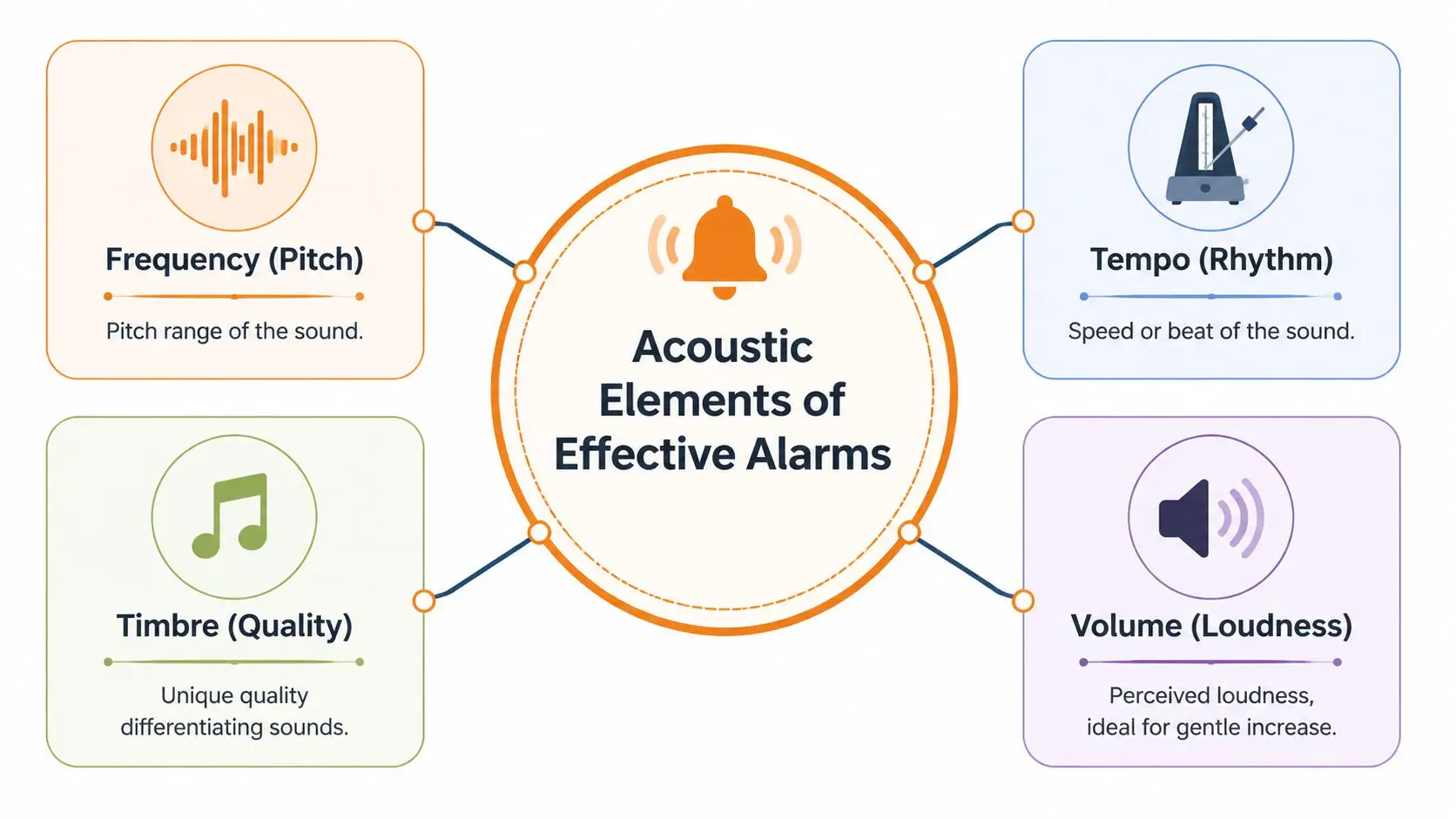
A good alarm sound usually has a few simple qualities working together. It has a noticeable pitch, a clear rhythm, a distinct tone quality, and a volume pattern that doesn't hit like a slap. You don't need musical training to hear the difference. You've probably already felt it.
A shrill electronic beep is like a whistle blown inches from your ear. A smoother, mid-range melodic tone feels more like a short musical phrase or birdsong. One demands attention through irritation. The other gets attention through structure.
Pitch matters more than people expect
Pitch is how high or low a sound seems. Research summaries on alarm design note that a technically strong alarm sound often sits in the 500–3000 Hz range because that band is easier for the brain to detect during sleep. The same summary reports that gradual volume increase and melodic structure can reduce the stress response compared with harsh, repetitive beeps (Mudita's science summary on alarm sounds).
That doesn't mean every sound in that range is good. It means pitch gives you a useful starting point. If a tone is extremely thin, piercing, or tinny, it may be easy to hate and still hard to process well when half asleep.
A practical way to judge pitch is to ask:
- Too high: Does it sound sharp or shrieky?
- Too low: Does it disappear into room noise, bedding, or a fan?
- More workable: Does it sit in the middle and remain clear without feeling aggressive?
Rhythm and melody help the brain organize sound
Rhythm is the pattern of timing. Melody is the sense that the sound moves in a musical way instead of repeating one flat note. These features matter because the sleeping brain responds better to sound that has shape.
A sound with rhythm gives the brain something to follow. A sound with melody feels less mechanical. That often makes it easier to recognize and less stressful to hear every day.
A useful alarm doesn't need to be pretty. It needs to be clear, structured, and tolerable enough that you won't dread hearing it.
The last ingredient is volume behavior. A sudden blast can feel disorienting. A rising volume, sometimes called a crescendo, gives the body a gentler transition. For a bedside wake-up alarm, that's often better than starting at full force.
Adapting Sounds for Hearing and Health
Older adults often get overlooked in alarm advice. Most articles talk as if everyone hears the same way and wakes the same way. Real households know better.
Why one-size-fits-all alarms fall short
Age-related hearing loss often affects higher frequencies first. That means a tone that seems obvious to a younger caregiver may sound faint, distant, or vanish entirely for an older adult. Independent reporting on alarm effectiveness for older adults highlights this practical gap. It notes that age-related hearing loss can make high-frequency tones hard to hear, and that deeper sleep can worsen sleep inertia. It also points to alarms with stronger low-frequency energy, or alarms paired with vibration or light cues, as important for reliability (ABC reporting on better alarm sounds).
That changes how you should choose a sound. “Louder” isn't always better. If the tone lives mostly in a range the person doesn't hear well, raising the volume may only make it more unpleasant for others in the home.
A better fit often has these traits:
- Lower and fuller tone: Not muddy, but less sharp than a standard digital beep.
- Clear rhythmic pattern: Easier to identify than a long, flat tone.
- Simple meaning: The person should quickly know what the alert is for.
Build a backup, not just a louder sound
Caregivers often feel relieved once they find one alarm tone that seems to work. It's safer to think in layers.
For an older adult with hearing changes, pair sound with another cue whenever possible:
- Vibration: A phone on a stable bedside surface, a wearable, or a dedicated vibrating alert can add a physical signal.
- Light cue: A bedside lamp, smart bulb routine, or dedicated flashing alert can help cue waking.
- Voice prompt: Some devices let you use a spoken reminder such as “Time for morning medicine.”
This matters even more when memory, slower processing, or morning confusion are part of the picture. A beep can be heard and still not be understood. A voice reminder or a distinct repeated pattern can reduce guesswork.
If someone often asks, “What is that sound?” the problem may not be loudness. It may be recognition.
The best setup for an older adult is usually a multisensory system. Sound gets attention. Light or vibration confirms the message. A familiar routine gives the alert meaning.
Matching the Alert to the Urgency
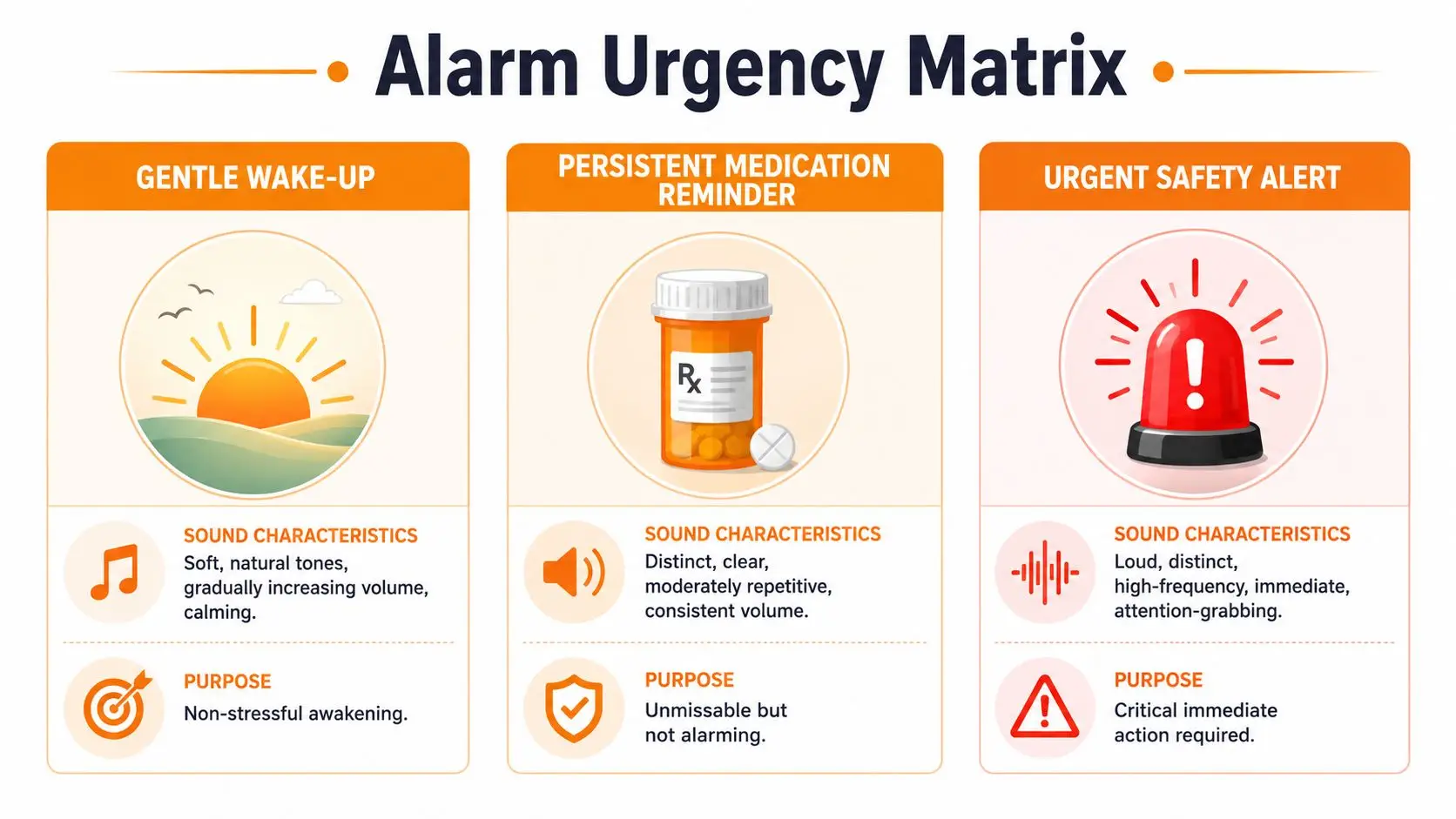
Not every alert should sound the same. That's one of the biggest mistakes people make at home. They use one default tone for waking up, medications, timers, and emergencies. Then the brain stops assigning clear meaning to the sound.
A wake-up alarm is not a safety siren
A wake-up alarm should encourage a smooth start. It can be melodic, gradual, and even pleasant. The goal is to bring someone into wakefulness without setting off panic.
A medication reminder has a different job. It should stand out from conversation, television, and kitchen noise. But it shouldn't sound frightening. A short repeating pattern or a spoken reminder often works better than a dramatic alarm.
A safety alert is different again. In urgent situations, the sound must be unmistakable. Industry guidance for fire alarm practice says sounders should be at least 65 dB at 3 meters, remain consistent across the building, and be clearly distinguishable from everyday sounds so people recognize urgency quickly (Cranford Controls on fire alarm sounder guidance).
That principle applies at home too, even when the device isn't a fire alarm. If an alert signals danger, a fall, or a call for immediate help, it shouldn't sound like the same soft chime used for a calendar reminder.
Choosing the Right Alarm for the Task
| Use Case | Ideal Characteristics | Sound Example |
|---|---|---|
| Gentle wake-up | Melodic, gradual volume, calm rhythm, not shrill | Soft chimes, birdsong, light piano phrase |
| Medication reminder | Distinct, repeatable, clear pattern, easy to identify in daytime noise | Rhythmic taps, short marimba pattern, spoken reminder |
| Urgent safety alert | Strong contrast from everyday sounds, immediate, impossible to confuse with routine alerts | Siren-like pulse, loud alert tone, urgent voice cue |
A few practical comparisons help.
- Wake-up alerts: Best when they rise into awareness. Many people do well with soft bell tones, calm strings, or natural sounds that have a gentle pattern.
- Medication reminders: Best when they are neutral but noticeable. Think of a firm knock rather than a scream.
- Safety alerts: Best when they interrupt everything. The person and anyone nearby should know at once that this sound means action.
For caregivers, consistency matters almost as much as sound choice. If one sound always means medicine and another always means help, response gets easier over time.
Configuring Alarms on Your Devices
You don't need specialty equipment to start improving alarm sounds. Many phones, tablets, watches, and smart speakers already include better options than the default beep.

Start with one alert that matters most. For most households, that's the morning wake-up alarm or a medication reminder. Test it during the day first. You want to know not just whether it plays, but whether the person recognizes it quickly and feels comfortable hearing it.
On a smartphone
On an iPhone, open the Clock app, tap Alarm, choose the alarm, and open Sound. Listen to several tones in a quiet room. Skip anything that feels piercing or too similar to message notifications. If available, choose a melodic tone or a softer chime and turn on options that make the volume increase more gradually.
On an Android phone, the path varies by brand, but it's usually Clock, Alarm, then the specific alarm sound. Samsung Galaxy, Google Pixel, and Motorola phones often include nature sounds, bell tones, and short musical patterns. If the person uses hearing aids, test the alarm both with and without them, especially for early morning use.
A few setup tips make a big difference:
- Rename the alarm when possible. “Morning medicine” is clearer than “Alarm 2.”
- Separate routine sounds. Don't use the same tone for alarms, texts, and app notifications.
- Keep the device placement realistic. A phone buried under a pillow won't perform the same as one on a bedside table.
On a smart speaker
A smart speaker can be helpful when bedside devices are too easy to miss. On Amazon Alexa or Google Home, create named alarms or reminders tied to daily routines. If voice prompts are available, use plain language such as “It's time to take your blood pressure pill.”
That spoken meaning can be more useful than a generic tone, especially when the person hears the sound but forgets why it's playing.
Here's a short walkthrough to make the process easier:
When you test any device, don't stop after one trial. Try it from the bathroom, from the kitchen, and with background noise on. A sound that works in a silent bedroom may disappear under running water or a television.
Good Alarm Sounds You Can Use Today
A perfect sound isn't always the goal. Often, a better one is all that's required. The easiest way to choose is to think in sound profiles rather than brand names or fancy labels.
A peer-reviewed study on waking sounds found that sounds rated as melodic were significantly associated with reduced perceived sleep inertia, while sounds rated as neutral were associated with increased perceived sleep inertia. It also found that rhythmic content was linked to how melodic a sound was perceived to be, which is a helpful reminder that melody and rhythm work together in a good waking sound (peer-reviewed study on waking sounds and sleep inertia).
Sound profiles that work in real life
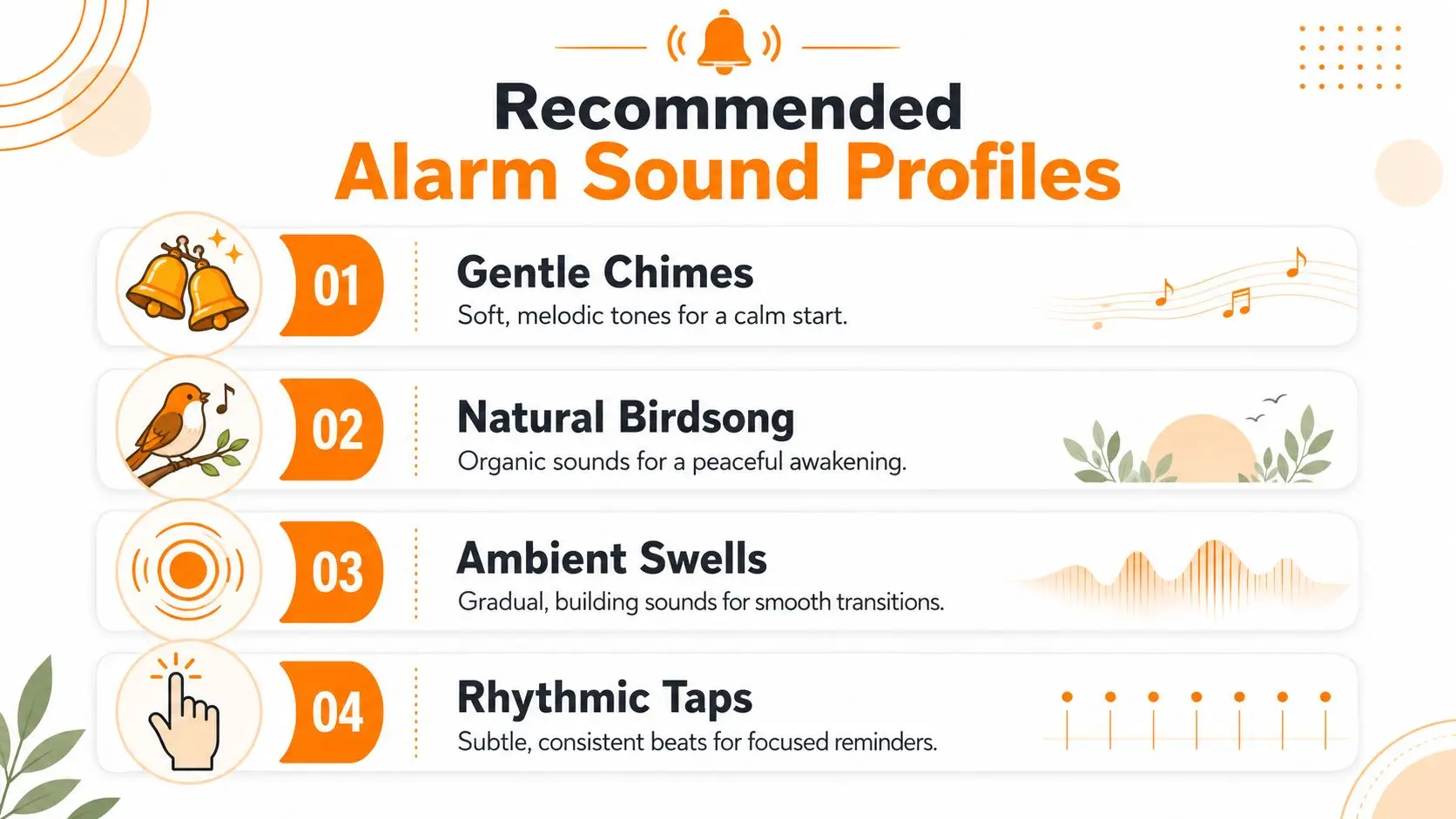
Gentle chimes work well for bedside wake-up alarms. They have shape, spacing, and a musical feel without sounding dramatic. Many iPhone and Android alarm libraries include a version of this.
Natural birdsong suits people who dislike synthetic tones. The organic variation can feel less intrusive than a repeating beep. It's often a good morning alarm if the sound remains clear enough to hear.
Ambient swells are useful when the main problem is abruptness. These begin softly and build. They can support a smoother wake-up, especially for people who feel rattled by instant loudness.
Rhythmic taps are strong for reminders during the day. Think woodblocks, marimba-like strikes, or short percussive patterns. They're less likely to blend into conversation than soft ambient tones, but they don't usually carry the same alarmed feeling as a siren.
Voice prompts can be excellent when meaning matters more than mood. “Time to take your medication” is easier to interpret than three electronic beeps. This can help when memory or attention is part of the challenge.
Choose the sound for the job, not for novelty. The best tone is the one a person notices, understands, and can live with every day.
If you're comparing options, test only two or three at a time. Too many choices can make every sound seem equally uncertain.
Create Your Circle of Sound Support
The best alarm setup is rarely the loudest one. It's the one that fits the person, the task, and the moment. A wake-up tone should support a clear start to the day. A reminder should be recognizable without causing worry. A safety alert should never be mistaken for an ordinary household sound.
For older adults, good alarm sounds are part of staying confident at home. They can reduce morning stress, make routines easier to follow, and help caregivers trust that important cues won't be missed. They also work better when they respect real-life changes in hearing, attention, and sleep.
Small choices matter here. The pitch of a tone. The rhythm of a reminder. The decision to add vibration or light. Those details shape whether an alert feels supportive or upsetting.
If you're helping a parent, spouse, or patient, start with one routine that causes the most friction. Change the sound. Test it. Keep what works. Then build from there. A thoughtful alert system becomes part of a larger support network, one that helps a person remain independent while staying connected to care and family through tools such as Rx360's connected wellness platform.
Rx360 helps older adults stay independent while keeping loved ones and care teams connected. If you want a calmer, more supportive way to manage daily routines and wellness signals, explore Rx360.
Lower-Risk Medication Plan Checklist
Below is a practical checklist and step plan you can implement into your daily life:
-
List all medications
Include prescriptions, over-the-counter drugs, supplements, sleep aids, creams, patches, eye drops, and inhalers.
-
Mark fall-risk drugs
Flag medicines that cause dizziness, sleepiness, confusion, blurred vision, low blood pressure, or low blood sugar.
-
Ask for a medication review
Bring the list to a pharmacist or prescriber.
-
Review after any warning sign
Request a new medication check after a fall, near-fall, new prescription, dose change, dizziness, or confusion.