You're tired, it's late, and the freezer has something hot that can be ready in minutes. For many older adults living independently, and for family caregivers trying to keep up with work, appointments, and medications, that's not laziness. It's real life.
A TV dinner can feel like a small victory. No chopping. No dishes piled in the sink. No standing at the stove when your back hurts or your energy is low. That convenience matters.
But the question still comes up: Are TV dinners healthy? The honest answer is sometimes, but many aren't. The difference usually comes down to what's inside the package, how often you rely on it, and whether you have health issues that make certain ingredients more risky. For older adults, that includes more than calories or fat. It can also include sodium sensitivity, medication concerns, swallowing challenges, and even under-discussed preservatives that may matter for brain health.
Table of Contents
- The Enduring Appeal of the TV Dinner
- The Unvarnished Truth About Most Frozen Meals
- Special Health Considerations for Older Adults
- How to Choose a Genuinely Healthy Frozen Meal
- Beyond the Box How to Enhance Any Frozen Meal
- Smarter Convenience Alternatives and Meal Planning
The Enduring Appeal of the TV Dinner
Mrs. Lewis is 78, lives alone, and still enjoys managing her own routine. She doesn't want to cook every night. Her daughter stops by on weekends, but during the week a frozen meal gives her something warm, familiar, and easy. For another family, the frozen entrée goes to a husband caring for his wife after a long day of helping with medications and appointments. In both homes, the choice makes sense.
That's why I never start this conversation by criticizing convenience foods. Convenience can support independence. If a meal helps someone eat consistently instead of skipping dinner, that matters. If it reduces fall risk by cutting down on long cooking sessions, that matters too.
What confuses many people is that “frozen” and “unhealthy” aren't the same thing. A frozen bag of vegetables is very different from a heavily engineered tray meal with a long ingredient list. The freezer aisle holds both.
A practical mindset: Don't ask whether all TV dinners are good or bad. Ask which ones help you eat safely, regularly, and with better nutrition.
Older adults and caregivers often need foods that are predictable, fast, and low effort. That need is legitimate. The skill is learning how to tell the difference between a frozen meal that works as a useful backup and one that becomes a daily nutritional problem.
The Unvarnished Truth About Most Frozen Meals
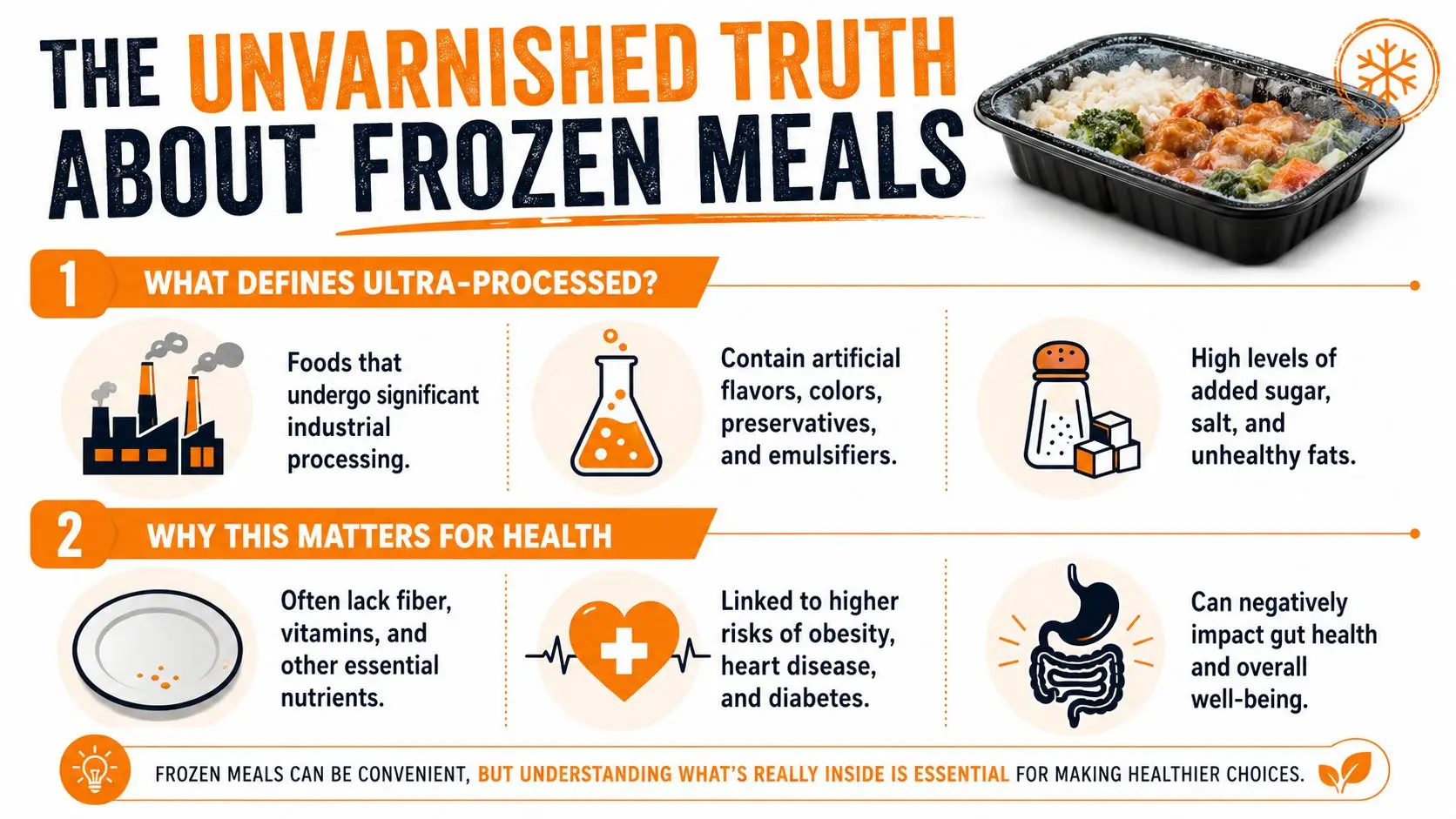
Most TV dinners are made to solve a manufacturing problem first. They need to taste good after freezing, shipping, sitting in storage, and being reheated in a microwave. That usually leads to meals built from highly processed ingredients, with added sodium, refined starches, fats, flavor boosters, and stabilizers.
That does not make every frozen meal “bad.” It does explain why so many of them look healthier on the front of the box than they are in the tray.
Why manufacturers build them this way
Freezing dulls flavor and changes texture. Food companies often compensate by adding more salt, richer sauces, and ingredients that help the meal hold together during reheating. A creamy pasta has to stay creamy. A meat patty has to stay tender enough to eat. A gravy has to reheat without separating.
From a product design standpoint, that is practical. From a nutrition standpoint, it often creates a meal that is heavy on convenience and light on the things older adults usually need more of, such as fiber, vegetables, and steady protein.
There is another issue families do not always notice right away. Ultra-processed meals are often engineered to be very easy to eat quickly. If a meal goes down easily but does not satisfy for long, a person may end up hungry again soon, or rely on snacks later to fill the gap. Over time, that pattern can work against blood sugar control, heart health, and weight stability.
What “ultra-processed” means at the dinner table
At home, ultra-processed usually means the meal is farther from a simple combination of foods you would cook yourself. Instead of chicken, rice, and broccoli with seasoning, you may get formed meat, a sauce built from multiple additives, refined grains, and a small spoonful of vegetables.
A frozen meal can also contain ingredients some families do not recognize, such as carrageenan, disodium inosinate, sodium benzoate, or other preservatives and texture agents. Nutrisense notes that frequent intake of standard frozen meals is associated with worse long-term health outcomes. The bigger point is practical. The more often a tray meal replaces a balanced meal, the more its weaknesses matter.
For older adults, this deserves extra attention. Some additives and preservatives may be harmless for one person in small amounts, yet still be unhelpful for another person who is managing multiple health conditions, lower appetite, or changes in thinking and alertness. Families also need to remember that a meal can be soft enough to chew and still be nutritionally thin.
Common misconceptions about frozen meals include:
- “It has vegetables on the box.” A few bites of corn or peas do not make the meal balanced.
- “It's portion-controlled.” A smaller tray can still be high in sodium, low in fiber, and short on protein.
- “It says healthy, smart, or power bowl.” Marketing highlights the best-sounding features. The nutrition label gives the fuller picture.
- “If it's easy to eat, it must be a good choice for seniors.” Easy texture helps, but ingredient quality, protein, and sodium still matter.
A helpful comparison is a cane versus a poorly fitted shoe. Both are aids, but one supports you while the other gradually creates problems. Frozen meals work the same way. Some support independence and nutrition. Many primarily make eating easier in the moment.
If you are asking whether TV dinners are healthy, the honest answer is that many common options deserve a closer label check before they become a routine part of the week.
Special Health Considerations for Older Adults
The same frozen meal that seems harmless to a younger person can create extra challenges for an older adult. That's partly because health conditions become more common with age, and partly because medications, appetite changes, chewing problems, and lower fluid intake can all change how the body handles a meal.
When convenience collides with common senior health issues
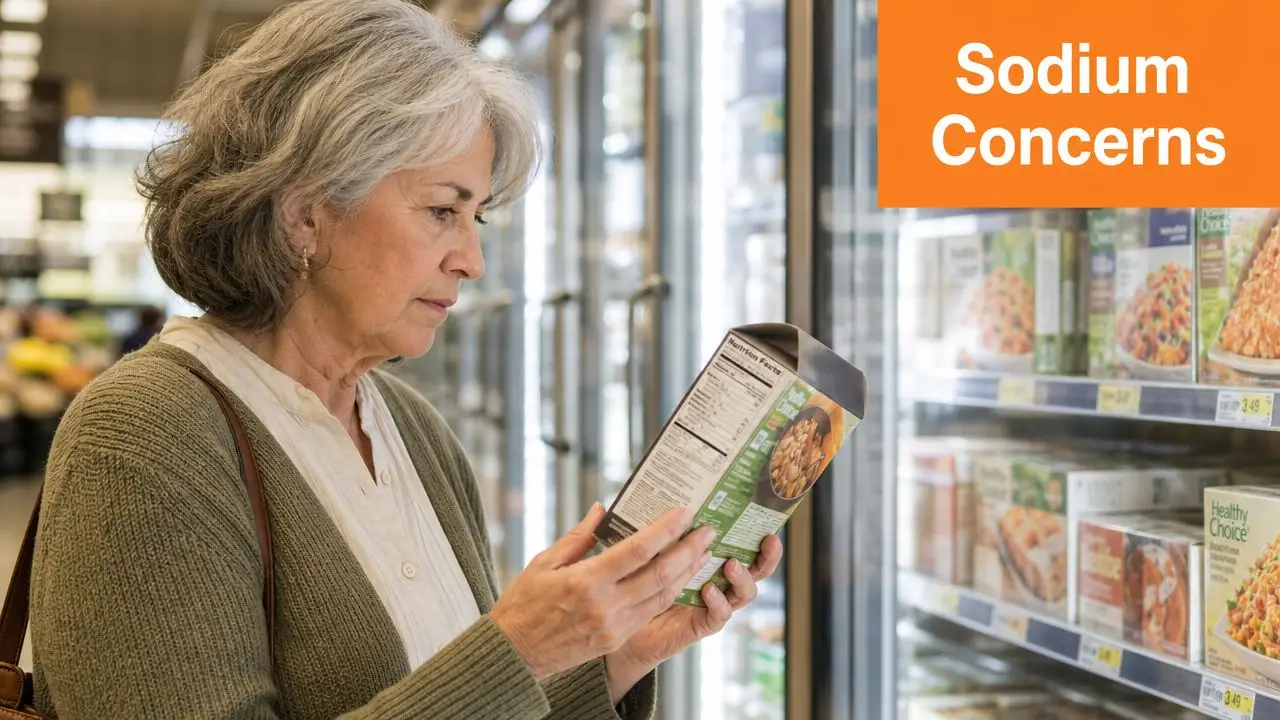
High-sodium meals can be especially unhelpful for people already managing blood pressure or heart concerns. If someone takes medications for those issues, a very salty meal may work against the overall care plan. I'm being intentional here: medication effects vary, and older adults should talk with their physician or pharmacist about specific drug-food concerns. But as a general rule, the salt load matters more in later life, not less.
Texture can also be a mixed blessing. Some frozen meals are soft and easy to chew, which can help someone with dental issues or swallowing fatigue. But soft doesn't always mean nourishing. Many are low in vegetables and fiber, so they don't support fullness, digestive comfort, or steady blood sugar as well as a more balanced plate would.
Caregivers should also watch for these practical issues:
- Small appetite, low protein intake: Some older adults eat only part of the day's meals. If dinner is low in protein, total intake may fall short.
- Swallowing safety: Saucy, mixed-texture meals may be easier for some people, but not for everyone. Anyone with coughing during meals or frequent throat clearing needs individualized guidance.
- Monotony: If the freezer becomes the default, diet variety tends to shrink.
What families often miss: The problem isn't just the frozen meal itself. It's what gets crowded out when that meal replaces produce, legumes, whole grains, and better protein sources night after night.
The preservative question most people miss
Sodium gets most of the attention, but some older adults and caregivers want to look deeper. That's reasonable. Chefs for Seniors highlights a concern that rarely appears in standard TV dinner guides: specific preservatives such as BHA, BHT, and TBHQ have been linked in independent research to neurotoxicity, endocrine disorders, thyroid dysfunction, and cognitive decline risks in older adults.
That doesn't mean every frozen meal contains these ingredients, and it doesn't mean a single exposure causes harm. It does mean the ingredient list deserves more attention than most shoppers give it.
For older adults trying to age in place, preserving clear thinking and day-to-day function matters greatly. That's one reason I encourage families to read beyond the front label. A box may advertise protein or low calories while still containing ingredients you'd rather limit.
How to Choose a Genuinely Healthy Frozen Meal
The best frozen meals are usually the least dramatic ones. They don't promise miracles. They have solid nutrition numbers and ingredient lists that look more like food than chemistry homework.
Start with the numbers on the label
A healthy frozen meal should have less than 650 milligrams of sodium, ideally under 600 milligrams, less than 3 grams of saturated fat, at least 15 to 20 grams of protein, and 5 or more grams of fiber per serving, based on ArchWell Health's guide to choosing a healthy frozen meal.
Those numbers matter because they answer four important questions:
- Will this meal overload me with salt?
- Will it support fullness instead of leaving me hungry?
- Does it provide enough protein to help maintain muscle?
- Does it include enough fiber to support digestion and steadier blood sugar?
If the answer to most of those is no, the meal may be convenient but not especially supportive.
Then read the ingredient list like a detective
Here's a simple way to scan the box.
Look for meals built around recognizable foods such as chicken breast, beans, vegetables, brown rice, or quinoa. Be cautious with very long ingredient lists, especially when the tray relies on additives and preservatives rather than whole-food ingredients.
A few clues can help:
- Better signs: vegetables listed early, lean protein you can identify, whole grains, beans
- Caution signs: a long list of additives, multiple flavor enhancers, words you only see in packaged foods
- Think twice: meals that seem mostly pasta, creamy sauce, breading, or processed meat
Shopping rule: If the front of the box makes the meal sound wholesome but the ingredient list tells a different story, trust the ingredient list.
Frozen Meal Nutrition Label Cheat Sheet
| Nutrient / Ingredient | Green Flag (Look For This) | Red Flag (Avoid This) |
|---|---|---|
| Sodium | Under 650 mg, ideally under 600 mg | Above 650 mg |
| Saturated fat | Less than 3 g | 3 g or more |
| Protein | 15 to 20 g or more | Low protein relative to meal size |
| Fiber | 5 g or more | Very little fiber |
| Main ingredients | Whole foods like vegetables, beans, seafood, turkey, brown rice, quinoa | Mostly refined starches, heavy sauces, breaded items, processed meats |
| Ingredient list length | Shorter list with recognizable foods | Arms-length list filled with additives and preservatives |
| Overall meal pattern | Balanced meal with vegetables and lean protein | Meal dominated by sodium, saturated fat, and ultra-processed ingredients |
One more point that's easy to forget. Even a better frozen meal may still need help if it's light on produce. If the tray gives you decent protein but very few vegetables, it's still not the whole picture.
Beyond the Box How to Enhance Any Frozen Meal
Sometimes the meal you have is the meal you're eating. That's fine. You can still make it better.
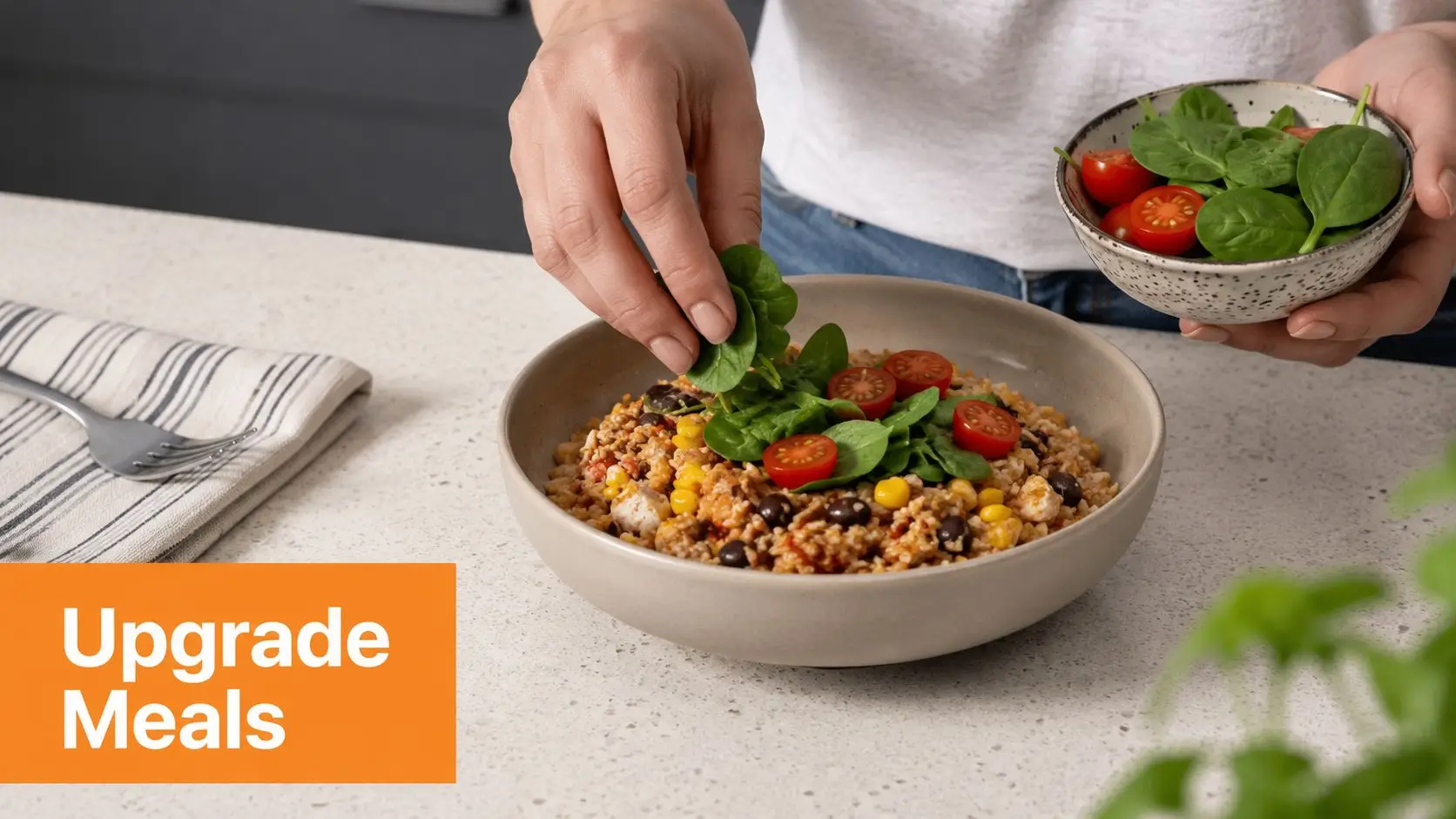
Many frozen dinners are light on vegetables and fiber. A practical fix is to add fresh vegetables, cooked chicken, or ground turkey on the side or into the meal itself. That kind of upgrade can help fill nutrient gaps and support weight management and blood sugar regulation, as noted qualitatively in the earlier shopping guidance.
Fast upgrades that actually help
You don't need a full second recipe. Try one small add-on.
- Add vegetables: Stir in spinach, peas, broccoli, or mixed vegetables near the end of heating.
- Boost the protein: Add plain chicken, turkey, beans, or a spoonful of cottage cheese if it fits the meal.
- Round out the plate: Serve fruit, a bagged salad, or cut vegetables on the side.
- Slow the meal down: Put the entrée on a plate instead of eating from the tray. It sounds simple, but it helps people notice portion size and fullness.
If someone has a small appetite, choose the upgrade that matters most for them. For one person, that may be extra protein. For another, it may be softer vegetables and a side of fruit.
A short demonstration can make these upgrades feel less abstract:
A few practical safety habits matter too
Older adults should also treat frozen meals as a food safety issue, not just a nutrition issue. Reheat thoroughly according to package directions. If a meal heats unevenly, stir it when possible and continue heating until it's hot all the way through. Don't leave leftovers sitting out for long stretches.
For people with chewing or swallowing concerns, pause before serving. Mixed textures, dry rice, or rubbery reheated meats can be harder than they look. Adding a little broth, sauce, or soft vegetables can improve comfort, but anyone with true swallowing problems needs personalized guidance from a clinician.
A frozen meal doesn't have to be perfect to be useful. It just shouldn't be the end of the conversation.
Smarter Convenience Alternatives and Meal Planning
A hard day often leads to the same decision. The freezer is close, cooking feels tiring, and a boxed meal seems like the safest way to get dinner on the table.
For older adults, the better question is not whether a TV dinner is “good” or “bad.” The better question is whether it is your only convenience plan. A single frozen meal once in a while is one thing. Relying on them by default can create a pattern that misses what older bodies often need most, such as enough protein, easier-to-chew textures, steadier hydration, and ingredients that do not add extra complications alongside medications or memory concerns.
A small backup system helps. It works like keeping a spare flashlight in the house. You hope you will not need it often, but when energy is low or a caregiver cannot be there, it prevents a stressful scramble.
Easy options that still respect your time
Keep a short list of very low-effort meals that you can rotate:
- Batch-cooked singles: Freeze soup, chili, or stew in one-meal containers that can be thawed and reheated easily.
- Building blocks: Keep rotisserie chicken, frozen vegetables, canned beans, and microwaveable brown rice on hand for mix-and-match meals.
- Simple assembled meals: Greek yogurt with fruit, toast with eggs, or a grain bowl made from leftovers can come together quickly.
- Better freezer staples: Choose frozen entrées with a clear protein source, vegetables you can recognize, and textures that can be softened with broth or sauce if needed.
- Support services: Some families do well with meal delivery services built for older adults, especially when shopping, memory lapses, or decision fatigue make regular meal planning harder.
One simple routine can make this easier. Pick two freezer meals, two homemade frozen options, and two no-cook meals each week. That gives variety without asking an older adult or caregiver to make fresh decisions every night.
If swallowing is a concern, convenience foods need another layer of planning. Soft casseroles, soups, oatmeal, yogurt, eggs, and tender shredded chicken are often easier starting points than dry rice bowls or tougher reheated meats. If a person has dementia, keeping meals visually simple and familiar can also reduce confusion at mealtime.
When people ask me, “Are TV dinners healthy?” my practical answer is this: they can have a place, but they should not run the routine. The goal is easy food that also respects the realities of aging.
Rx360 supports independent older adults and the people who care about them with a connected approach to wellness, daily awareness, and peace of mind. If you want tools that help families stay informed while preserving autonomy, explore Rx360's connected aging-in-place platform.
Lower-Risk Medication Plan Checklist
Below is a practical checklist and step plan you can implement into your daily life:
-
List all medications
Include prescriptions, over-the-counter drugs, supplements, sleep aids, creams, patches, eye drops, and inhalers.
-
Mark fall-risk drugs
Flag medicines that cause dizziness, sleepiness, confusion, blurred vision, low blood pressure, or low blood sugar.
-
Ask for a medication review
Bring the list to a pharmacist or prescriber.
-
Review after any warning sign
Request a new medication check after a fall, near-fall, new prescription, dose change, dizziness, or confusion.