
The kitchen table has a notebook, a pen, and a calendar with a few plans penciled in. You remember yesterday's conversation with a friend, but not whether you watered the plant afterward. There's no big problem to solve. You'd just like a simple place to record the routines you choose.
Think of it as eight small trackers for everyday independence, not another set of obligations. These daily habit tracker ideas use checkmarks, short notes, and occasional time entries to record participation. They aren't grades, and an empty square doesn't need to mean something went wrong.
Researchers include self-monitoring, goals, feedback, cues, rewards, and social support among techniques associated with engagement in mobile behavior-change interventions, according to a systematic review of engagement techniques. That doesn't make every tracker effective for every person. It gives us a starting point for making everyday actions visible without turning them into a competition.
The ideas below focus on movement, curiosity, connection, and familiar home routines. Each includes a not-planned option, a privacy boundary, and a way to choose what family, friends, or another care-network member can see. Paper is welcome. So are voice notes, a shared household notebook, or a simple digital record.
Table of Contents
- 1. A Daily Movement and Enjoyment Tracker
- 2. An Evening Wind-Down Routine Tracker
- 3. A Meaningful Connection Tracker
- 4. A Reading and Curiosity Tracker
- 5. A Small Home-Reset Tracker
- 6. A Creative Practice Tracker
- 7. A Nature-Noticing Tracker
- 8. A One-Line Appreciation and Enjoyment Journal
- How the eight daily habit tracker ideas compare at a glance
- Pick One Tracker and Let It Grow
1. A Daily Movement and Enjoyment Tracker
Research on older adults' connected-health preferences included interest in recording exercise and physical activity. It also documented paper-based tracking, so a movement record doesn't have to begin with an app or wearable.
Ryder Carroll's The Bullet Journal Method and James Clear's Atomic Habits describe approaches to making repeated actions visible. For this tracker, the entry is what you chose to do, with an optional note about what you enjoyed. Walking, gardening, dancing, or an established exercise routine can each have a place.
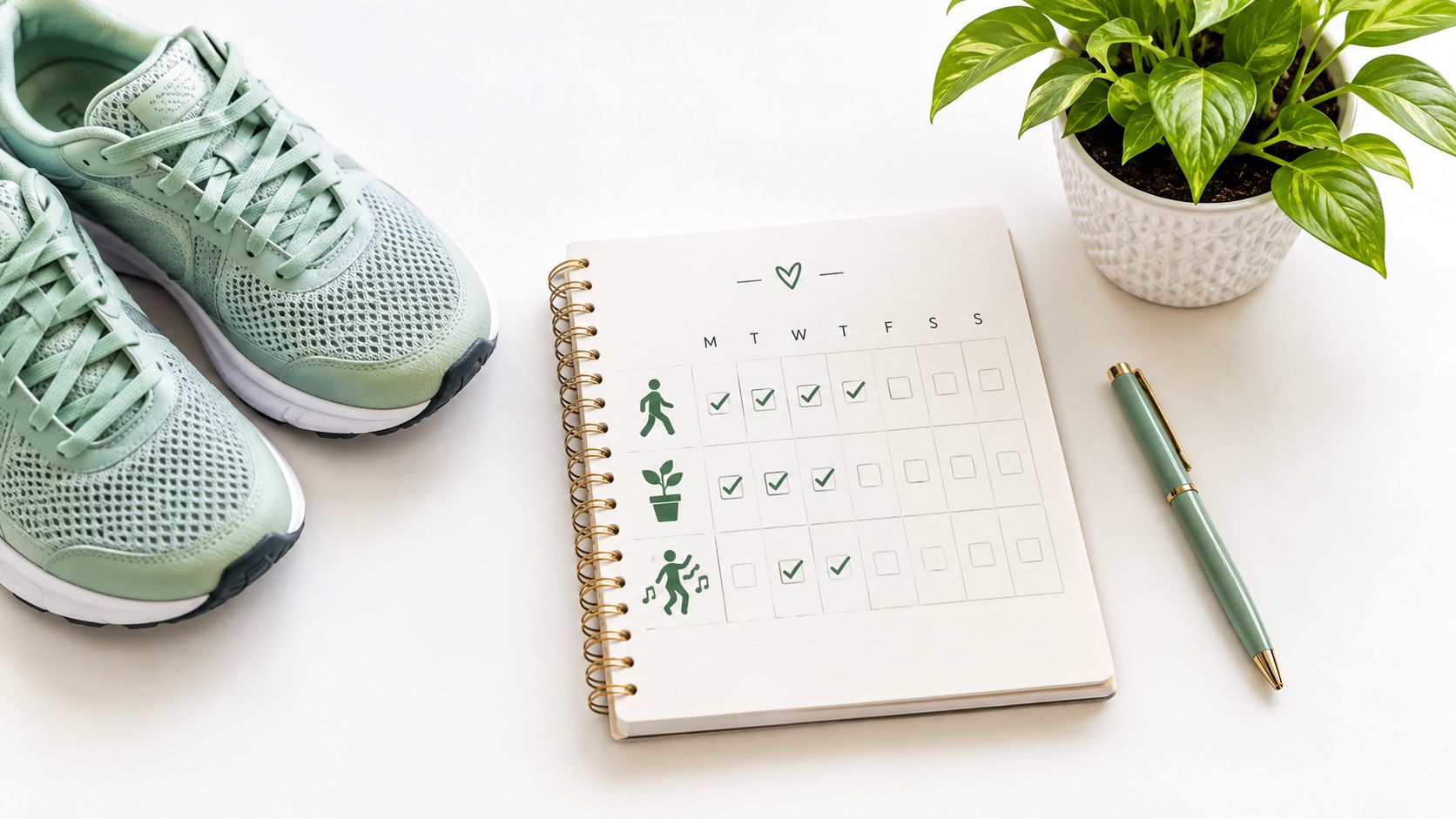
Record the Activity, Not a Performance Grade
On a paper calendar, write a letter for the activity and add a checkmark when you take part. A gardening entry might say “repotted the basil, enjoyed being outside.” There's no requirement to record distance, intensity, or duration unless that information interests you.
- Choose your completion rule. Decide what participation means before filling in the calendar.
- Mark not planned. Write “NP” when movement tracking wasn't part of that day's plans.
- Keep enjoyment optional. A checkmark is enough when you don't feel like writing.
A shared household notebook can work, too, with each person recording their own chosen activities. If an existing gym routine belongs on your page, Rx360's Silver Sneakers gym list offers related reading.
Privacy and sharing: Leave routes, locations, and exact times out of a shared version if you prefer. A care-network member could receive only “chosen activity completed,” while your personal notes stay yours. Agree on that boundary before sharing the notebook.
2. An Evening Wind-Down Routine Tracker
Research on everyday routines and reminders among older adults identifies established routines and contextual cues among strategies people use to remember actions. The bedtime examples below apply that recording approach to ordinary evening choices, not to evaluating sleep.
BJ Fogg's Tiny Habits describes connecting a small action to an existing routine. Combined with the flexible logging approach in The Bullet Journal Method, that gives you a straightforward bedside card: record what you chose to do around the end of your day.
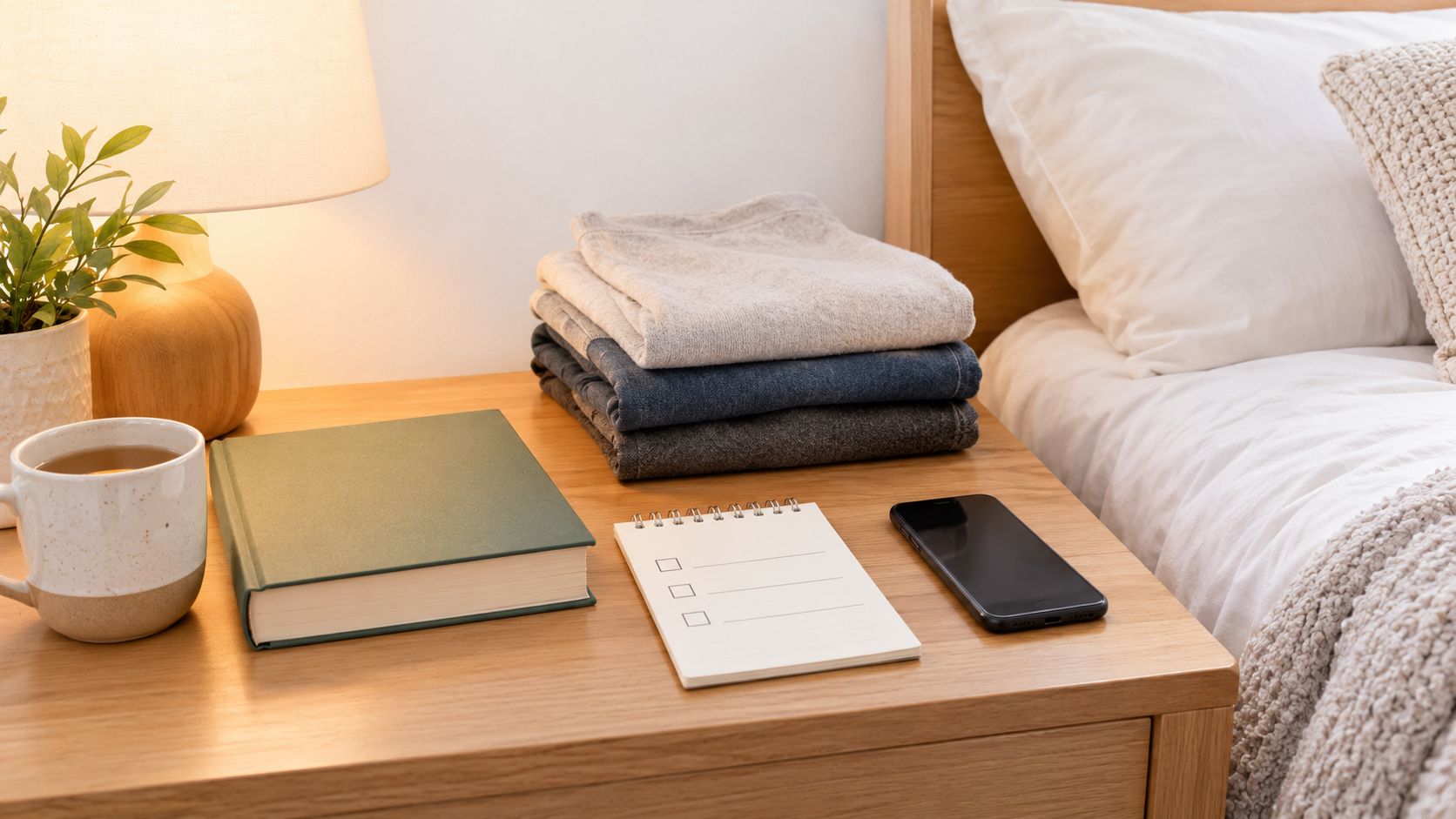
Keep the boundary clear: This is a record of evening actions, not a verdict on how well you slept.
You might check off setting out tomorrow's clothes, reading, or putting your phone aside. Record each action separately if you want detail. Alternatively, use a single checkmark for the evening routine you've chosen.
Leave Room for a Different Evening
A late visit or an evening out doesn't need to become an unfinished checklist. Add alternative routine and not planned as distinct options, so you can describe what happened without forcing every evening into the same pattern.
Keep the card brief enough that logging doesn't become another evening project. If you're exploring related topics, Rx360 also has an article on eating before bed and sleep. Keep that reading separate from what this tracker records.
Privacy and sharing: A bedside journal can contain personal details about your schedule. You could keep the full card private and share only a routine-completed update, or share nothing. A supporter doesn't need access to bedtime timestamps just because they help with other routines.
3. A Meaningful Connection Tracker
The World Health Organization's Commission on Social Connection addresses connection as a broad everyday-life topic. More specifically, a National Academies resource on technology and social connectedness describes research that recorded contact through face-to-face interaction, telephone, and electronic communication.
Your personal version can distinguish those channels without ranking them. A conversation, a shared activity, and a message can all appear in the record. What matters here is which contact you chose to record, not a score for the relationship.
Keep the Follow-Up, Skip the Sensitive Details
A calendar might hold a recurring call with a friend and a community gathering. After a conversation, a private notebook could hold a reminder to ask about a relative's upcoming event. You don't need to summarize what anyone confided in you.
- Record the format. Use “conversation,” “shared activity,” or “message,” with more detail only if you want it.
- Include not planned. A quiet day can be intentional, rather than an empty space to explain.
- Keep reminders practical. Note a follow-up topic instead of sensitive conversation details.
James Clear's Atomic Habits provides a general approach to recording repeated behaviors, but this tracker isn't a requirement to contact someone every day. A weekly call can belong on a daily calendar without becoming a daily obligation. Rx360's article on maintaining an active social life offers related reading.
Privacy and sharing: Names and message contents can stay private. If a family member wants an update, agree whether they'll see only “connection recorded,” the communication channel, or a specific entry you select. Sharing a completion mark doesn't have to mean sharing the conversation.
4. A Reading and Curiosity Tracker
Project Gutenberg provides public-domain ebooks, while the Smithsonian offers educational material across subjects such as history, science, art, and culture. Those resources can supply reading ideas, but your tracker can include any book, audiobook, article, or educational program you choose.
Start with a title or topic and a checkmark for participation. Add an interesting detail if you'd like something to return to later. The record doesn't need a page target, a finishing deadline, or a test of what you remember.

Give Curiosity Somewhere to Go
Suppose you listen to an audiobook while sitting by the window. Your entry could name the book and note a place you'd like to look up. Another day, you might record an art article and a question to discuss with a friend.
Keep a separate list of possible next topics if that appeals to you. That way, the daily square records participation while the longer list holds possibilities. Neither list needs to become an assignment.
- Choose your format. Use large-print handwriting, audio notes, or simple checkmarks.
- Allow changes of mind. Record that you sampled a book without requiring yourself to finish it.
- Include not planned. Leave room for days when reading or listening wasn't on your agenda.
Privacy and sharing: Reading interests can be personal, even when the material is publicly available. Keep titles private if you prefer. A care network could see “reading or listening recorded,” while a friend receives only the book recommendation you decide to share.
5. A Small Home-Reset Tracker
KC Davis's How to Keep House While Drowning frames household care around function rather than personal worth. BJ Fogg's Tiny Habits describes making actions small and specific. Together, those approaches offer a format for recording a bounded household task without rating the whole home.
Choose something observable, such as putting keys in their usual place, sorting incoming mail, or preparing a frequently used table for its next activity. “Sort today's mail” describes an action. “Organize the house” leaves much more undefined.
A completed household task can include help. The entry doesn't have to prove that you did everything yourself.
A shared list might say who handled the mail and whether anything remains. A personal card might contain only a checkmark beside “keys returned.” Both record the routine without requiring a description of the room.
Separate Daily Actions From Occasional Projects
Keep cupboard sorting, furniture changes, and other occasional projects off the daily page unless you deliberately choose them. A home-reset record can stay focused on the small action you meant to track. There's no need to add every unfinished household job.
Use done by me, done with help, delegated, and not planned if those distinctions are useful. If you prefer fewer choices, mark whether the chosen task happened. The person using the tracker decides what the entry means.
Privacy and sharing: A household list doesn't need to include photographs, financial documents, or details from correspondence. A care-network member could see the task status and any specific request for help, without seeing the contents of your mail or a running account of your home.
6. A Creative Practice Tracker
Julia Cameron's The Artist's Way includes recurring creative practices such as Morning Pages and Artist Dates. Austin Kleon's Keep Going discusses sustaining creative work through everyday routines. A participation tracker borrows that attention to recurring practice without setting a standard for the finished work.
Drawing, knitting, writing, photography, and music can each fit. Completion means taking part in the activity you chose, not making something good enough to show. An unfinished sketch still belongs in a record of sketching.

Leave a Note for Your Next Session
Put a date and checkmark in the corner of a sketchbook page. In a knitting journal, record your current row and the next step. A music notebook could hold the name of the piece you played and where you'd like to begin next time.
Those notes describe participation and unfinished work without judging either. If separate logs feel cumbersome, keep a general creative-practice page and name whichever activity you chose that day.
- Define participation yourself. Record a session without requiring a finished object.
- Make room for not planned. A day away from a project doesn't need a replacement task.
- Keep next steps brief. Write enough to recognize where you stopped.
Privacy and sharing: A creative tracker doesn't grant anyone access to drafts, recordings, photographs, or sketchbooks. You could share only “creative time recorded” with your care network. Show the work itself only when you choose to, and keep feedback separate from the completion record.
7. A Nature-Noticing Tracker
The Cornell Lab of Ornithology's eBird project supports recording bird observations, and the USA National Phenology Network's Nature's Notebook supports observations of seasonal changes in plants and animals. A personal nature-noticing page can use a simpler format, without requiring participation in either project.
Record an outdoor detail during an existing outing or from a window. A bird, a changing leaf, and a cloud formation all fit. The entry describes what you noticed, not how far you traveled or how much time you spent outside.

Describe Before You Identify
A window-side notebook might say “small brown bird on the fence” when you're unsure of its name. Keep the observation separate from a possible identification. There's no need to turn an uncertain sighting into a definite statement.
You could also date photographs of the same tree or sketch the shape of a leaf. A familiar observation point gives you a place to return to when you want to compare entries. If you submit bird observations to eBird, follow the project's participation guidance rather than treating a personal note as a complete submission.
Privacy boundary: Before publishing a nature photograph or observation, check what location information you're choosing to share.
Include not planned for days when you didn't intend to make an observation. “Looked, nothing recorded” can be a separate choice if you want to distinguish participation from finding something to note.
Privacy and sharing: Keep exact locations out of the care-network version if they aren't needed. You might share a selected photograph or “nature observation recorded,” while keeping your regular observation spot and full notebook private.
8. A One-Line Appreciation and Enjoyment Journal
Robert Emmons and Michael McCullough's paper Counting Blessings Versus Burdens studied gratitude journaling, while Ryder Carroll's The Bullet Journal Method describes reflective logging. This version uses a brief personal entry without promising any particular outcome or requiring a positive description of every day.
Write something concrete that you noticed or enjoyed. It might be a conversation, a favorite meal, or a step forward on a personal project. A detail is enough. You don't have to turn it into a lesson.
Make Room for Ordinary Days
An entry might describe the color of a flower on the table or a funny remark during a call. Another might say that the afternoon was quiet. A pocket notebook, a private voice journal, and a digital note can each hold that kind of record.
There's room for difficult-day entries, too. You can describe the day plainly, skip the entry, or mark not planned. None of those choices needs to be rewritten as gratitude before it belongs in your journal.
- Record something specific. Name the moment rather than requiring a broad positive statement.
- Keep participation flexible. Writing and speaking are both possible formats.
- Separate recording from sharing. A private entry doesn't create an obligation to report it.
A family exchange can be another option, with each participant voluntarily sharing a moment they enjoyed. Keep that exchange separate from access to the full journal.
Privacy and sharing: Decide entry by entry what anyone else can see. Your care network might receive a chosen sentence, a simple participation update, or nothing at all. Personal reflection can remain personal even when other routines are shared.
How the eight daily habit tracker ideas compare at a glance
| Item | Tracking Format | Typical Entry | Caregiver Sharing |
|---|---|---|---|
| A Daily Movement and Enjoyment Tracker | Monthly activity grid | Walk completed; optional note about enjoyment | Optional shared household notebook; each person records their own activity |
| An Evening Wind-Down Routine Tracker | Short checklist or weekly journal | Set out clothes, read, and put phone aside | Personal routine record; sharing not specified |
| A Meaningful Connection Tracker | Calendar or private notebook with contact symbols | Weekly call with a friend; follow-up reminder | Share completion updates selectively; keep private notes separate |
| A Reading and Curiosity Tracker | Reading log or monthly grid | Audiobook session and one interesting detail | Can support a book club or discussion; sharing not specified |
| A Small Home-Reset Tracker | Task-based checklist | Sort today's mail; note whether task was shared or delegated | Shared list can record who handled a task |
| A Creative Practice Tracker | Dated participation marks with optional project notes | Drawing session and next step | Can include group activities; sharing not specified |
| A Nature-Noticing Tracker | Dated observation log with optional location or sketch | Bird spotted from a window | Observations can be shared; check location privacy |
| A One-Line Appreciation and Enjoyment Journal | Dated sentence, phrase, or voice entry | A moment worth remembering | Entries remain private or are shared individually by choice |
Pick One Tracker and Let It Grow
A summary of the foundational University College London habit study reports that habit formation varied considerably between participants. It also reports that a missed opportunity didn't materially disrupt the overall process. That's a useful distinction between recording a routine and demanding an unbroken streak.
You don't need all eight trackers at once. Choose the one that fits a routine you already enjoy, give it a single page or card, and decide what a completed day and a not-planned day look like. Keep the definition visible so you don't have to renegotiate it every evening.
Decide What the Record Is For
A reading page might help you remember titles. A household card might show whether a task was handled. A movement calendar might preserve a record of activities you chose and enjoyed.
Those are different purposes, so they don't require identical entries. Before adding another field, name what you'll use it for. If you only want to remember that you participated, a checkmark can be the whole record.
- Keep the original private by default. Choose what to share rather than assuming the entire page is shared.
- Name the recipient. Agree on which friend, relative, or care-network member receives an update.
- Specify the information. Distinguish a completion mark from timestamps, locations, and personal notes.
- Allow changes. Revisit sharing choices when your preferences or routines change.
If you use Rx360, its notifications and caregiver updates can sit alongside a paper or simple digital tracker. Check the platform's current features before deciding how they fit your preferred arrangement. A shared update and a private notebook can have different roles.
Review Without Grading Yourself
Set aside a weekly moment to look over the page. Notice whether the categories still describe your life, whether you used the not-planned option, and whether any field felt unnecessary. You can simplify the page, change the routine, or stop recording something that no longer interests you.
A missing entry isn't enough to explain why an activity didn't happen. Leave room for changed plans, a forgotten pen, or a choice not to record. The tracker is a personal record, not permission for someone else to draw conclusions about your day.
Start with the routine you want to remember. Let the format change as your preferences change, while keeping participation, choice, and privacy clearly separate.
Rx360 offers wellness insights, smart technology, and connected-care features designed around independence and connection with loved ones. Visit Rx360 to explore its current notifications and caregiver updates, and consider which selected routine updates you'd like to share alongside your personal tracker.
Lower-Risk Medication Plan Checklist
Below is a practical checklist and step plan you can implement into your daily life:
-
List all medications
Include prescriptions, over-the-counter drugs, supplements, sleep aids, creams, patches, eye drops, and inhalers.
-
Mark fall-risk drugs
Flag medicines that cause dizziness, sleepiness, confusion, blurred vision, low blood pressure, or low blood sugar.
-
Ask for a medication review
Bring the list to a pharmacist or prescriber.
-
Review after any warning sign
Request a new medication check after a fall, near-fall, new prescription, dose change, dizziness, or confusion.