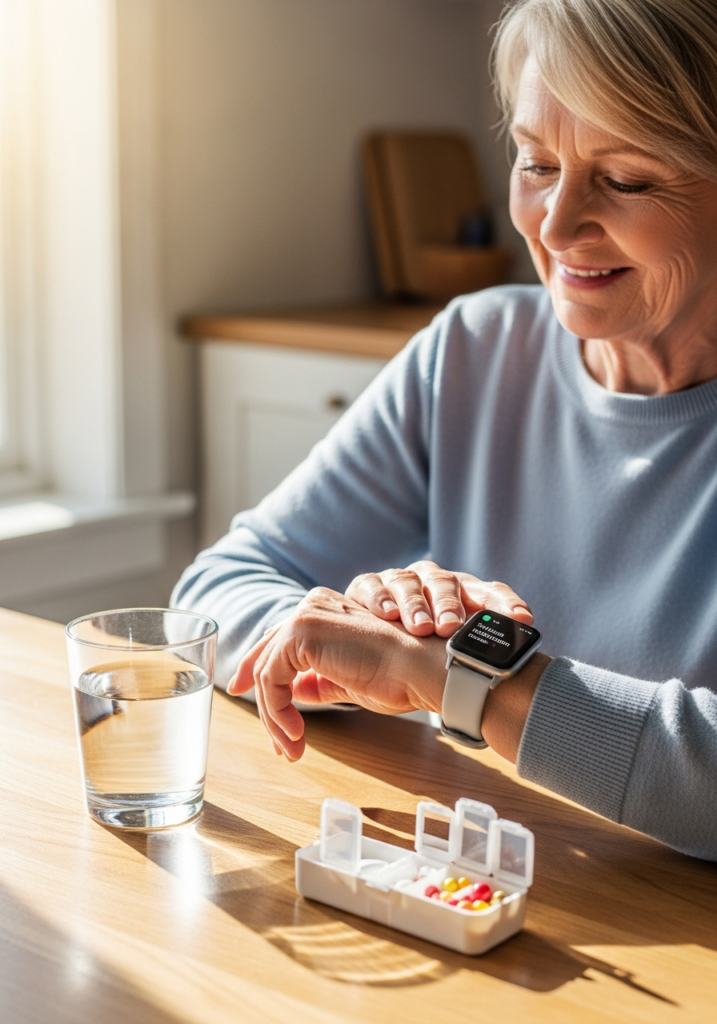
Why the hour you take a pill can be just as important as the dose — and how to build a rhythm that sticks.
RS
RX360 Staff
Contributing Writer • August 14, 2025
Share
The Connection Between Medications and Falls
While people fall for a number of different reasons, there are some universally common factors that affect many of those cases, especially in older age adults. These include, but aren’t limited to:
Primary physical and health-related causes like immobility, cognitive issues, and body limitations
Environmental hazards like lighting or unexpected obstacles
Behavioral or psychological factors such as cognitive decline, fear of falling (leading to immobility) and even less obvious things like urinary issues
One additional key factor that effects falling in older age adults is their medication regimen. Medication significantly increases fall risk in older adults through side effects like dizziness, sedation, and lowered blood pressure.
What Type of Medications Are Most Related to Falling?
There are a number of categories of medicines that increase fall risk. While each person’s individual chemistry plays a factor in the potential damage that can be done through the following medication’s, this list can be especially impactful on people who are prone to imbalance:
Sedatives and Hypnotics
These drugs can slow thinking, reaction time, and body control. They can cause morning grogginess, confusion, weak balance, and poor coordination. Nighttime use adds risk during bathroom trips.
Blood Pressure Medications
These drugs can drop blood pressure too far. The person can feel faint after standing, bending, showering, or getting out of bed.
Why Do The Falls Take Place?
When it comes to medication fall risk, there are a number of different factors that can be attributed to accidents that take place. A drop in blood pressure when standing causing fainting is relatively common with blood pressure medication. Ingestion of multiple medications can cause interactions that increase drowsiness in most patients.
Is There A Way to Address This Problem?
While there is no full proof way of avoiding falling from medication use there are some practical steps that can be considered.
Medication review and reduction: This includes reviewing all prescriptions, over-the-counter drugs, and supplements. The goal is to find drugs that raise fall risk, stop drugs that are no longer needed, and lower doses where safe.
Safer medication selection: This includes switching from higher-risk drugs to safer options. It also includes avoiding drug stacking.
Monitoring and follow-up: This includes checking blood pressure, blood sugar, kidney function, liver function, and new symptoms.
Lower-Risk Medication Plan Checklist
Below is a practical checklist and step plan you can implement into your daily life:
List all medications
Include prescriptions, over-the-counter drugs, supplements, sleep aids, creams, patches, eye drops, and inhalers.
Mark fall-risk drugs
Flag medicines that cause dizziness, sleepiness, confusion, blurred vision, low blood pressure, or low blood sugar.
Ask for a medication review
Bring the list to a pharmacist or prescriber.
Review after any warning sign
Request a new medication check after a fall, near-fall, new prescription, dose change, dizziness, or confusion.
Frequently Asked Questions
Which of my medicines raises my fall risk?
Medicines that cause dizziness, sleepiness, confusion, blurred vision, low blood pressure, or low blood sugar can raise fall risk. Common examples include sleep aids, opioids, antidepressants, blood pressure drugs, diabetes drugs, antipsychotics, and older allergy medicines.
Do I still need every medicine on my list?
A prescriber or pharmacist can help answer this. Some medicines stay on the list after the original problem has changed. A review can show which drugs still have clear value and which ones can be lowered, switched, tapered, or stopped.
What symptoms should I report right away?
Report falls, near-falls, new dizziness, faintness after standing, confusion, heavy sleepiness, blurred vision, weak legs, shaking, sweating, or signs of low blood sugar. These can point to medication-related fall risk.
How can I reduce fall risk without losing symptom control?
Use small, planned changes. The care team can lower doses, switch to safer options, adjust timing, taper risky drugs, or monitor symptoms before changing treatment.